PHUL Workout Split - The Best Way toTrain for Athletic Fitness
by Ivan Escott
Sep 15, 2026
•7 minutes
When it comes to building strength, muscle, and athletic performance, many training programs force you to choose between lifting heavy weights or focusing on muscle growth. The PHUL workout split (Power Hypertrophy Upper Lower) eliminates that problem by combining both training styles into one effective four-day program.
Designed for athletes, bodybuilders, and everyday lifters, PHUL blends heavy compound movements with higher-volume hypertrophy training to create a balanced approach to fitness. Instead of only chasing size or only focusing on strength, this training split helps develop power, endurance, explosiveness, and overall athletic ability.
Whether you are looking to improve your performance on the field, build a stronger physique, or add structure to your workouts, PHUL is one of the best intermediate training splits available.
What Is the PHUL Workout Split?
PHUL stands for:
Power
Hypertrophy
Upper
Lower
The program follows a four-day weekly split that separates strength-focused training from muscle-building workouts.
The first session of the week focuses on power training, where athletes use heavier weights, lower reps and sets, and compound movements to increase strength and explosiveness.
The second session of the week has an emphasis on higher volume training to target hypertrophy.
The back half of the week focuses on dedicated training days for the upper body and lower body.
A typical PHUL schedule looks like this:
Day 1: Full Body Power Day 2: Rest Day 3: Full Body Hypertrophy Day 4: Rest Day 5: Upper Strength Day 6: Lower Strength Days 7: Rest or Active Recovery
This structure allows you to train intensely while still giving your body enough time to recover and adapt.
Why PHUL Works for Athletic Fitness
To be athletic, you need more than just muscle size. You need strength, speed, coordination, power output, and the ability to perform repeatedly at a high level.
That is where PHUL excels.
Traditional bodybuilding programs often prioritize hypertrophy, while strength programs may focus almost entirely on maximal lifts. PHUL combines both approaches.
The power days improve:
Absolute strength
Explosive force production
Coordination
Athletic performance
The hypertrophy days improve:
Muscle growth
Work capacity
Muscular endurance
Injury resistance
By training both qualities throughout the week, athletes can build a more complete foundation.
Sample PHUL Workout Split
PHUL Power Training Days
The goal of power days is to produce maximum force. Whether that be through dynamic olympic movements or absolute strength lifts like squat and bench.
These workouts emphasize compound exercises performed with lower repetitions and longer rest periods.
Most exercises fall within the:
3-5 sets
2-6 repetition range
The focus is not chasing fatigue. Instead, the goal is producing maximum force with every repetition.
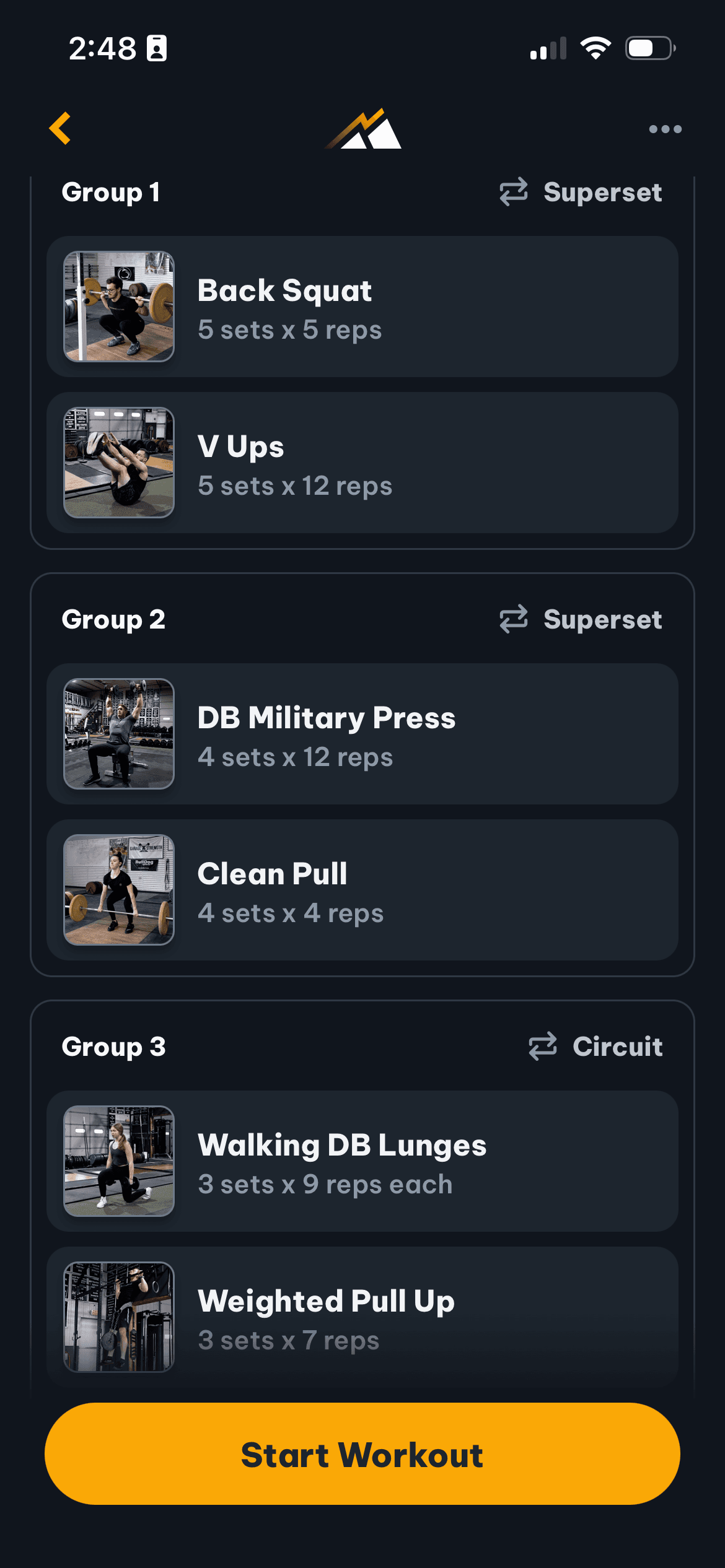
Full Body Power Workout
The full-body power day in PHUL focuses on developing strength and force production across the entire body through heavy, compound movements. Rather than separating upper- and lower-body power into different sessions, this approach trains major muscle groups together while keeping repetitions relatively low and intensity high.
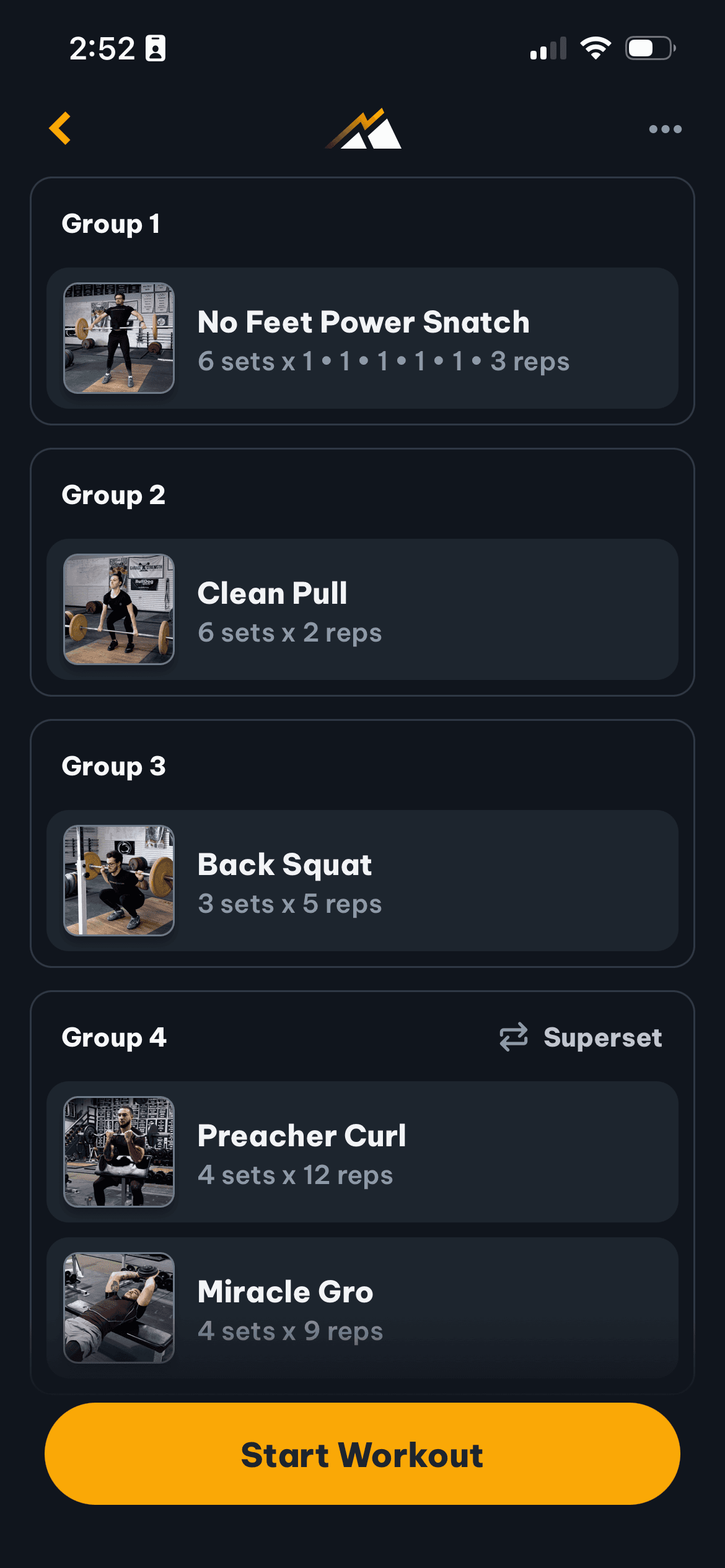
A full-body power session might include movements such as squats, clean pulls, bench presses, rows, and overhead presses. These compound exercises allow you to train the major muscle groups efficiently while emphasizing strength and the ability to produce force against heavier resistance. Exercise selection can also be adjusted based on individual goals, experience, and available equipment.
The full-body power day provides the strength-focused foundation of the PHUL program. It complements the higher-volume hypertrophy sessions by exposing the muscles to heavier loads without adding excessive training volume. This creates a balance between strength development and muscular growth throughout the training week.
Full Body Hypertrophy Training
.png&w=3840&q=75)
.png&w=3840&q=75)
The full-body hypertrophy day shifts the focus from heavy strength work to higher training volume designed to stimulate muscle growth. Following the heavier loading of the power day, this session uses moderate weights, higher repetitions, and a greater variety of exercises to challenge the muscles without relying on maximal loads.
The goal is to accumulate enough quality volume to stimulate muscle growth while managing fatigue. Unlike power day, where longer rest periods help maintain strength and performance, hypertrophy training can use moderate rest periods to keep the muscles working throughout the session.
A full-body hypertrophy workout might include exercises such as dumbbell bench presses, lunges, pull ups, core exercises, squat variations, and other pulls. This combination allows you to train the major muscle groups while incorporating exercises that target individual muscles and complement the heavier compound movements performed on power day.
Pairing full-body power and hypertrophy days creates a balanced training approach. The power day emphasizes strength and force production, while the hypertrophy day emphasizes muscle growth through increased volume. Together, they provide a foundation for building both strength and size while keeping the training week structured and purposeful.
Upper Body Hypertrophy Workout
After the full-body hypertrophy day, a rest day provides time for your muscles to recover and your energy levels to replenish. This allows you to approach the next session ready to handle additional training volume.
The upper-body day shifts the focus toward developing the chest, back muscles, shoulders, biceps, and triceps. While the full-body sessions provide a broad training stimulus, this workout allows you to dedicate more volume to the upper body and target individual muscle groups with greater precision.
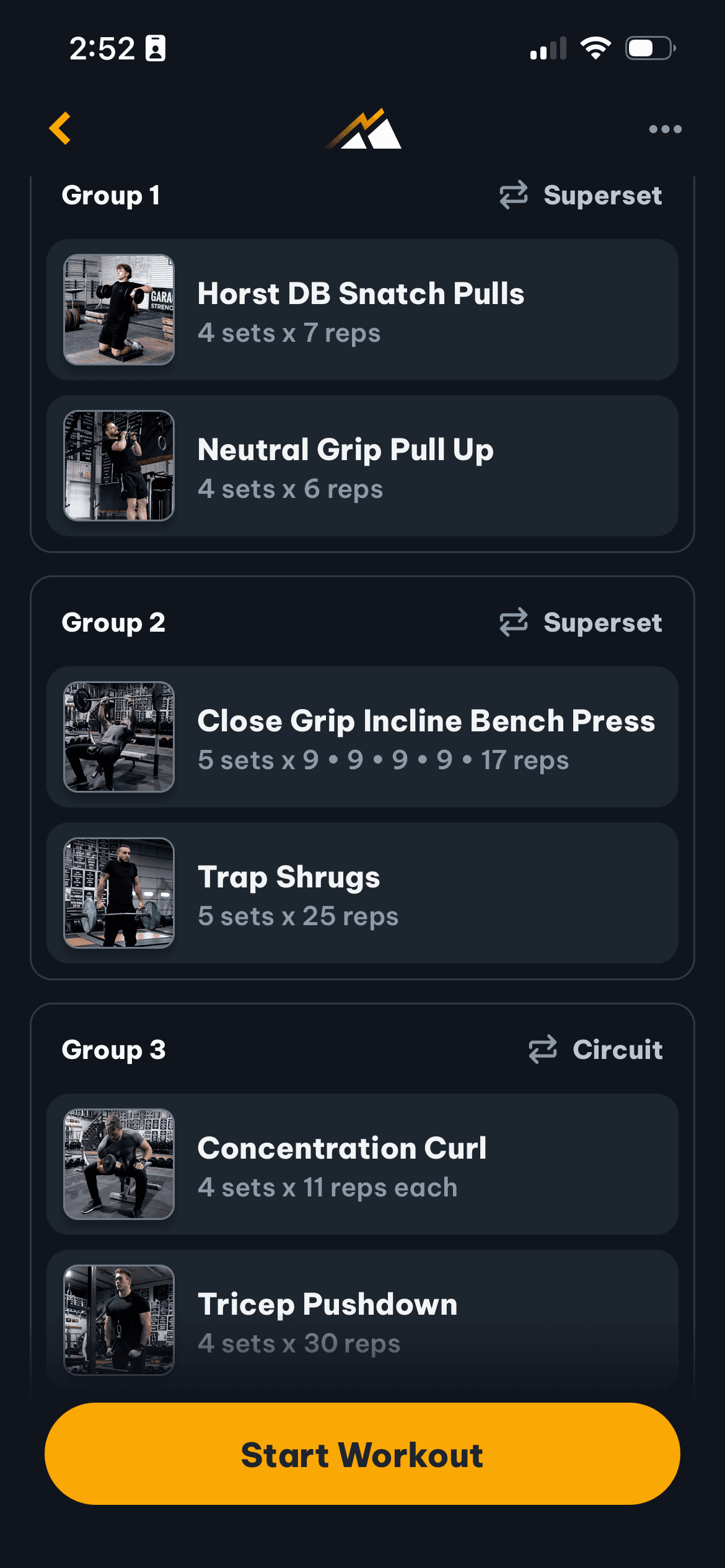
The upper-body day rounds out the PHUL split by adding targeted upper-body volume to the full-body power and hypertrophy sessions. This combination creates a balanced approach to developing strength, muscle size, and overall muscular development.
Lower Body Hypertrophy Workout
The lower-body hypertrophy day brings the PHUL training week to a close with a focus on building muscle through volume and controlled movement. Instead of chasing maximum weights, the goal is to challenge the legs with enough quality work to stimulate growth while maintaining good technique throughout the session.
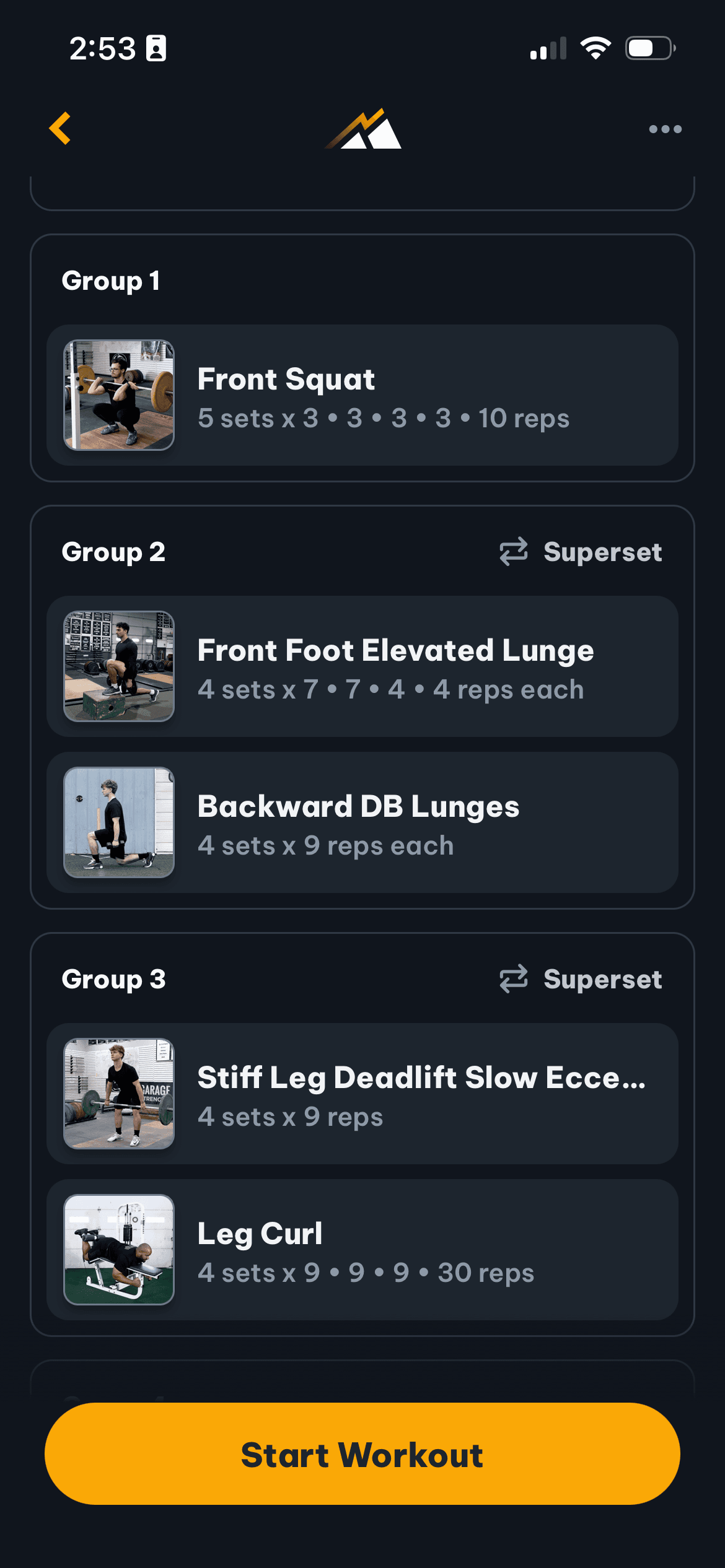
The combination of compound lifts, unilateral exercises, and targeted hamstring work creates a well-rounded hypertrophy session. Each exercise serves a specific purpose, allowing you to train the major lower-body muscles without simply adding more exercises for the sake of volume.
This approach gives the lower body a strong growth stimulus while complementing the heavier full-body power training earlier in the week. The result is a balanced PHUL structure that develops both strength and muscle size.
Benefits of Following a PHUL Workout Program
Build strength and muscle together: Many programs focus heavily on either strength or hypertrophy. PHUL combines both, allowing you to increase your numbers in the gym while building an impressive physique.
Improved athletic performance: The combination of heavy lifting and explosive movements helps athletes develop the qualities needed for sports performance.
Prioritizes recovery: Training four days per week gives you plenty of time to recover while still providing enough stimulus to make consistent progress.
Supports various training goals: A PHUL training split can help athletes, powerlifters, general populations. Depending on the exercise selection and other lifestyle habits, a PHUL split is easy to adjust based on your specific training goals.
Is PHUL Good for Beginners?
PHUL can be a great introduction to more advanced training concepts, especially for lifters who have learned proper exercise technique and want more structure.
It introduces important aspects of training like:
Impulse and explosive training
High volume training
Absolute strength
Rest and recovery
However, athletes who want a more personalized plan may benefit from a more advanced training system like Peak Strength.
Peak Strength was designed to help athletes improve through intelligent programming, sport-specific training, and long-term development. Instead of following a generic routine, athletes can access structured workouts designed to help them reach their goals.
Bottom Line
The PHUL workout split is a good introduction to athletic style training. It gives athletes time to prioritize intense training early in the week and develop the muscle throughout the week with hypertrophy training.
However, PHUL is not an end all be all solution for people that want to maximize their athletic goals. PHUL is great for preparing the body for more intense training later on. People that should use PHUL include beginners, people recovering from injury, or people in early phases of training.
For more specialized training, you can find more training plans inside Peak Strength that are dedicated to specific goals and sports.
Ivan Escott
Ivan is a national-level Olympic weightlifter and performance coach at Garage Strength Sports Performance.