10 Deep Core Exercises You've Never Done
by Ivan Escott
Aug 31, 2026
•10 minutes
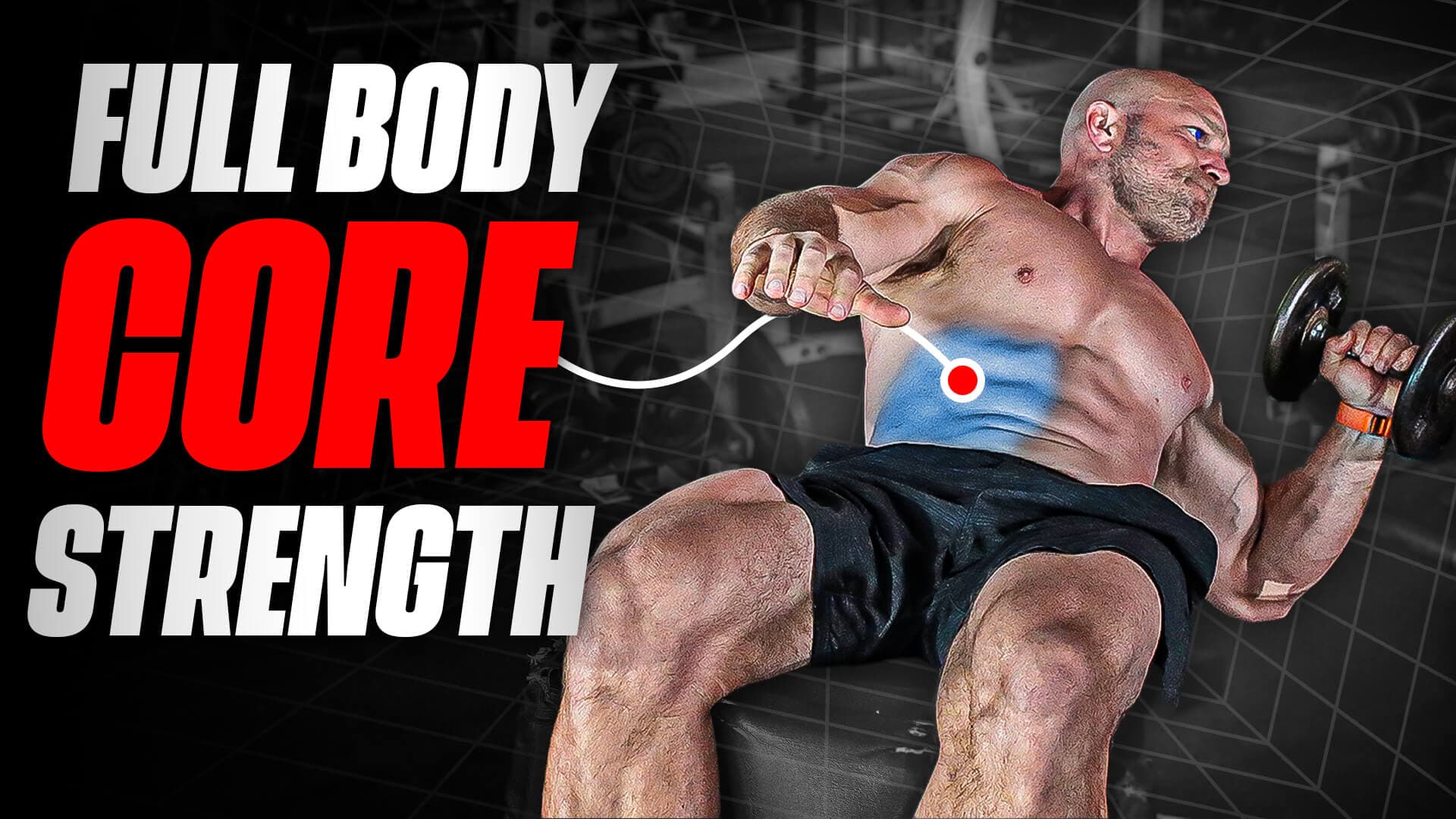
If your core training consists of the same crunches, sit-ups, and planks every week, it may be time to change things up. These exercises certainly have their place, but developing a truly strong core requires more than repeatedly flexing your spine or holding a plank for as long as possible. Athletes need a core that can brace, rotate, resist movement, transfer force, and maintain stability under fatigue.
That is where deeper core training comes in.
Your core acts as the connection between your upper and lower body. Whether you're sprinting, jumping, throwing, changing direction, squatting, deadlifting, or competing in a sport, your ability to create and maintain tension through your trunk can have a major impact on performance.
The following 10 deep core exercises take a more athletic approach to abdominal training. They challenge your trunk through different planes of movement while introducing instability, rotation, anti-extension, and dynamic control.
Why Deep Core Strength Matters
A strong core isn't simply about having visible abs (though it is nice to have those). Your trunk includes the abdominal muscles, obliques, spinal erectors, pelvic musculature, diaphragm, and other muscles that contribute to maintaining stability around your torso. Together, they help you transfer force between your upper and lower body.
Think about a heavy squat. Your legs generate force, but your torso has to maintain position while maintaining a load on your back or front rack. If you can't create sufficient trunk stiffness, energy can be lost and your position can break down.
The same principle applies to athletic movements.

A basketball player changing direction, a football player absorbing contact, a baseball player rotating through a swing, and a weightlifter catching a heavy clean all need the ability to control their trunk.
Core training should be more than just an afterthought. It’s an essential part of sports performance.
.png&w=3840&q=75)
.png&w=3840&q=75)
10 Best Deep Core Exercises
Here are 10 exercises to help you train it differently.
1. Pass the plate
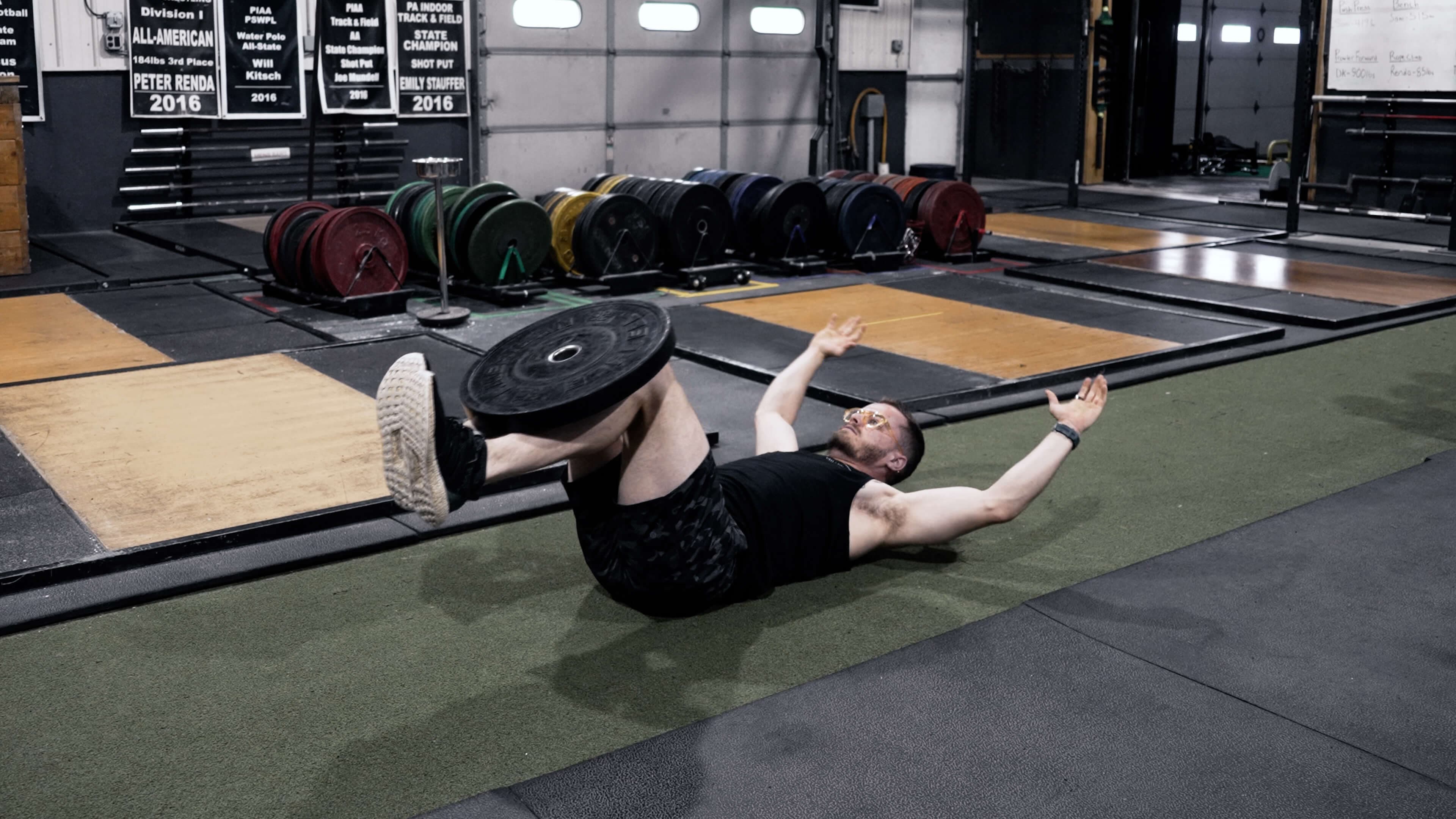
Pass the plate takes full body crunches to a whole new level. Starting off our list is a loaded core movement that works the entire sagittal core.
How to do:
Start by laying flat on your back with your arms extended above your head, holding the plate.
Then do a full body crunch and transfer the plate onto your shins.
Full extend to the starting position while maintaining your legs elevated off the ground.
Crunch again and grab the plate from off your shins and return to the starting position. This is a single pass.
Try: 3 sets of 5–10 reps per set.
Primary focus: Eccentric control, trunk stability, coordination.
Coaching cue: Keep your rib cage pulled down and your lower back controlled against the floor.
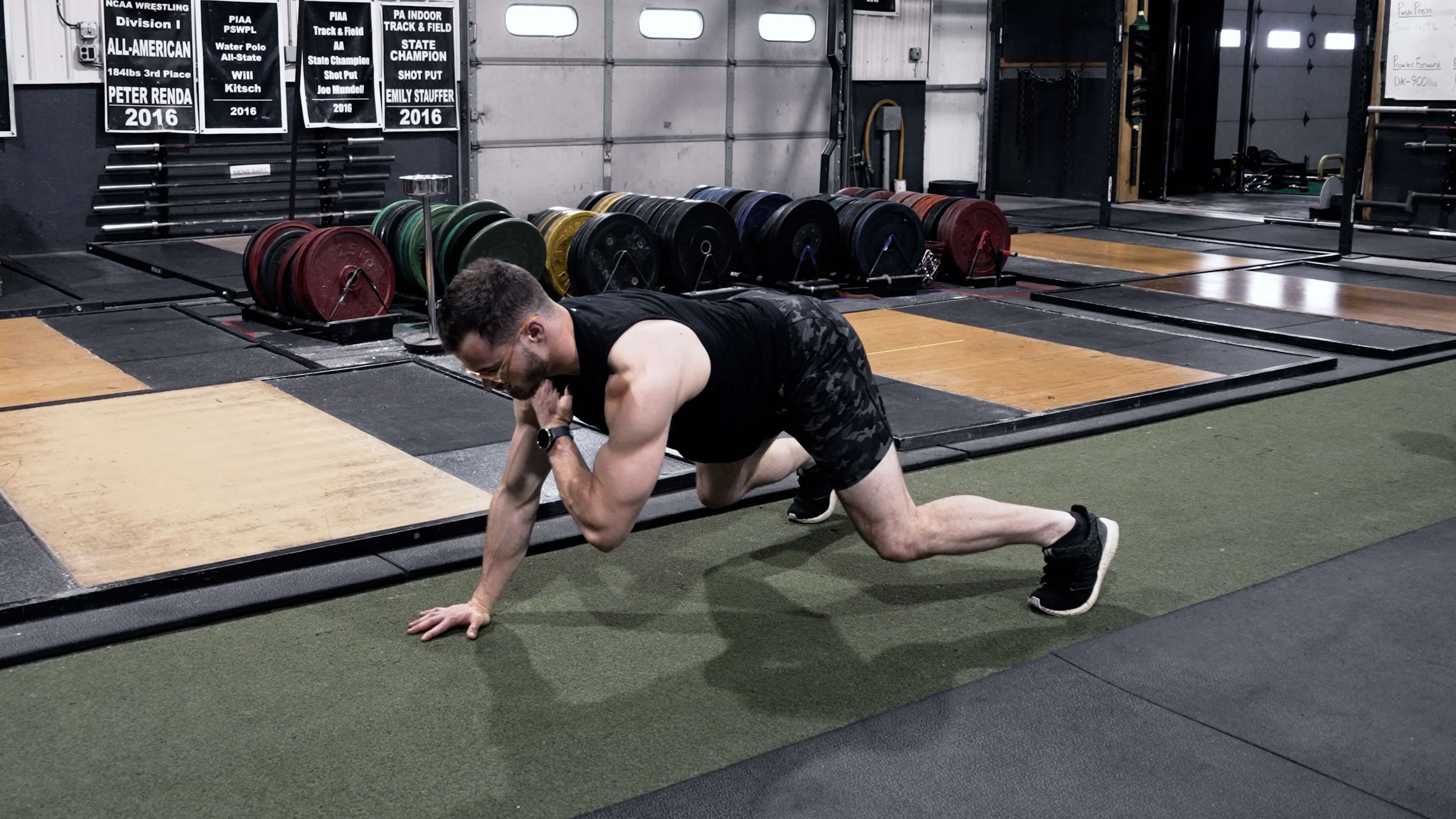
2. Bear Crawl Shoulder Taps
This exercise combines core stability with contralateral movement. Start in a quadruped position and lift your knees slightly off the ground.
How to do:
Keep your back relatively flat and your hips controlled.
From there, slowly lift one hand and tap the opposite shoulder.
Place it back down and repeat on the other side.
The goal isn't to move quickly. The goal is to prevent your hips from rotating or shifting as you take one hand away from the floor.
Once you become proficient, increase the distance of your crawl or perform the movement at a controlled pace.
Try: 3–4 sets of 20–30 seconds.
Primary focus: Anti-rotation, shoulder stability, trunk control.
Coaching cue: Imagine balancing a glass of water on your lower back.
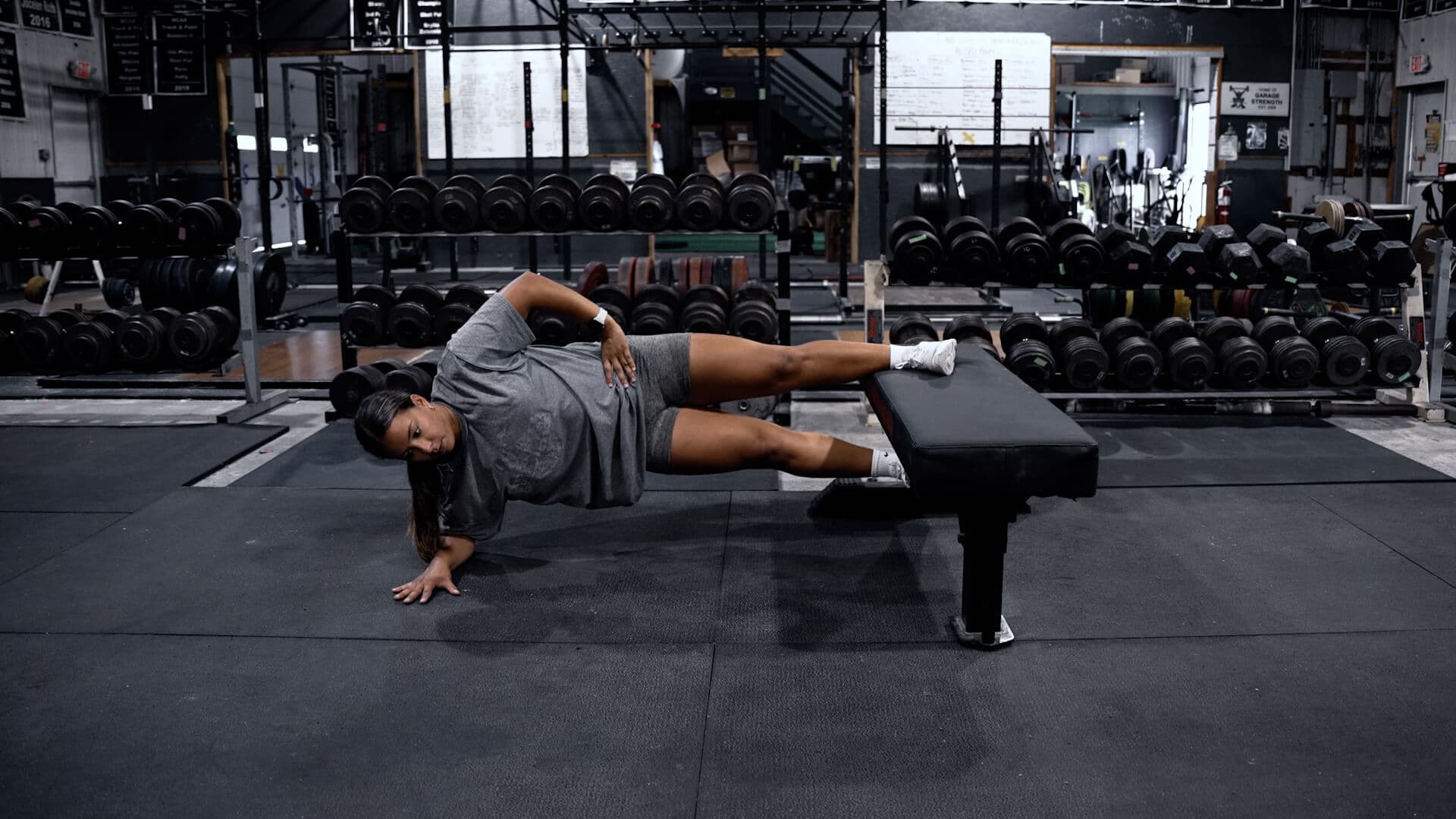
3. Copenhagen Plank With Reach
You've probably done a side plank before. The Copenhagen plank takes the concept and adds a significant challenge for your obliques, adductors, and lateral core.
How to do:
Place your top leg on a bench while supporting yourself with your forearm. Keep your body in a straight line.
Once you're stable, reach your free arm underneath your torso before returning it toward the ceiling.
That small rotation forces your core to control movement instead of simply holding a static position.
Try: 3 sets of 6–10 reaches per side.
Primary focus: Obliques, adductors, anti-rotation, lateral stability.
Coaching cue: Keep your hips elevated throughout the entire set.
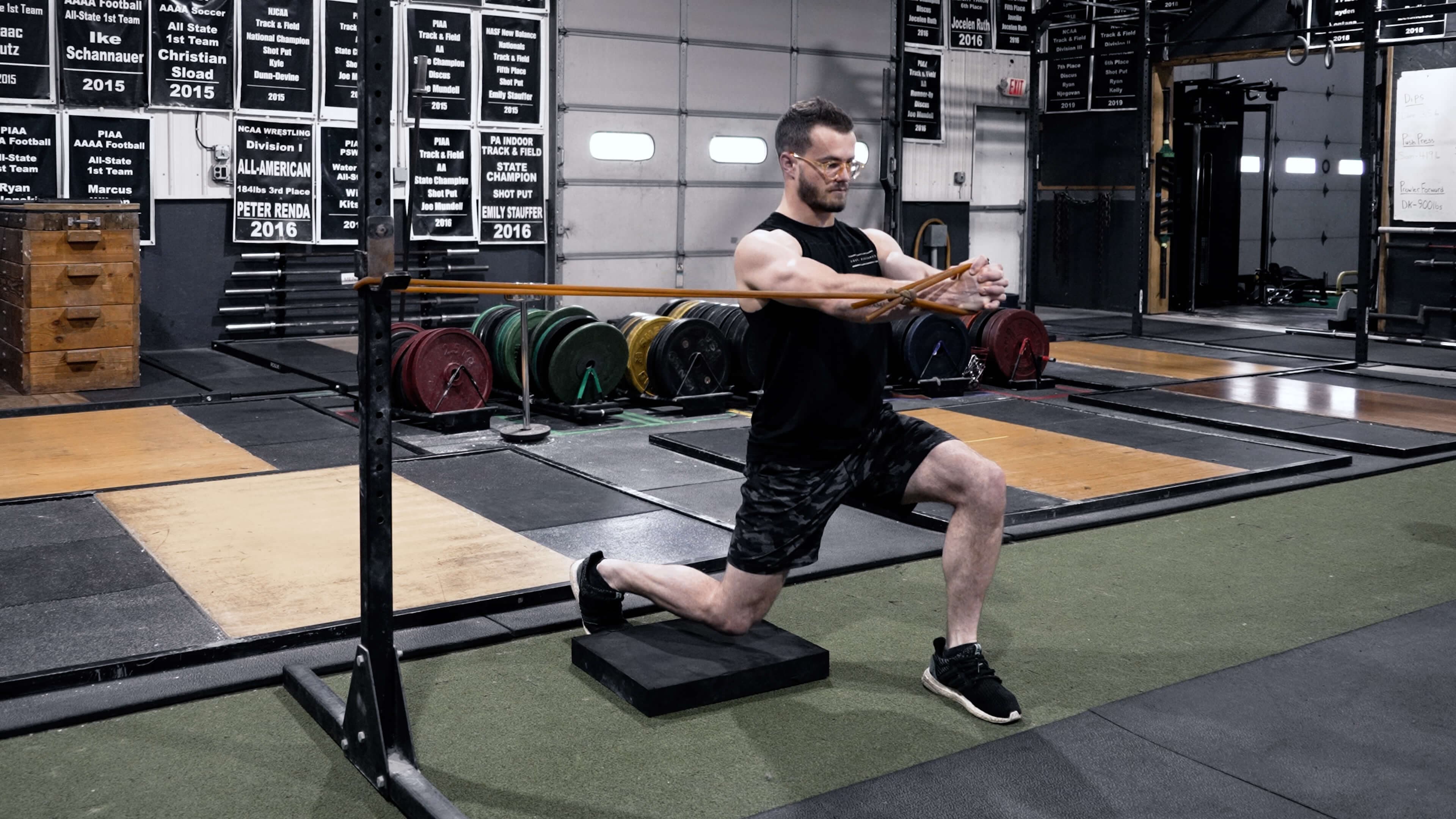
4. Pallof Split Squat
The Pallof press is one of the best ways to teach your core to resist rotation.
How to do:
Attach a resistance band or cable around chest height. Kneel with one knee down and the opposite foot planted.
Hold the handle close to your chest, brace your trunk, and press your hands straight forward.
The resistance will try to rotate your torso toward the anchor point. Your job is to prevent that rotation.
To make it more difficult, pause with your arms extended.
Try: 3 sets of 8–12 reps per side.
Primary focus: Anti-rotation and trunk stability.
Coaching cue: Your arms should move while your torso stays quiet.
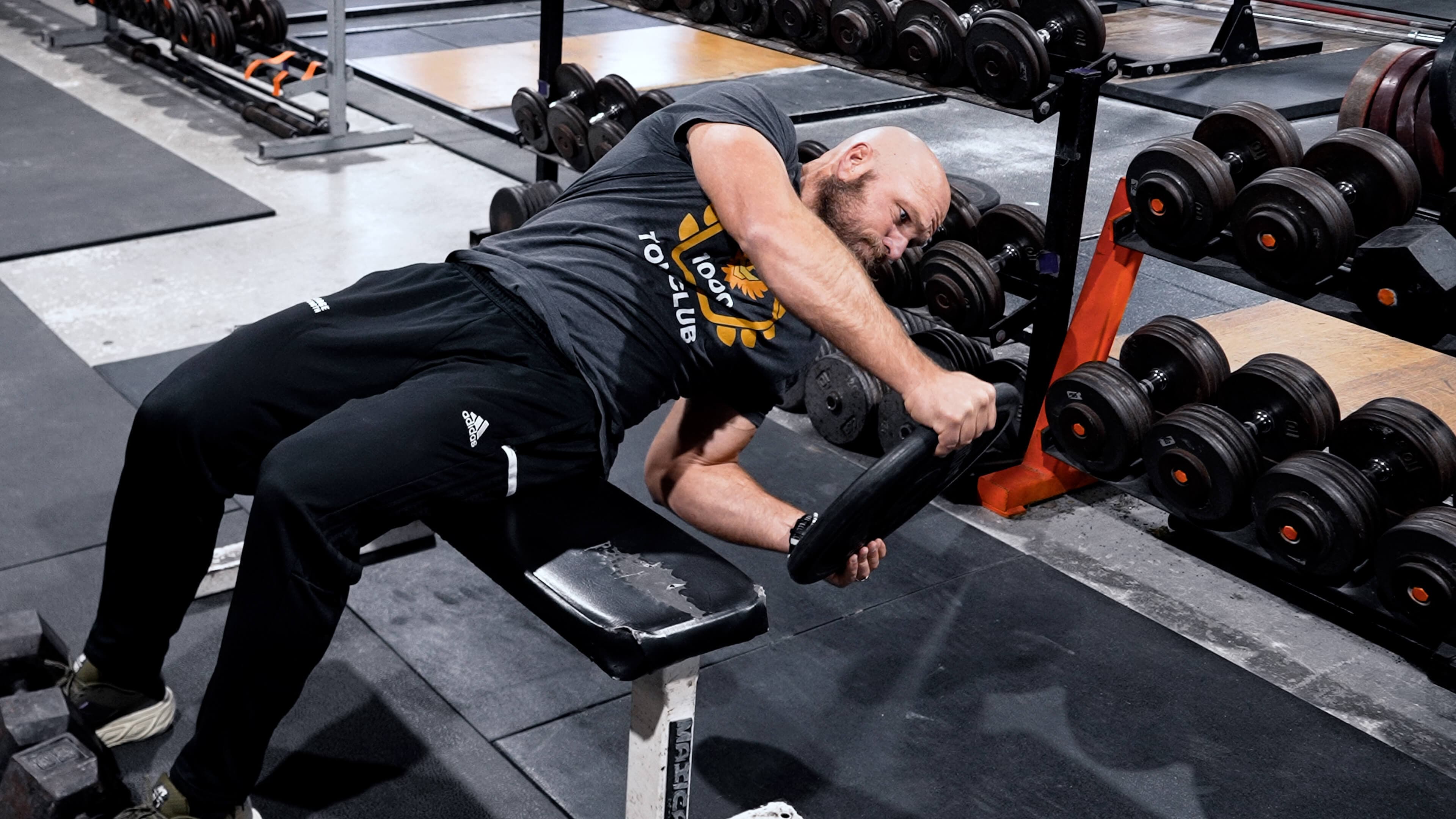
5. Stahl Twists
This exercise looks deceptively simple.
How to do:
Sit on a bench with your feet being held in place by dumbbells on the ground.
Hold a plate straight out then lean back so that your back is off the bench.
Rotate your entire torso from side to side, keeping the plate away from your body with straight arms.
Be sure to keep your core activated when changing direction, and do not rotate past 90 degrees to either side."
Use a relatively light load and prioritize control.
Try: 3 sets of 5–8 circles in each direction.
Primary focus: Anti-extension, rotational strength, shoulder stability.
Coaching cue: Keep the core tight like you’re doing a crunch.
6. Side Band Twitches in Split
This next exercise prioritizes dynamic trunk control and helps with explosive exercises.
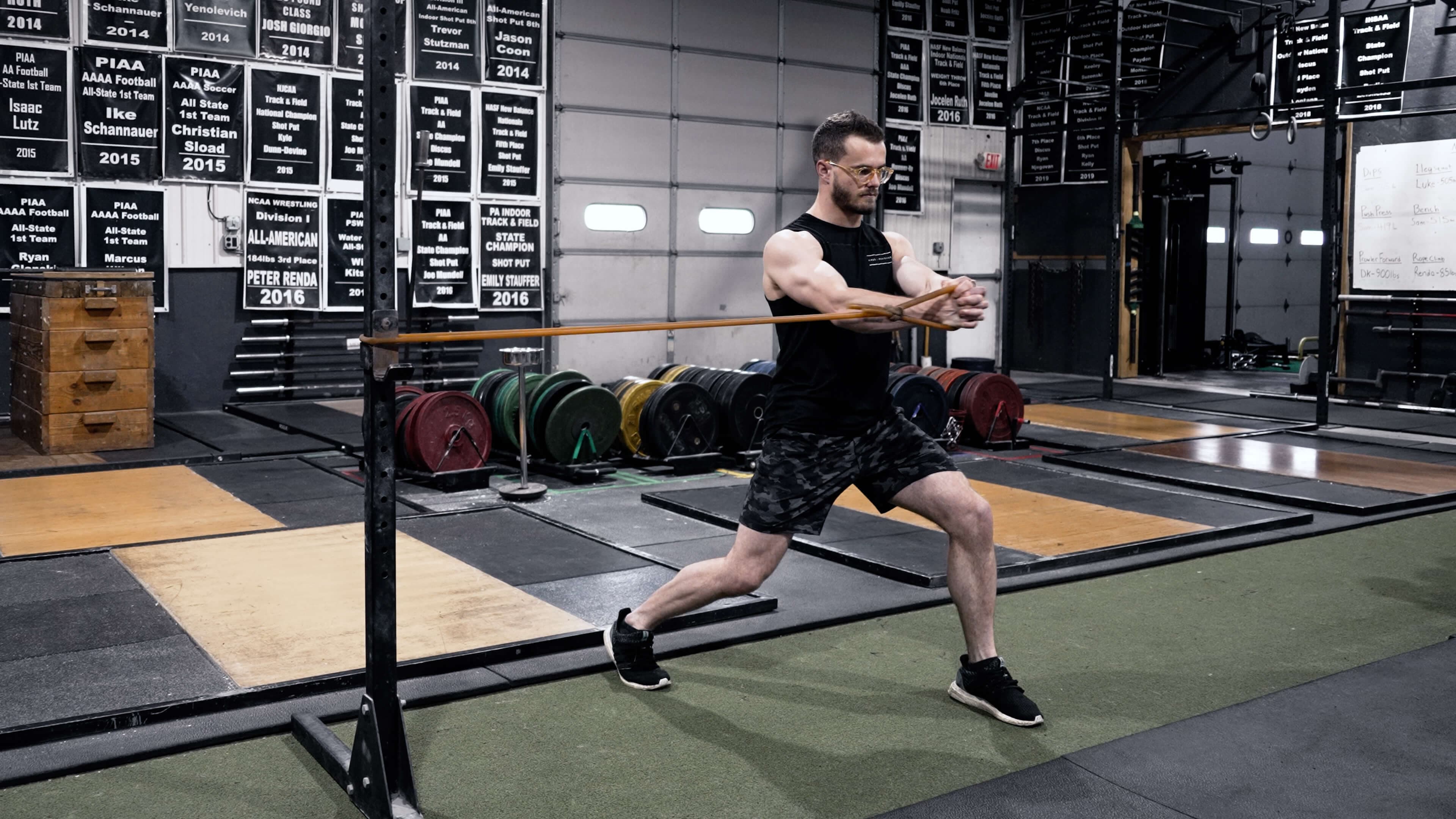
How to do:
Assume a split squat position, with feet at shoulder width side to side and taking a small step forward with one foot and back with the other. The back knee should be directly under the hip and the back heel elevated.
Hold the band with bend elbows at the center of your torso with the band attached on the side of your front foot.
Rapidly twist your torso outward in a very small range of motion, keeping a tight core and hips in place.
To increase the difficulty, step further away from the attachment point or use a heavier band."
Try: 3 sets of 6-10 reps each way
Primary focus: Dynamic trunk control and shoulder stability
Coaching cue: Keep your hips from dropping or rotating.
7. Body Saw
This may be the hardest core exercise on this list. The body saw takes the plank and makes it 10X harder.
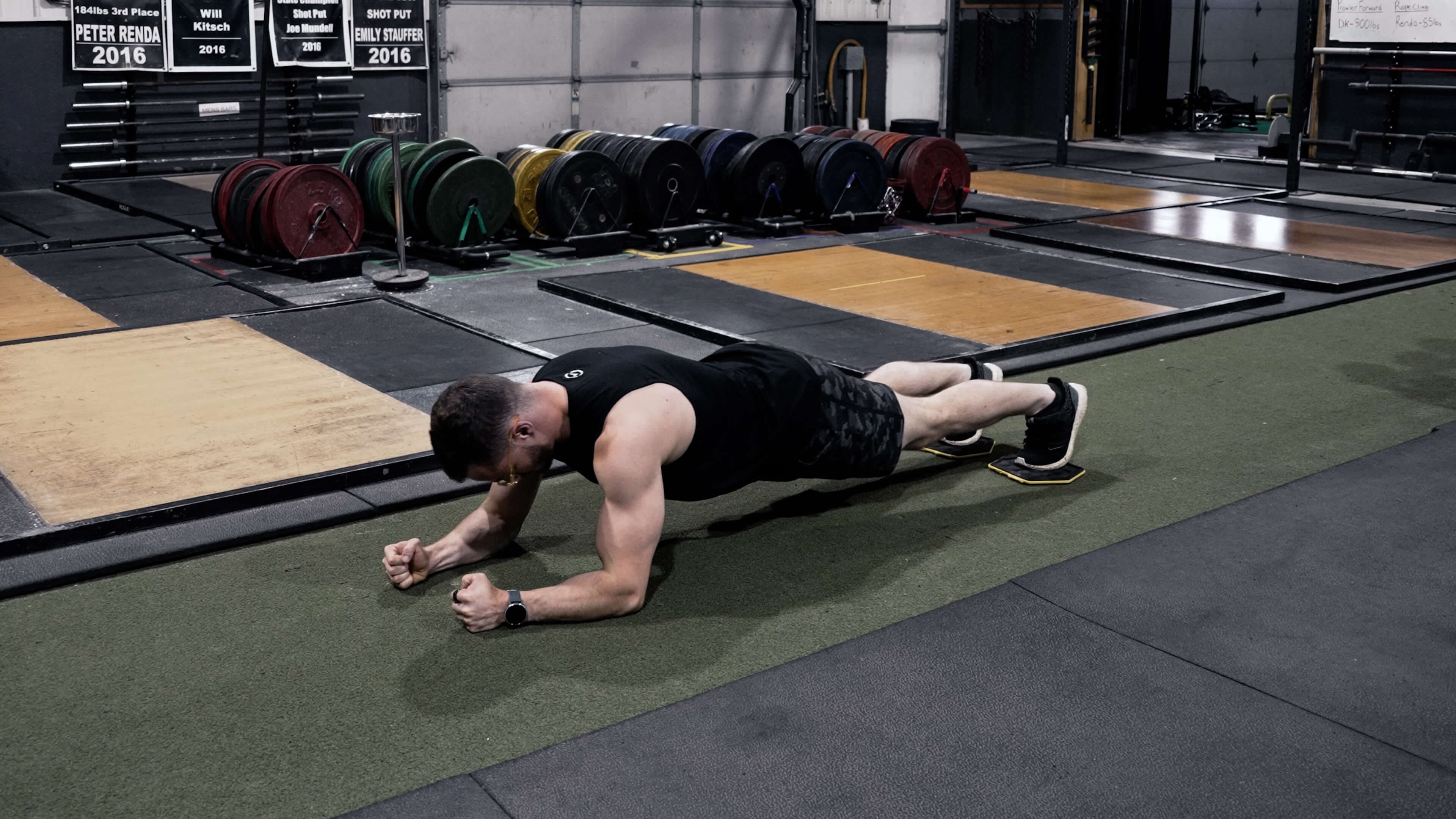
How to do:
Place your elbows on the ground directly under your shoulders with legs out straight behind you and the ball of your toes on floor sliders (can also use a towel).
Maintain a stiff core, maintaining a straight line from your shoulders, through the hips to the toes. Do not let your hips sink or pike upwards.
Using your shoulders, pull your body forward, sliding forward on the sliders, and then push back, oscillating back and forth."
Try: 3 sets of 6-10 reps per side.
Primary focus: muscular endurance and shoulder stability
Coaching cue: squeeze your lat to help brace your core
8. Chinese Side Bends
Chinese side bends seem like just an upper body exercise, but your obliques will be crying the next day.
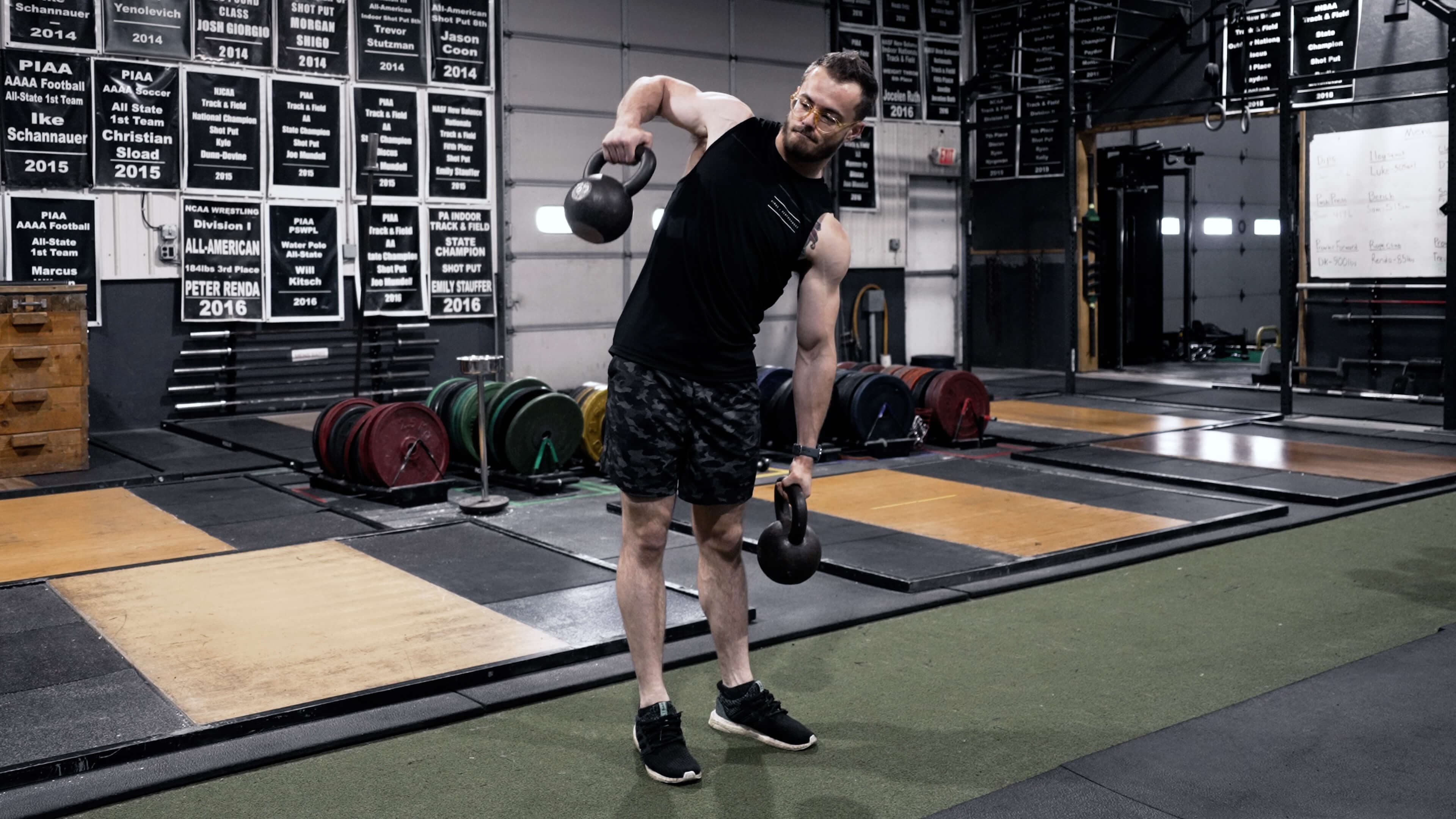
How to do:
Holding a kettlebell or dumbbell in each hand, reach one kettlebell down while simultaneously lifting the other up, alternating in a rapid motion.
Maintain a stiff core and do not sway your hips from side to side.
Try: 3–4 sets of 7-9 reps each side
Primary focus: Obliques and traps
Coaching cue: Don’t just bend, side to side, actively pull the implement up with your obliques and traps.
9. V Up Isometric Press
How can you make a v up harder? Add weight and try to stay still.
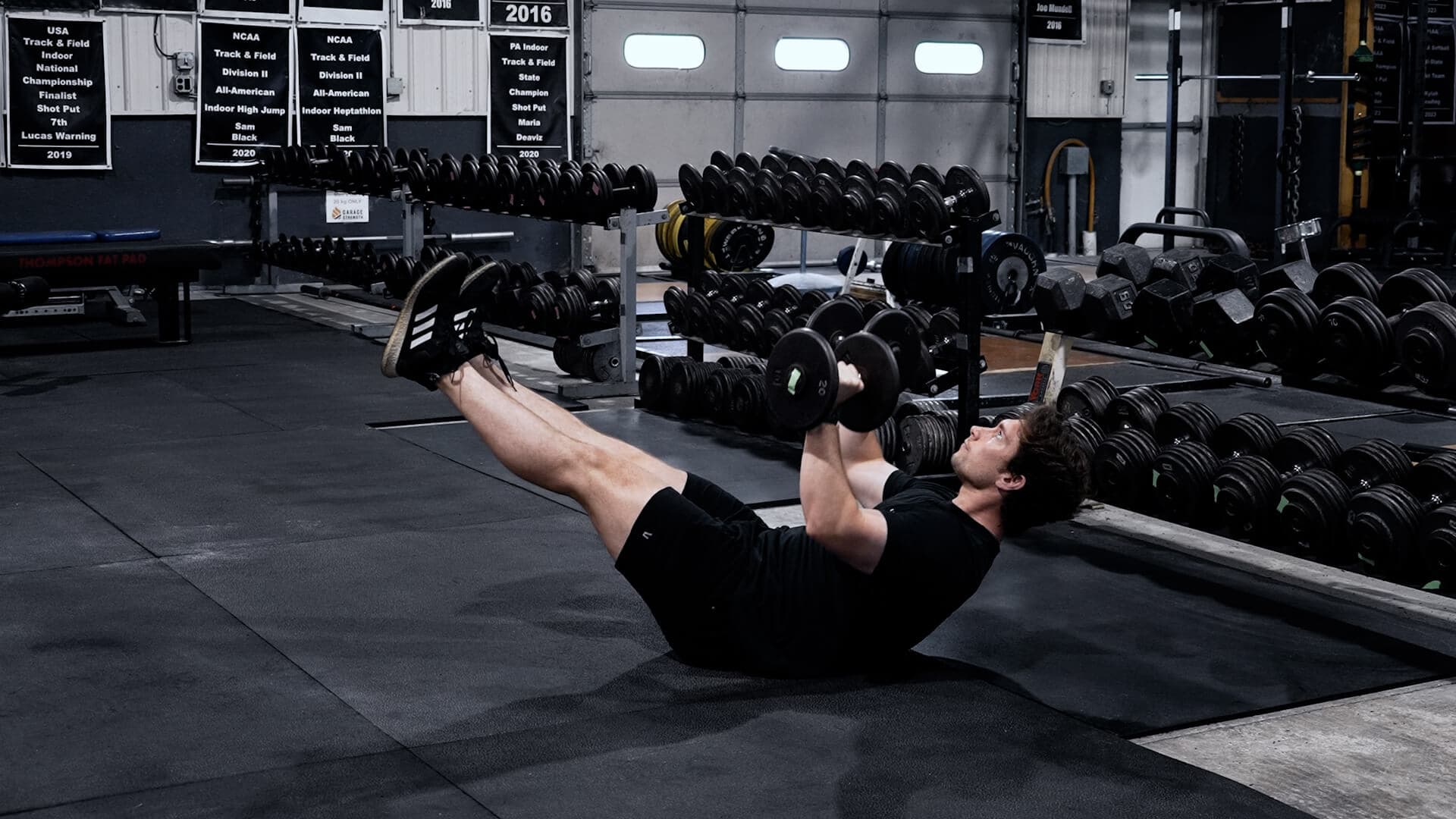
How to do:
Lay flat on your back with light dumbbells in your hands.
Crunch up half way into a v up position. Similar to a hollow body rock. Yous back and shoulders should be off the ground.
Press the dumbbells while holding the v up position until the set is completed.
Try: 3 sets of 8–10 reps
Primary focus: Truck stiffness, balance, and coordination.
Coaching cue: keep your shoulders and upper back off the ground
10. Banded Hollow Body Rocks
If you want a serious challenge for your deep core, finish with banded hollow body rocks.
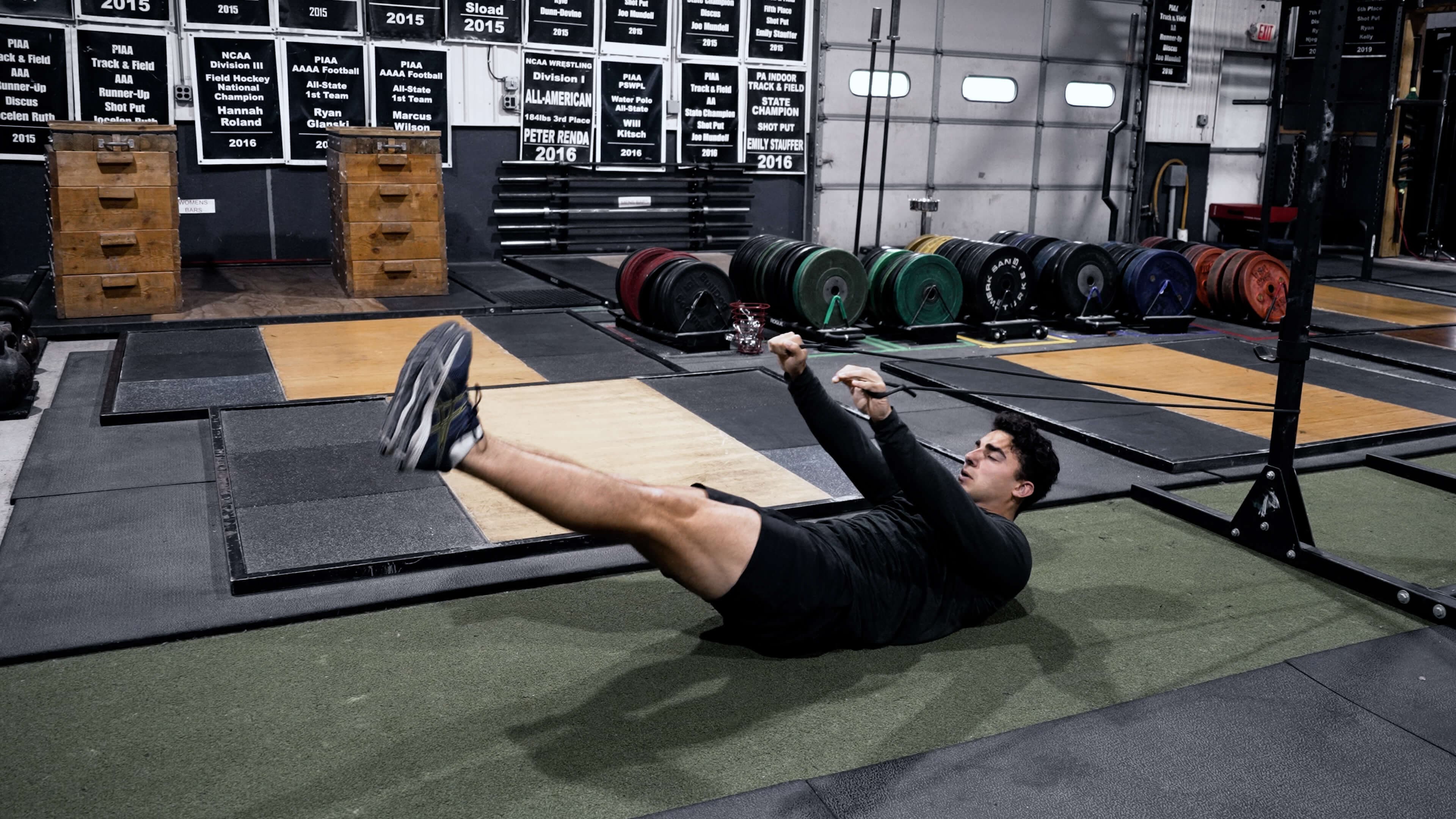
How to do:
Start lying on your back in a hollow-body position. Anchor a resistance band behind your head and hold the band with your arms extended overhead.
Maintain the hollow position as you gently rock forward and backward.
The resistance of the band changes throughout the movement, forcing your abs to continuously adjust.
This isn't about rocking as violently or quickly as possible. The goal is maintaining your body position while controlling the movement.
Try: 3–5 sets of 20–30 seconds.
Primary focus: Anti-extension, abdominal endurance, dynamic trunk control.
Coaching cue: Keep your ribs down and maintain tension throughout the entire set.
How to Program Deep Core Exercises
You don't need to perform all 10 exercises in a single workout as that can overexhaust the core.
Instead, select 1-2 movements that complement the rest of your training.
For example, here is a core finisher directly from inside Peak Strength
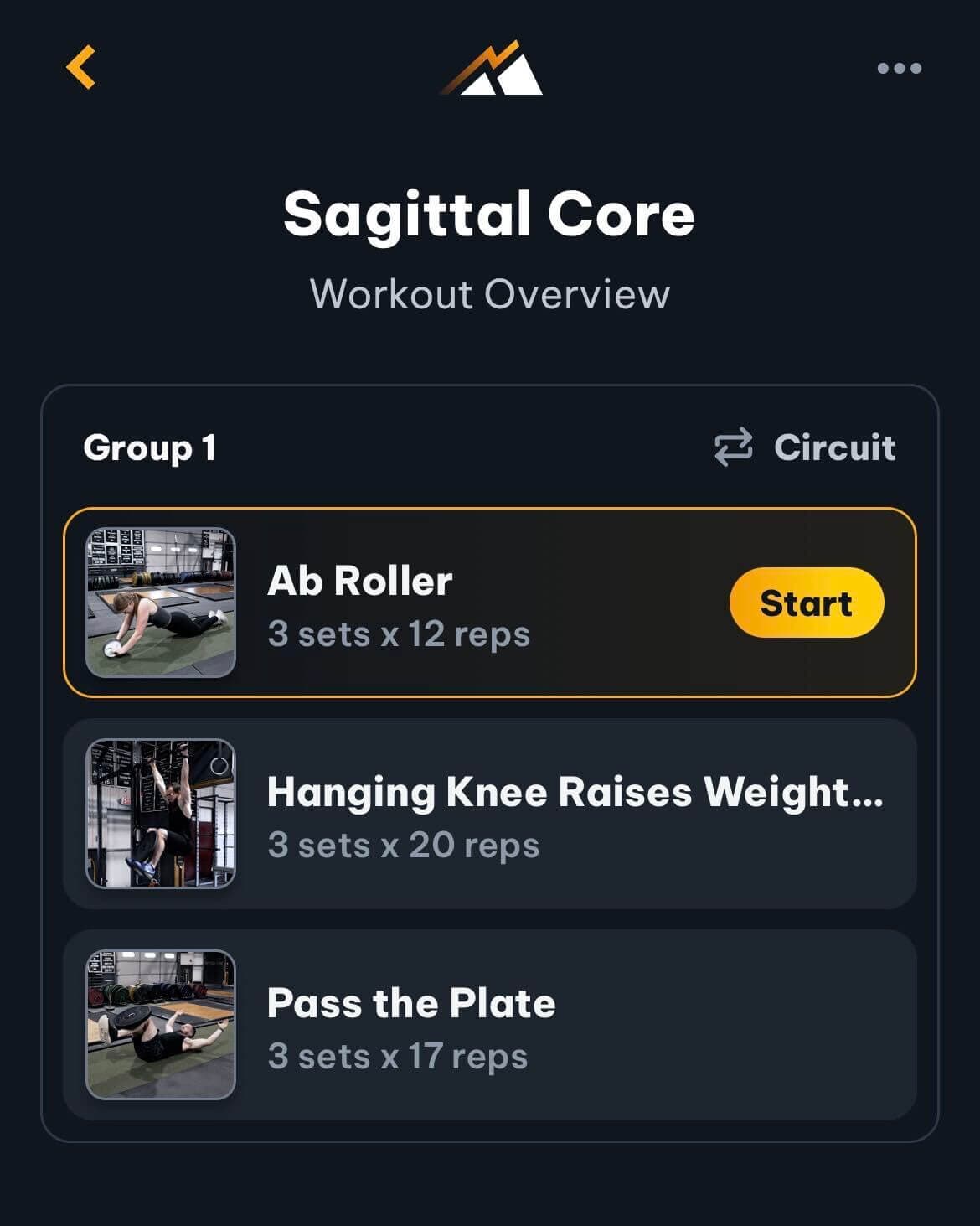
The key is to treat core training like any other part of your program. You can progressively increase repetitions, resistance, duration, range of motion, or movement complexity instead of simply performing hundreds of repetitions.
Train Your Core Like an Athlete
The best core workout isn't necessarily the one that leaves your abs the most sore. A strong core should allow you to produce force and control force.
That means training more than spinal flexion. Incorporate anti-extension, anti-rotation, lateral stability, controlled rotation, and dynamic movements into your training.
For athletes, this approach can make core training more relevant to the demands of sport. For strength athletes, it can help develop the trunk control necessary to maintain position under heavy loads.
And for coaches, programming these movements strategically can help make core training a meaningful part of an athlete's overall development rather than an afterthought at the end of practice.
Final Takeaway
Your core is more than a six-pack.
It's the system that helps connect your upper and lower body, stabilize your spine, transfer force, and control movement. By incorporating less conventional exercises like bear crawl shoulder taps, Stahl twists, body saws, and banded hollow-body rocks, you can challenge your core in ways that traditional crunches can't.
Finding individual exercises is easy. Building them into an intelligent training program is the harder part.
The Peak Strength App is built to help coaches and athletes organize training, follow structured programming, and develop strength and performance over time.
Stop training your abs only for the burn. Start training your core for performance.
Ivan Escott
Ivan is a national-level Olympic weightlifter and performance coach at Garage Strength Sports Performance.