10 Explosive Exercises Every Athlete Should Do
by Ivan Escott
Jun 4, 2026
•15 minutes
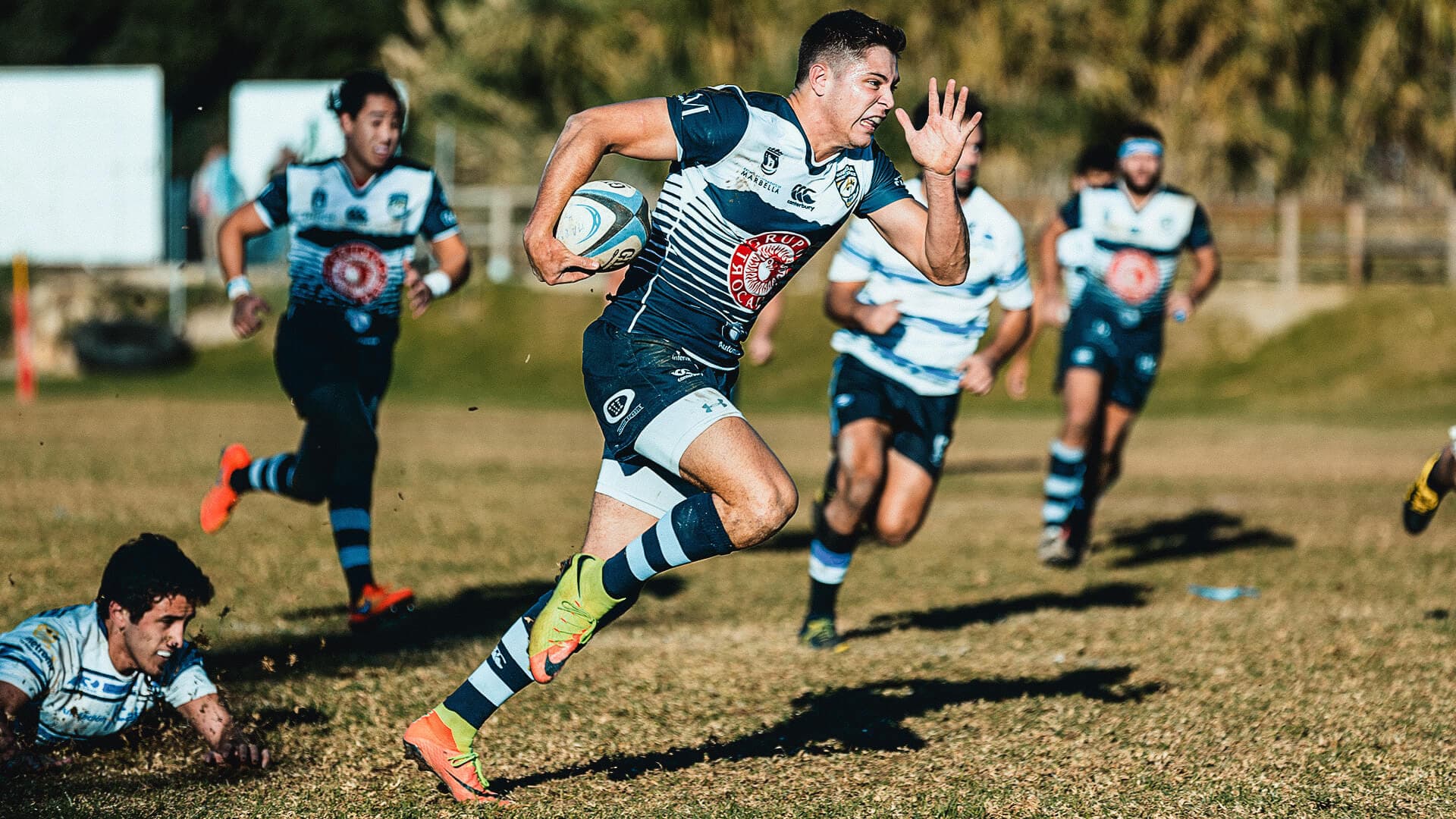
If your goal is to build real athleticism, you need to train explosiveness. Sure, you can do the basics like the squat, bench and deadlift, but the ability to generate force quickly is what separates average lifters from high-performing athletes.
Whether you’re sprinting, jumping, cutting, or lifting, explosive power is the foundation. This can be applied to any sport in some way shape or form.
An explosive exercise is considered a movement that requires more than just absolute strength. It requires strength, speed, stability, and oftentimes coordination.
That’s why in this article, our team at Peak Strength is listing 10 explosive exercises every athlete should do with instructions, difficulty level, and when they should be used in training.
Defining Explosiveness and Impulse
Explosiveness, defined by Garage Strength, is the ability to produce high levels of force in a very short amount of time. It is not just about how strong an athlete is, but how quickly that strength can be expressed.
This is closely tied to the concept of impulse, which is the total force applied over a given period of time. In practical terms, impulse represents how effectively an athlete can “push into the ground” or an implement to create movement, whether that’s in a clean, jump, sprint, or throw.
.jpg&w=3840&q=75)
From a force-time perspective, explosive athletes aim to maximize the area under the curve by producing large force quickly and sustaining it long enough to meaningfully accelerate their body or a load.
Improving explosiveness is about improving both rate of force development (RFD) and positional strength so athletes can access force in key joint angles. Movements like jumps, Olympic lifts, and plyometrics are used because athletes should train to apply force rapidly, improving impulse and ultimately translating strength into sport performance.
10 Explosive Exercises for Athletes
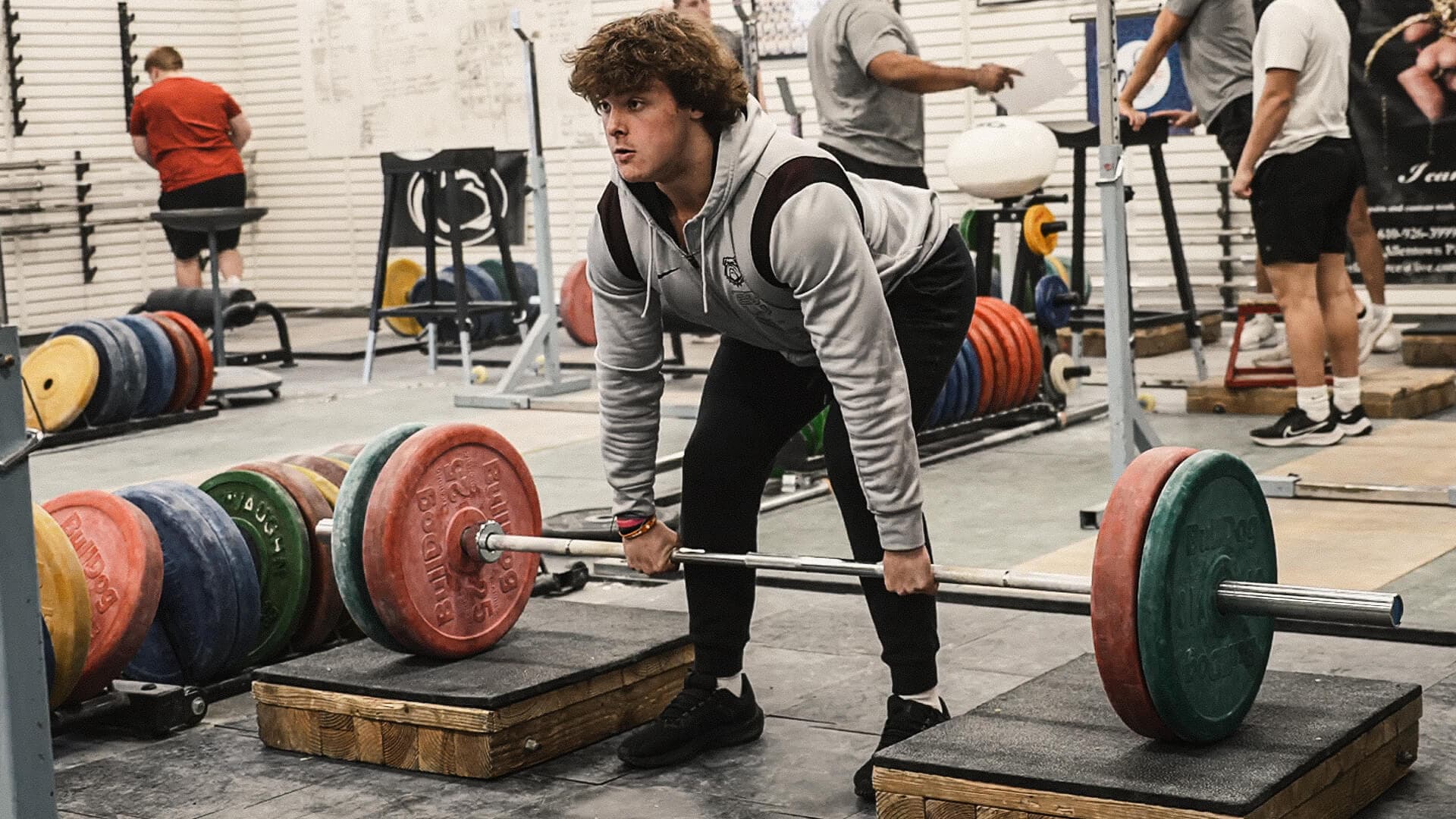
1. Power Clean
The power clean is an explosive Olympic lifting variation used to develop total-body power, speed, and athleticism. The movement requires an athlete to lift a barbell from the floor and rapidly catch it in a front rack position through aggressive hip extension and force production. It is widely used in strength and conditioning programs because it improves explosiveness, sprint acceleration, jumping ability, and overall power output.
-1.jpg&w=3840&q=75)
Technique Instructions:
1. Start with the barbell on the floor, feet shoulder-width apart, chest tall, and core braced.
2. Drive through the floor while keeping the bar close to the body during the initial pull.
3. Explosively extend the hips, knees, and ankles to generate maximum upward force.
4. Shrug the shoulders and quickly pull the elbows underneath the bar.
5. Catch the bar in the front rack position with the elbows high and knees slightly bent.
6. Stand tall to complete the repetition while maintaining control and posture.
Difficulty: Intermediate
When to use: Power cleans are best programmed during lower body days and explosive training days. They are commonly used by football players, wrestlers, sprinters, and jumping athletes to improve rate of force development and total-body explosiveness. They can be used in any phase of training to improve or maintain explosiveness.
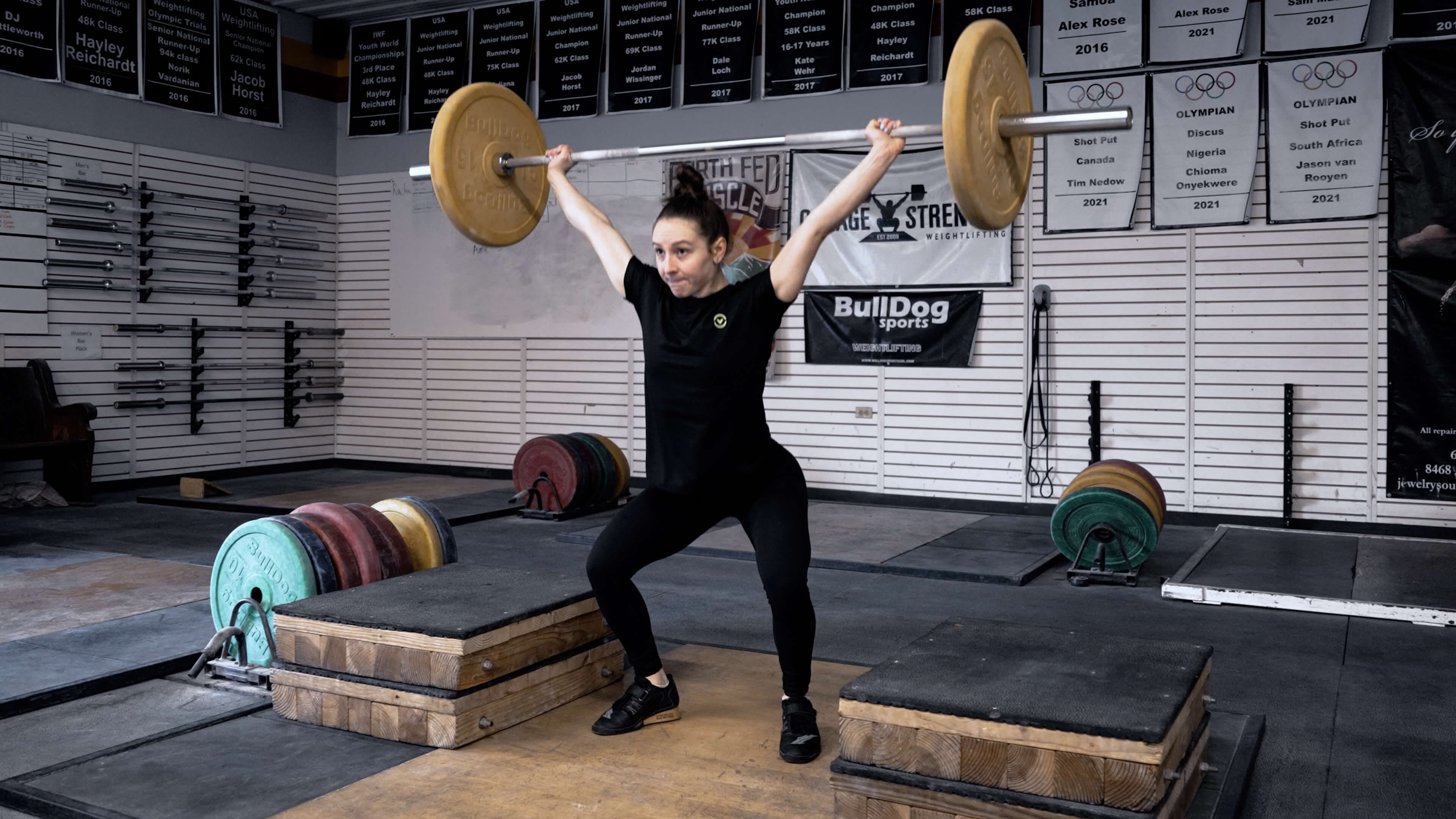
2. Power Snatch
The power snatch is another explosive Olympic lifting movement designed to improve speed, coordination, and total-body power. Unlike the power clean, the barbell is caught overhead rather than on the shoulders, requiring greater mobility, stability, and technical precision. The exercise trains rapid force production through the hips and lower body while also demanding strong overhead control. Power snatches are commonly used in athletic performance programs to improve vertical explosiveness, sprint mechanics, and overall power development.
Technique Instructions:
1. Begin with the barbell on the floor using a wide snatch grip and an athletic starting position.
2. Keep the chest tall and core braced as you drive through the floor during the first pull.
3. Explosively extend the hips, knees, and ankles while keeping the bar close to the body.
4. Shrug the shoulders and rapidly pull yourself underneath the bar.
5. Catch the bar overhead with locked elbows and knees slightly bent in a stable receiving position.
6. Stand tall while maintaining overhead control to complete the repetition.
Difficulty Rating: Advanced
When to use: Power snatches are effective for long-limbed athletes and should be used on upper body strength or impulse days. They are commonly used by track athletes, football players, wrestlers, and Olympic weightlifters to improve rate of force development and full-body coordination.
3. Full Clean
The full clean, also known as the squat clean, is an Olympic weightlifting movement used to develop explosive power, strength, and coordination. Unlike the power clean, the athlete catches the barbell in a full front squat position before standing up to complete the lift. The movement emphasizes rapid force production through the hips and legs while also requiring mobility, balance, and front squat strength. Full cleans are widely used in Olympic weightlifting and athletic performance training to improve total-body explosiveness and force absorption.
Technique Instructions:
1. Start with the barbell on the floor, feet shoulder-width apart, chest tall, and core braced.
2. Push through the floor while keeping the bar close to the body during the first pull.
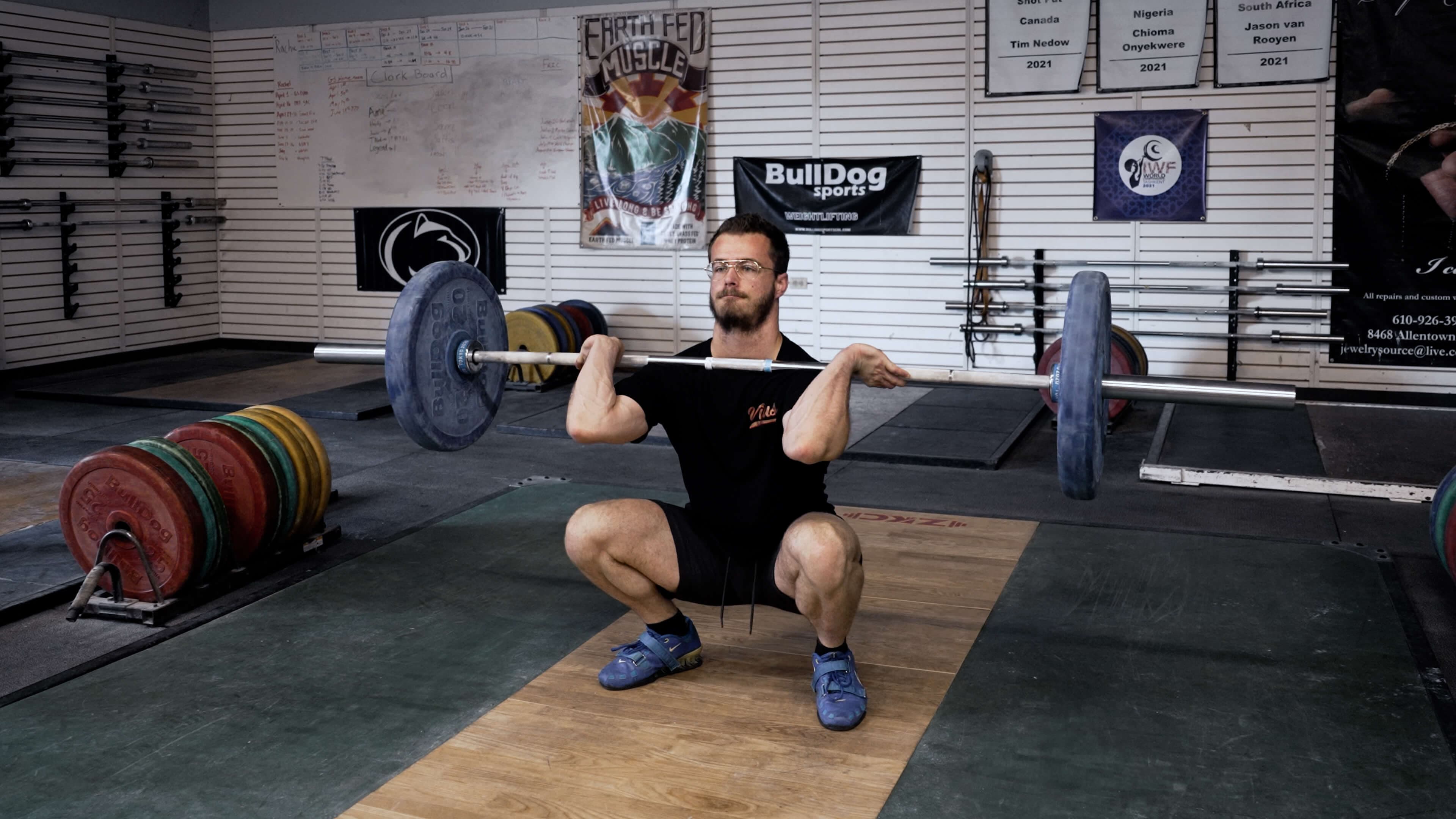
3. Explosively extend the hips, knees, and ankles to create maximum upward force on the barbell.
4. Quickly rotate the elbows underneath the bar while pulling yourself down into a front squat.
5. Catch the bar on the shoulders with the elbows high and hips below parallel.
6. Drive through the legs to stand tall and complete the repetition.
Difficulty Rating: Advanced
When to use: Full cleans are best used on lower body strength days and phases of training where strength is being prioritized. They are commonly programmed for Olympic weightlifters and athletes in sports that require rapid force production, such as football, wrestling, and track and field.
4. Push Press
The push press is an explosive upper-body pressing movement that uses lower-body drive to help move a barbell overhead. By incorporating leg power through a quick dip and drive, the exercise allows athletes to produce more force and move heavier loads than a strict overhead press. The push press develops shoulder strength, upper-body power, coordination, and total-body force transfer, making it a valuable movement for athletes who need explosive pressing ability in sport performance.
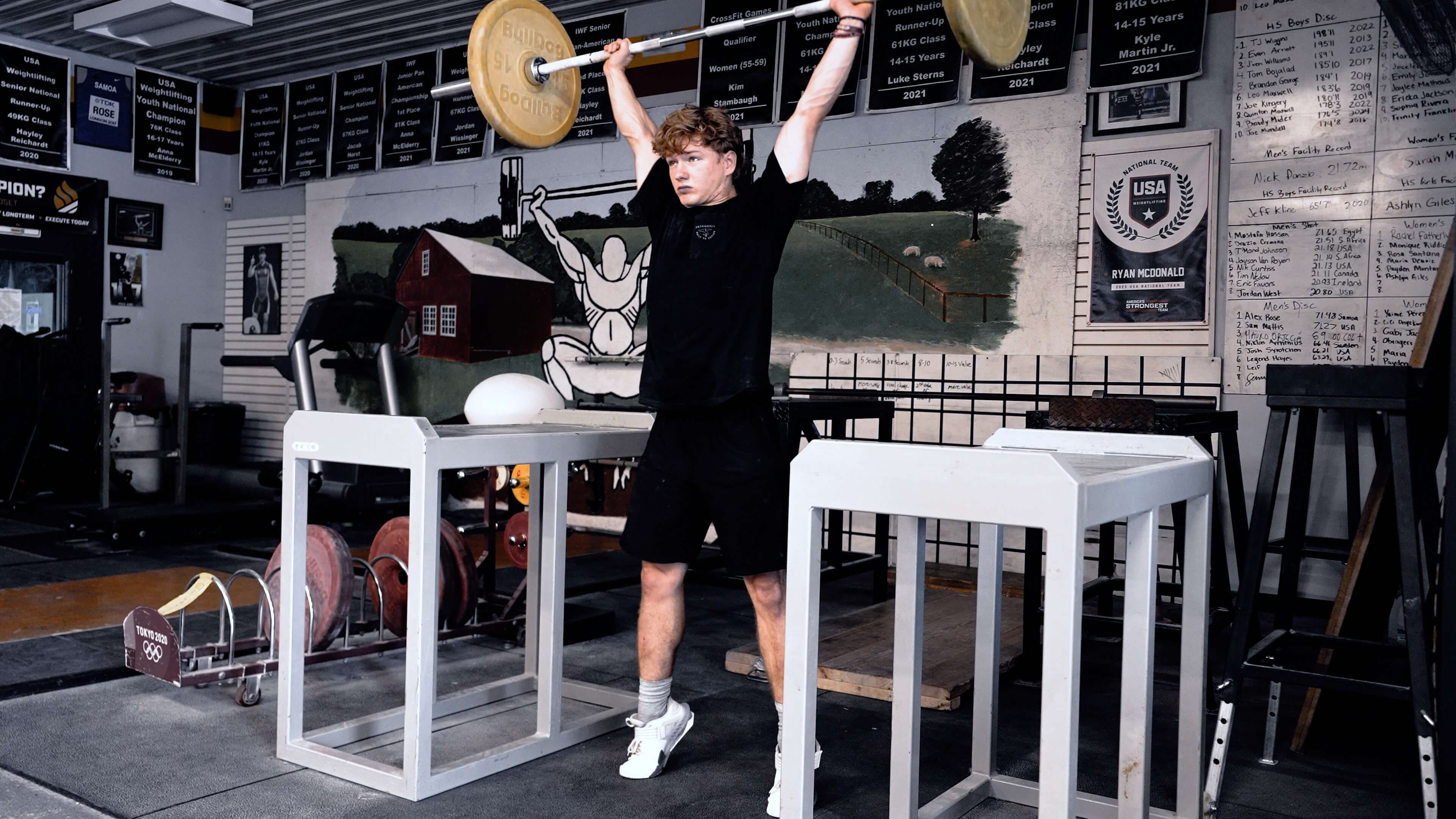
Technique Instructions:
1. Start with the barbell in the front rack position, hands just outside shoulder width, and feet hip-width apart.
2. Brace the core and perform a shallow, controlled dip by bending the knees slightly while keeping the torso upright.
3. Explosively drive through the legs to transfer force upward into the barbell.
4. Press the bar overhead as the hips and knees extend fully.
5. Lock the elbows overhead with the head slightly through the arms for a stable finish.
6. Lower the bar back to the front rack position under control before repeating.
Difficulty Rating: Intermediate
When to use: Push presses are best used on upper body strength days. They are commonly programmed for football players, throwers, combat athletes, and Olympic weightlifters to improve overhead power, shoulder strength, and total-body coordination. Coaches should place push presses early in workouts when athletes are fresh to maximize speed and power output.
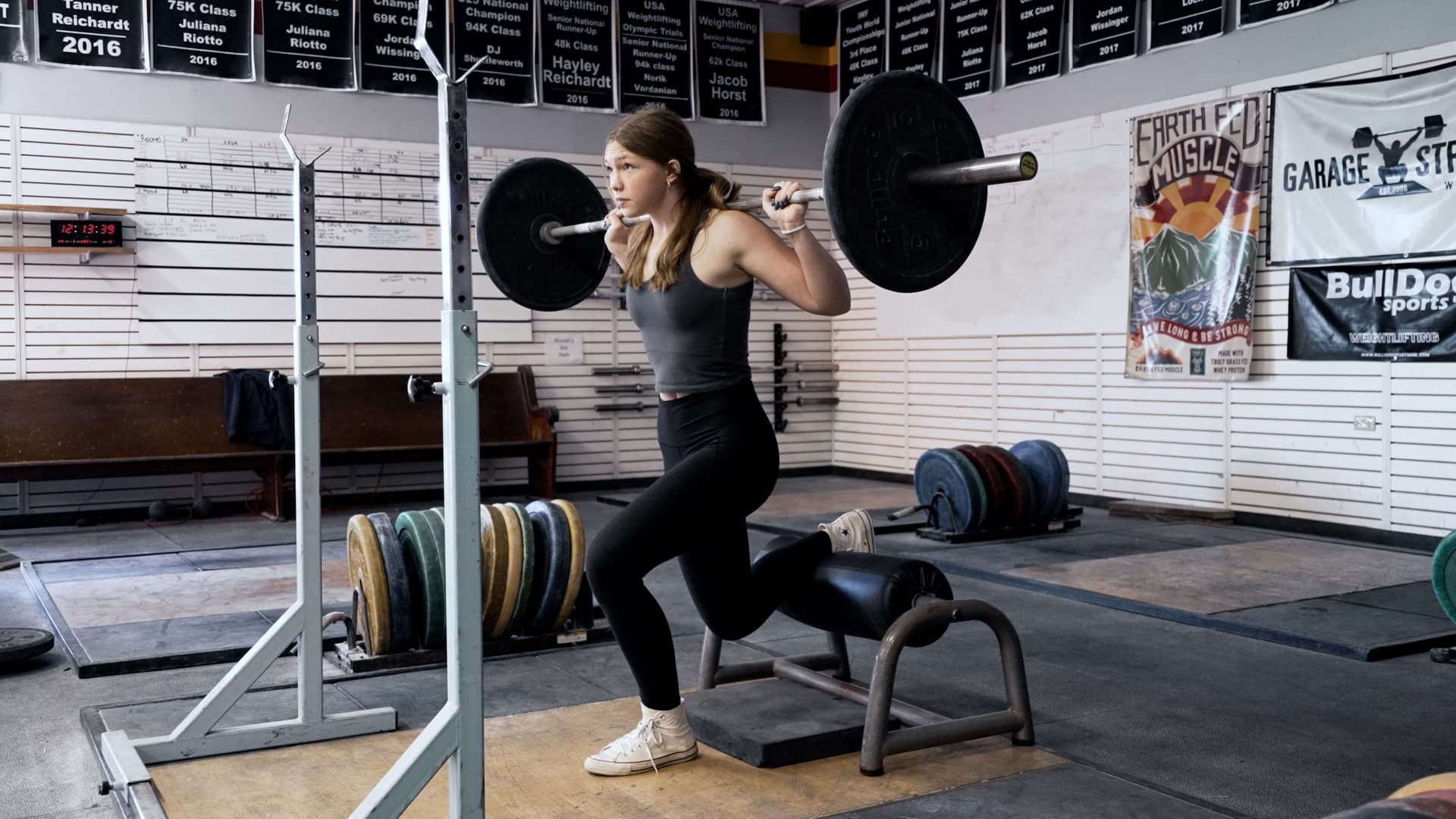
5. Single Leg Squat
The single leg squat is a unilateral lower-body exercise used to improve leg strength, balance, stability, and coordination. By training one leg at a time, the movement helps correct muscular imbalances while increasing hip, knee, and ankle control. Single leg squats also place a greater demand on core stability and joint positioning compared to traditional bilateral squats. The exercise is widely used in athletic performance and rehabilitation settings to enhance lower-body function, movement efficiency, and injury resilience.
-1.jpg&w=3840&q=75)
Technique Instructions:
1. Stand on one leg with the chest tall, core braced, and opposite foot placed on a single leg roller.
2. Push the hips back while bending the knee of the working leg under control.
3. Keep the knee aligned with the toes and maintain balance throughout the descent.
4. Lower until the knee touches the balance pad placed in front of the single leg roller.
5. Drive through the working foot to return to a standing position.
6. Repeat for the desired repetitions before switching legs.
.png&w=3840&q=75)
.png&w=3840&q=75)
Difficulty Rating: Intermediate
When to Use: Single leg squats should be used as an absolute strength exercise on lower body strength or impulse days. They are especially effective for athletes in running, jumping, and change-of-direction sports because they improve unilateral force production and movement control. Coaches also program them to address side-to-side strength imbalances and enhance lower-body joint stability.
6. Vertical Jump
The vertical jump is a foundational explosive movement used to measure and develop lower-body power, coordination, and athletic explosiveness. The exercise requires an athlete to rapidly produce force through the hips, knees, and ankles in order to jump vertically off the ground. Vertical jump training is commonly used in strength and conditioning programs because it improves rate of force development, reactive strength, and overall athletic performance in sports that involve sprinting, jumping, and rapid changes of direction.
.jpg&w=3840&q=75)
Technique Instructions:
1. Start in an athletic stance with the feet shoulder-width apart and the chest tall.
2. Quickly load the hips by bending the knees into a quarter or half squat position while swinging the arms backward.
3. Explosively drive through the ground while extending the hips, knees, and ankles.
4. Swing the arms upward to help generate maximum vertical force.
5. Jump as high as possible while maintaining body control in the air.
6. Land softly with bent knees and stable posture before resetting for the next repetition.
Difficulty Rating: Beginner.
When to Use: Vertical jumps are best used on explosiveness and plyometric training days. They can be used with any level athlete as a primary testing exercise. Vertical jumps can be used more often for beginners to develop force production through a simple movement.
7. Hurdle Hops
Hurdle hops are a plyometric exercise designed to improve reactive strength, explosiveness, and lower-body power. The movement requires athletes to rapidly jump over a series of hurdles while minimizing ground contact time between repetitions. Hurdle hops train the stretch-shortening cycle, helping athletes develop faster force production and improved elastic power. The exercise is commonly used in speed and power programs to enhance jumping ability, sprint performance, and overall athletic explosiveness.
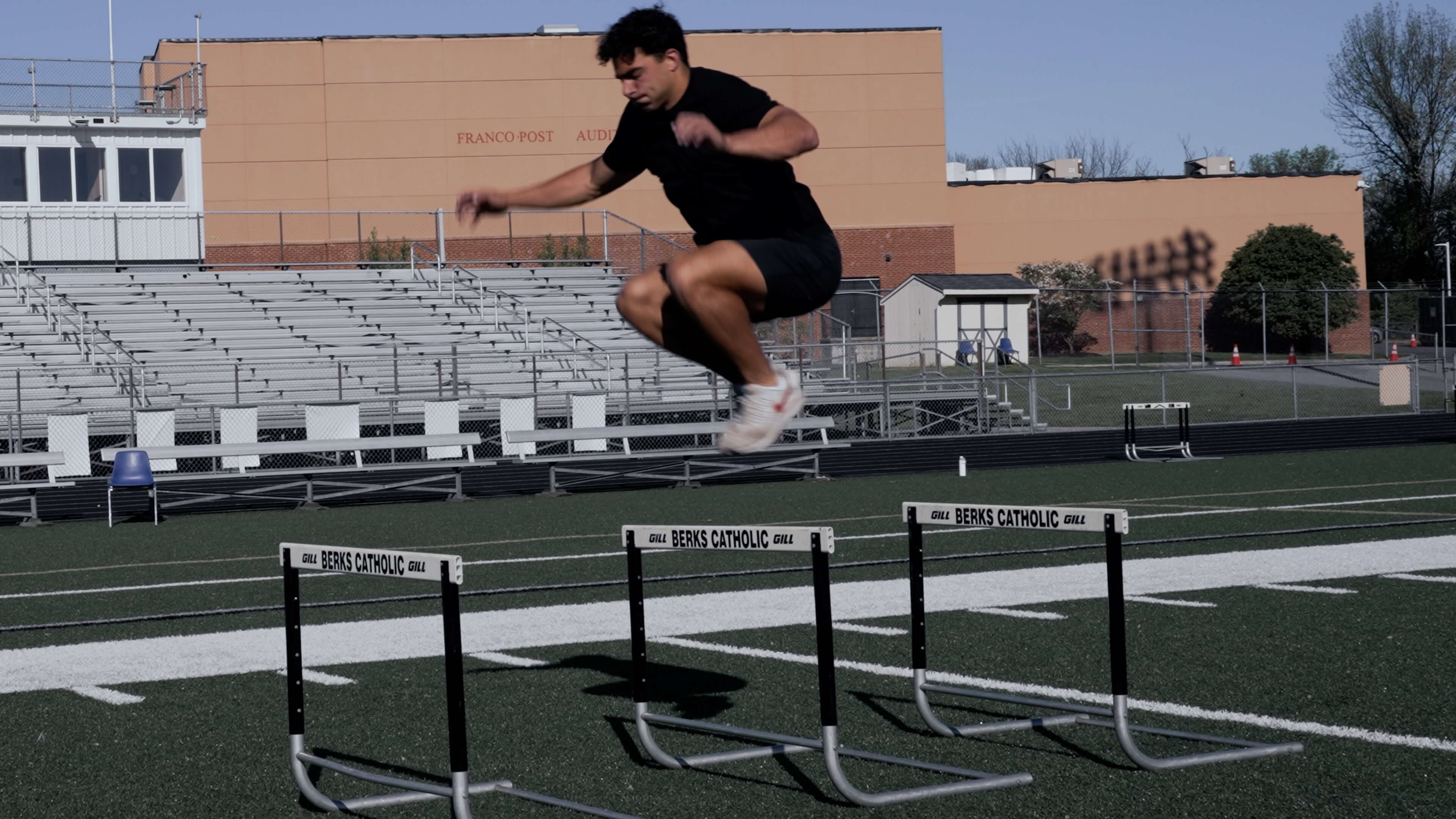
Technique Instructions:
1. Stand in an athletic position facing a line of evenly spaced hurdles.
2. Load the hips slightly while keeping the chest tall and core braced.
3. Explosively jump over the first hurdle using quick and powerful hip, knee, and ankle extension.
4. Land softly on the balls of the feet with minimal ground contact time.
5. Immediately rebound into the next jump while maintaining rhythm and posture.
6. Continue through the full series of hurdles with controlled, explosive movement.
Difficulty Rating: Beginner
When to Use: Hurdle hops are best used during plyometric and explosive training days. They can be used for any athlete as long as the hurdle height is appropriate for the athlete’s skill level.
8. Seated Box Jump
The seated box jump is an explosive plyometric exercise used to develop starting strength, concentric power, and lower-body explosiveness. Unlike traditional box jumps, the athlete begins from a seated position, which reduces momentum and forces the muscles to generate force from a dead stop. This variation emphasizes rapid force production through the hips and legs while improving acceleration and jumping mechanics. Seated box jumps are commonly used in athletic performance training to enhance vertical power and explosive athletic movement.
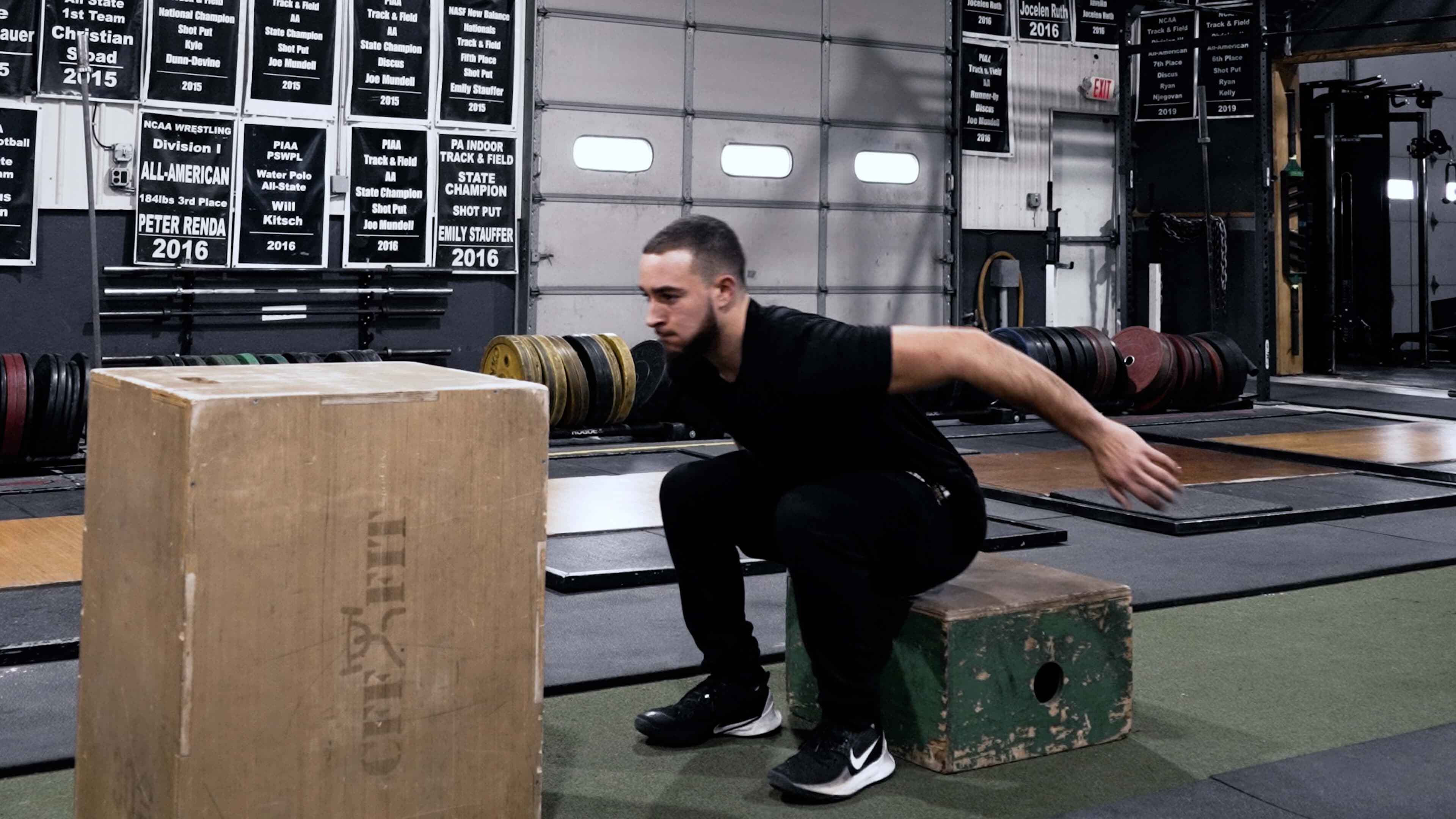
Technique Instructions:
1. Sit on a box or bench with the feet flat on the floor and knees bent roughly 90 degrees.
2. Keep the chest tall, core braced, and arms prepared for an explosive swing.
3. Drive through the floor aggressively while swinging the arms upward.
4. Explosively extend the hips, knees, and ankles to jump onto the box.
5. Land softly in an athletic position with the knees slightly bent.
6. Step down under control and reset fully before the next repetition.
Difficulty Rating: Beginner
When to use: Seated box jumps are best used during lower body strength and explosive training days. They can be used by all athletes, especially beginners to focus on direct force production without having to think about the counter movement.
9. Linebacker Jerk
The linebacker jerk is an explosive total-body movement used to develop upper-body power, hip drive, and coordination under load. It is a variation of the push jerk pattern commonly used in athletic strength training, emphasizing rapid force transfer from the lower body through the upper body. The movement helps athletes generate force quickly from a front rack position and express it overhead, making it especially valuable for contact athletes who need explosive pressing and bracing strength.
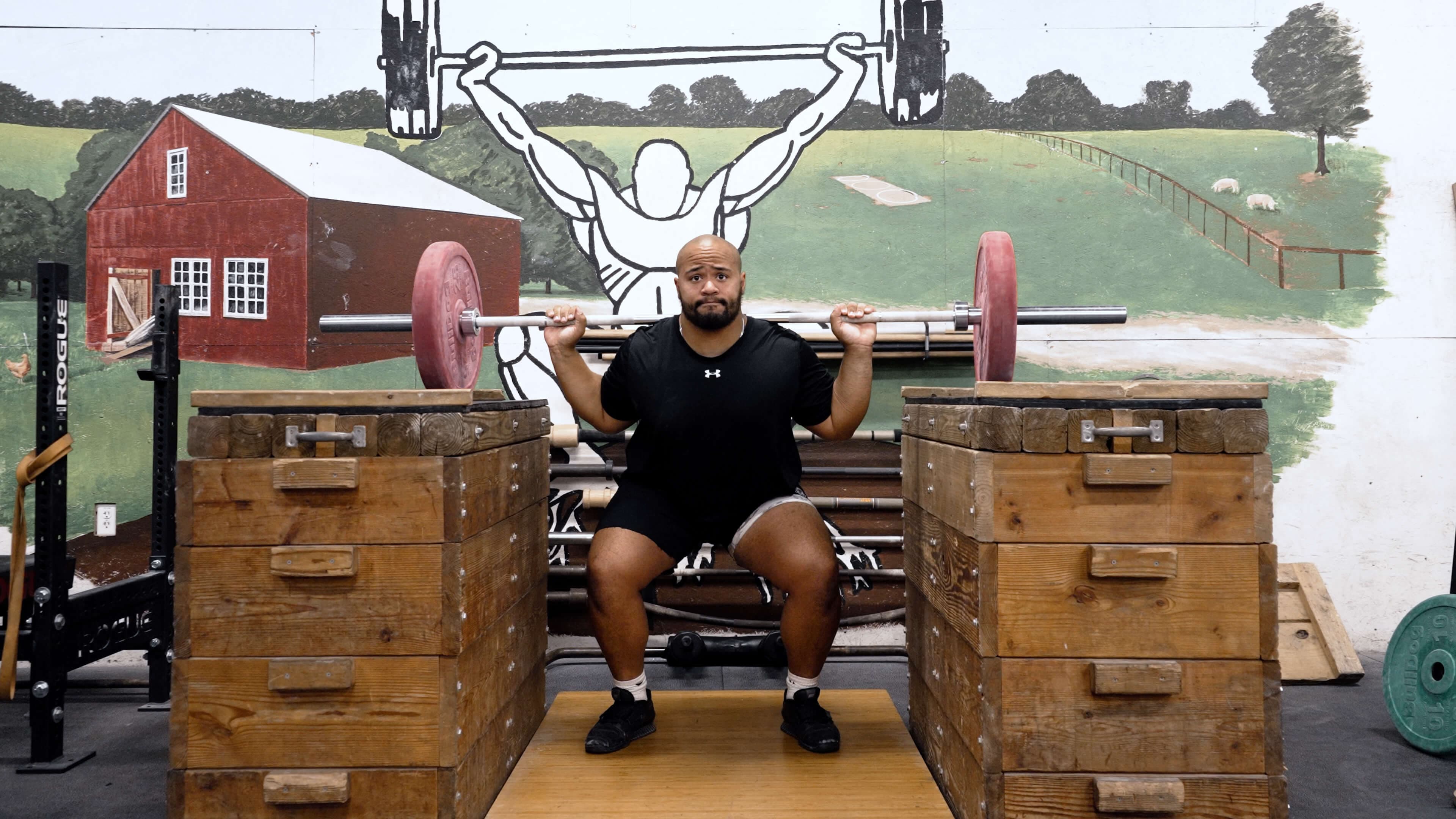
Technique Instructions:
1. Start with the barbell in a strong back rack position with the core braced with the weight resting on jerk blocks.
2. Explosively drive through the legs to generate upward momentum on the bar.
3. As the bar rises, quickly drop under it into a partial squat or split stance while punching the arms overhead.
4. Lock the elbows out overhead with the head through the arms for stability.
5. Stand tall to finish the lift, then allow the weights to drop back onto the jerk blocks while holding the bar for a controlled drop.
Difficulty Rating: Advanced
When to Use: The linebacker jerk is best used during upper body strength days as a priming exercise before something like bench press. It is commonly programmed for football players, rugby athletes, and combat sport athletes to improve total-body explosiveness, upper-body power, and force transfer.
10. Bounds
Bounds are a bilateral plyometric locomotion drill designed to develop horizontal power, elastic strength, and sprint mechanics. The movement emphasizes powerful, alternating strides with both feet contributing to force production during each contact phase. Unlike single-leg bounding variations, bilateral bounds use a coordinated two-leg push-off pattern to enhance horizontal propulsion, stride rhythm, and overall running efficiency. They are widely used in speed development programs to improve acceleration and elastic power output.
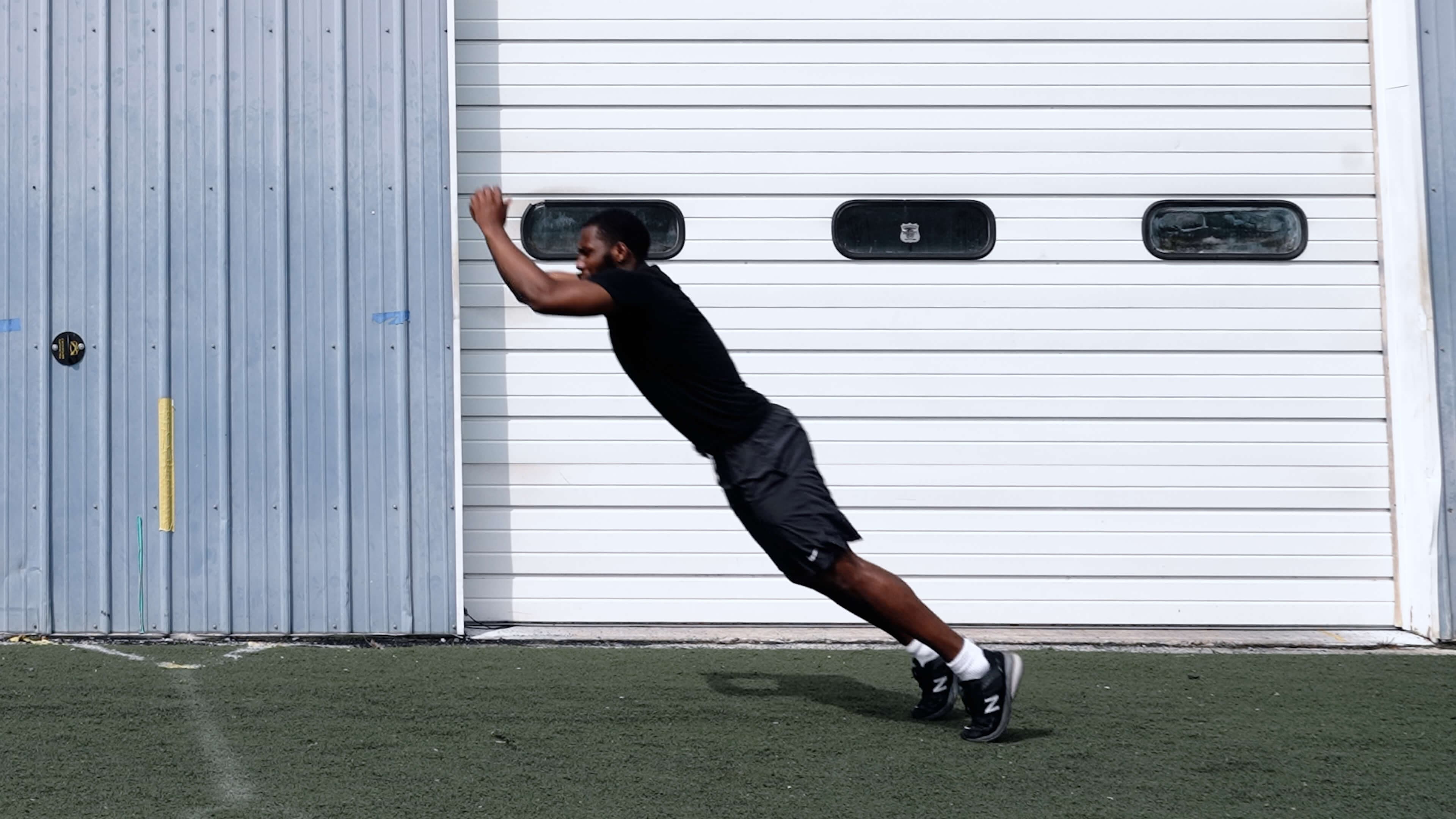
Technique Instructions:
1. Start in an even athletic posture with legs shoulder width apart/ Similar to a broad jump.
2. Drive explosively off both legs to project the body forward into the first bound.
4. Land in a controlled, athletic position using both legs to absorb force briefly.
5. Immediately reload and push off both legs again into the next bound.
6. Maintain rhythm, posture, and minimal ground contact time while covering distance efficiently.
Difficulty Rating: Beginner
When to Use: Bounds are best used during speed, plyometric, and explosiveness training days. They are commonly programmed for sprinters, football players, soccer athletes, and field sport athletes to improve horizontal force production and stride efficiency. They can be used with beginner athletes to help develop elasticity, reactiveness, and general force production.
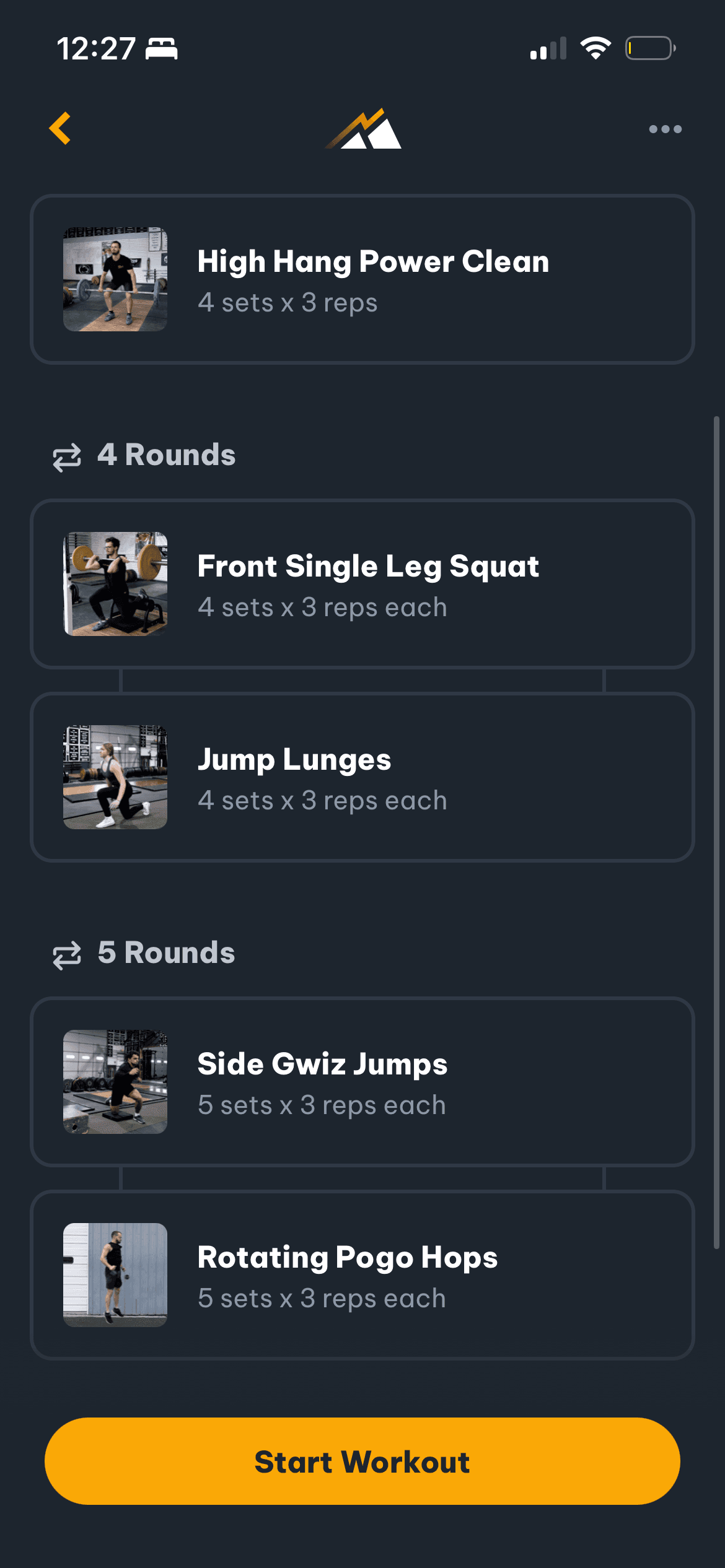
Sample Workout for Explosiveness
Below is an example of an explosiveness workout for a multi-sport athlete. If you want to see what an explosiveness workout looks like for your sport or goal, create a training plan in Peak Strength for free here: https://peakstrength.app/signup
How to Create Your Own Explosiveness Workout
Before building your own explosiveness workout, you need to keep in mind a few things:
Explosive workouts do not need to be super heavy. Intensity is high in terms of the speed and intent of execution, so any added resistance should not compromise that focus.
Total volume will be lower. The majority of working sets should be done with close to if not maximal effort. This means less reps should be programmed during the workout compared to strength or hypertrophy training.
Plan rest times ahead. To get the most out of an explosive workout, you want to keep your body ready for the next set, but still give it enough rest to push the intensity.
Now to build an explosiveness workout, like the ones provided by Peak Strength, follow these steps:
Start with a single technical coordination exercise.
Then add a lower body absolute strength exercise super-setted with a bilateral plyometric.
Finally, superset a unilateral plyometric and a unilateral plyometric.
It might sound short, and that’s because it is. An impulse or explosiveness workout shouldn’t take as long as a traditional strength workout. The volume is lower, the rest times are often shorter, so an average explosive workout should be able to be completed in 60 minutes.
Wrap Up
Explosive training can be challenging to program for athletes based on their experience level. Additionally, different types of athletes will need different amounts of explosive training.
On average, athletes should train explosiveness 2-3 times per week. Explosives exercises should be incorporated into lower body strength days, explosive/impulse days, and sometimes upper body strength days.
Every single one of these exercises should not be crammed into a single training week. Instead, they should be used over the course of 3-4 months throughout a longer training cycle.
If you need help with finding the right exercises and structure to develop explosiveness for your sport, start Peak Strength’s free trial to get dedicated training for your long-term goals.
Ivan Escott
Ivan is a national-level Olympic weightlifter and performance coach at Garage Strength Sports Performance.