10 Hardest Exercises for Lower Body, Upper Body, Core, and Athletic Performance
by Ivan Escott
Aug 13, 2026
•13 minutes
Building strength, muscle, and athletic ability requires more than just repeating the same workouts week after week. While consistency is important, your body grows and adapts when you continue to challenge yourself with new movements, heavier loads, and more demanding exercises.
The hardest exercises in the gym are not always the ones that involve the most weight. Some movements are difficult because they require incredible strength, balance, coordination, mobility, stability, and mental toughness. These exercises challenge your body from head to toe and force you to develop qualities that carry over into everyday life and athletic performance.
Whether you are trying to build a stronger physique, improve sports performance, or break through a training plateau, adding challenging movements into your program can help you become a more complete athlete.
At Peak Strength, we believe training should push you beyond your comfort zone while still focusing on proper technique and long-term progress. We are going to break down 10 of the hardest exercises for building lower body strength, upper body power, core stability, and athleticism.
.png&w=3840&q=75)
.png&w=3840&q=75)
Hardest Lower Body Exercises
Your lower body contains some of the strongest muscles in the human body. The glutes, hamstrings, and quadriceps are responsible for generating power, speed, and explosive movement. These exercises will challenge your legs while improving strength and athletic performance.
1. Single Leg Squat
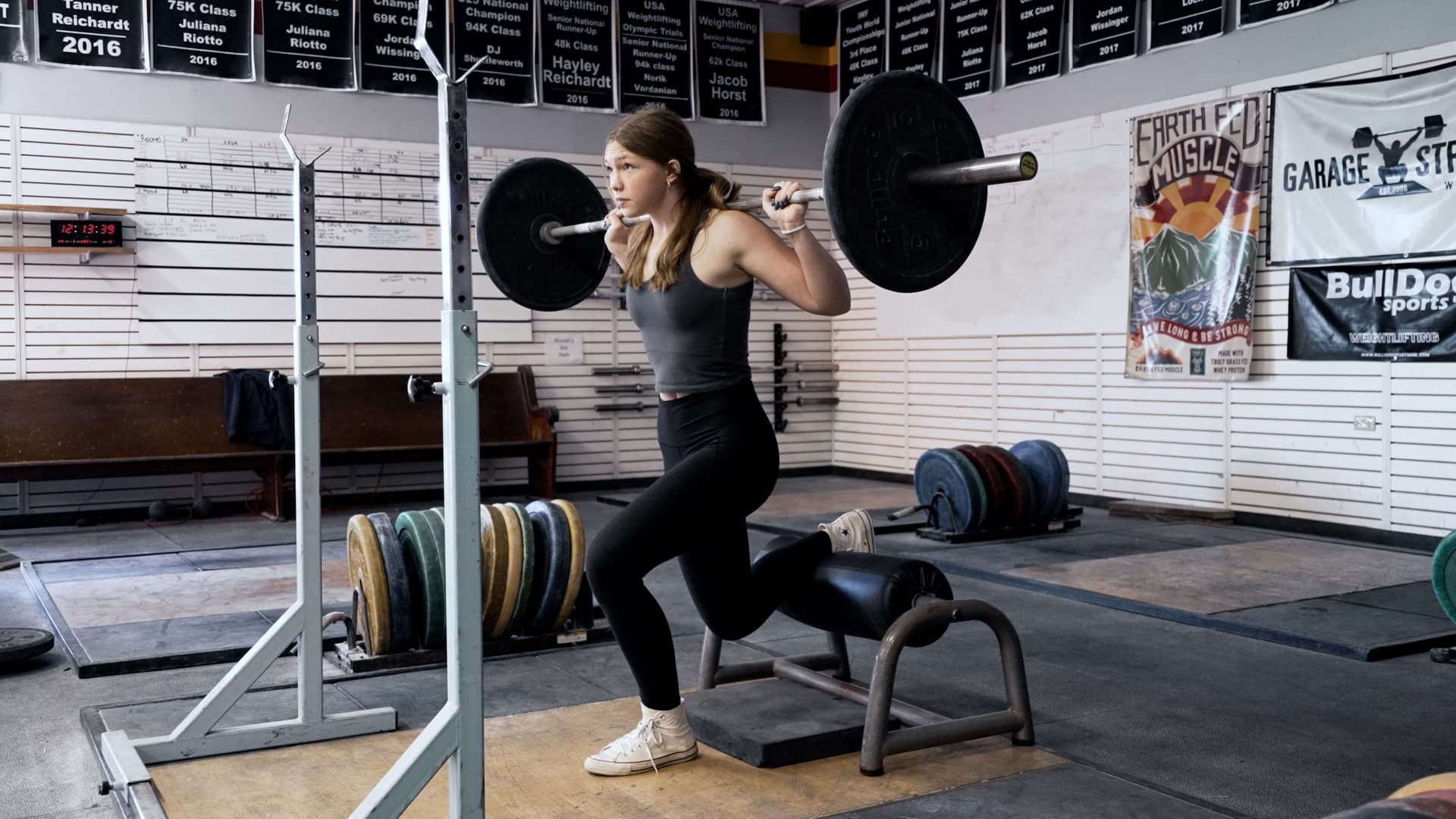
The single leg squat is one of the most difficult unilateral leg exercises because it requires strength, balance, and mobility all at the same time. Unlike traditional squats where both legs share the workload, single leg squats force one leg to handle most of the movement. This creates a major challenge for your quads, glutes, hamstrings, and stabilizing muscles.
To perform the exercise, place your back foot on an elevated surface, like a single leg roller, while keeping your front foot planted firmly on the ground. Lower your body under control until your front thigh touches a foam balance pad, then drive through your front foot to return to the starting position.
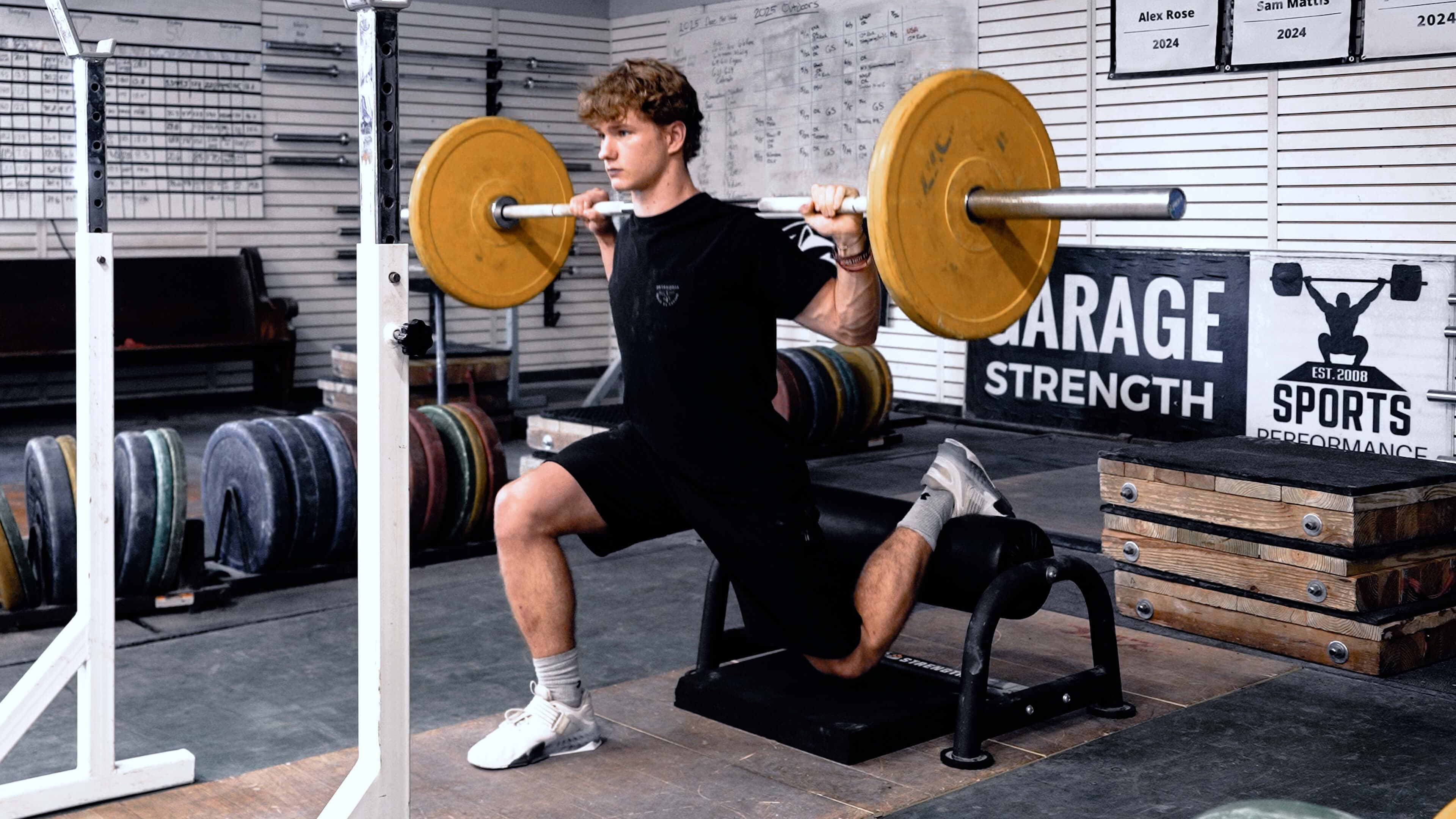
If an athlete cannot do this with a barbell, dumbbells and body weight variations can be good substitutes.
Athletic Performance: Single-leg squats improve unilateral strength, balance, and control, which are important whenever an athlete must produce force from one leg. They can help athletes maintain stability while accelerating, decelerating, or changing direction.

For example, a soccer winger repeatedly pushes off one leg when cutting around a defender, so stronger single-leg control can help produce a more powerful and stable change of direction. The exercise may also help address side-to-side strength differences that can affect movement quality.
Recommended sets: 3-5 sets of 3-7 reps per leg
2. Nordic Hamstring Curl
The Nordic hamstring curl is one of the most demanding bodyweight exercises for developing hamstring strength.
This movement places an incredible amount of stress on the posterior chain by requiring your hamstrings to control your body as you lower toward the ground. The eccentric portion of the exercise is especially challenging and can help improve strength, injury resistance, and athletic performance.
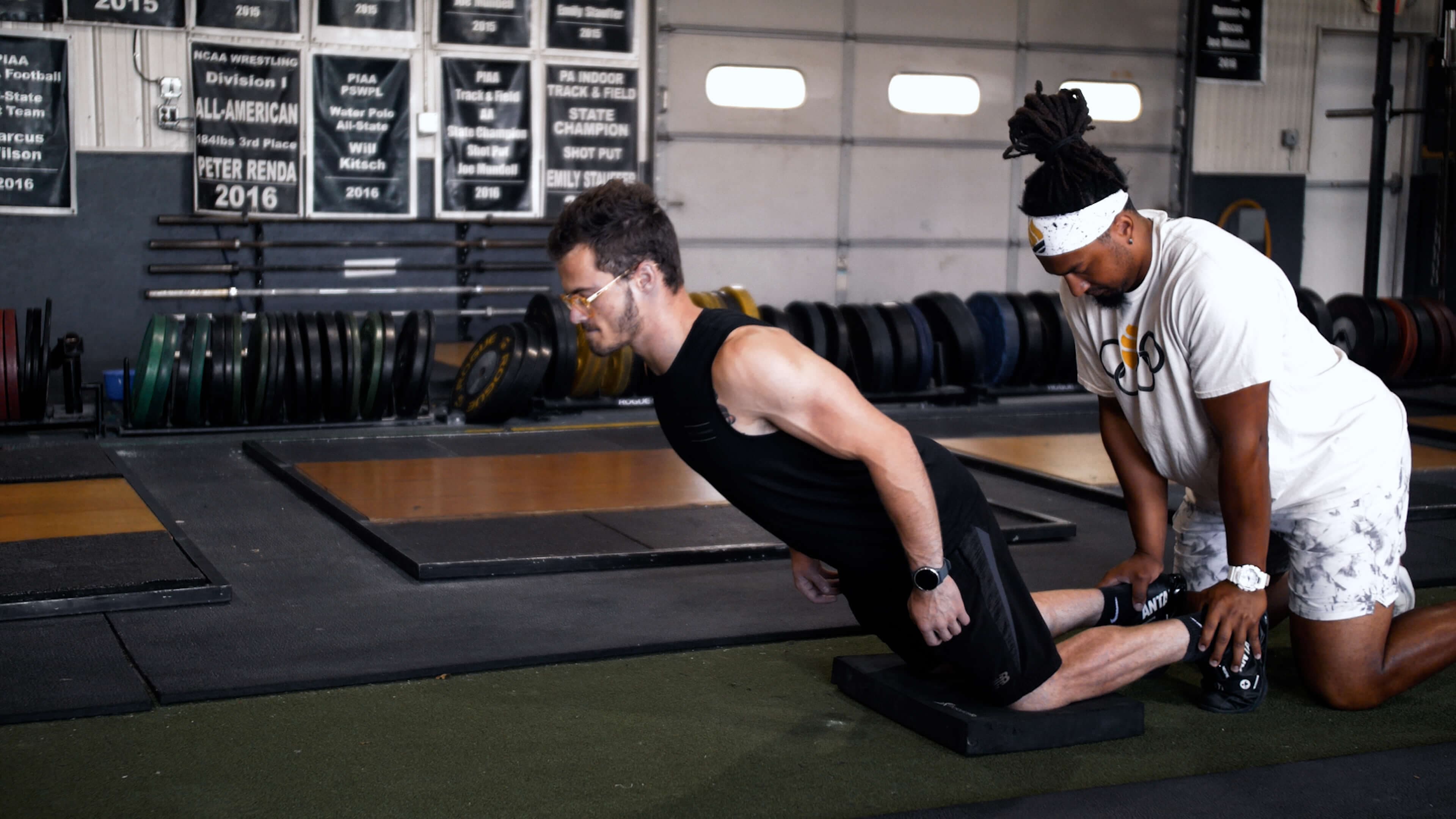
Many athletes use Nordic curls because powerful hamstrings are essential for sprinting, jumping, and explosive movements.
Beginners can modify this exercise by using resistance bands for assistance or pushing off lightly with their hands. Advanced athletes can focus on slow negatives and controlled repetitions.
Athletic Performance: Nordic hamstring curls develop eccentric hamstring strength, helping athletes control the leg during high-speed running and explosive movements. Stronger hamstrings can contribute to better force production and may improve an athlete’s ability to tolerate the demands of sprinting.
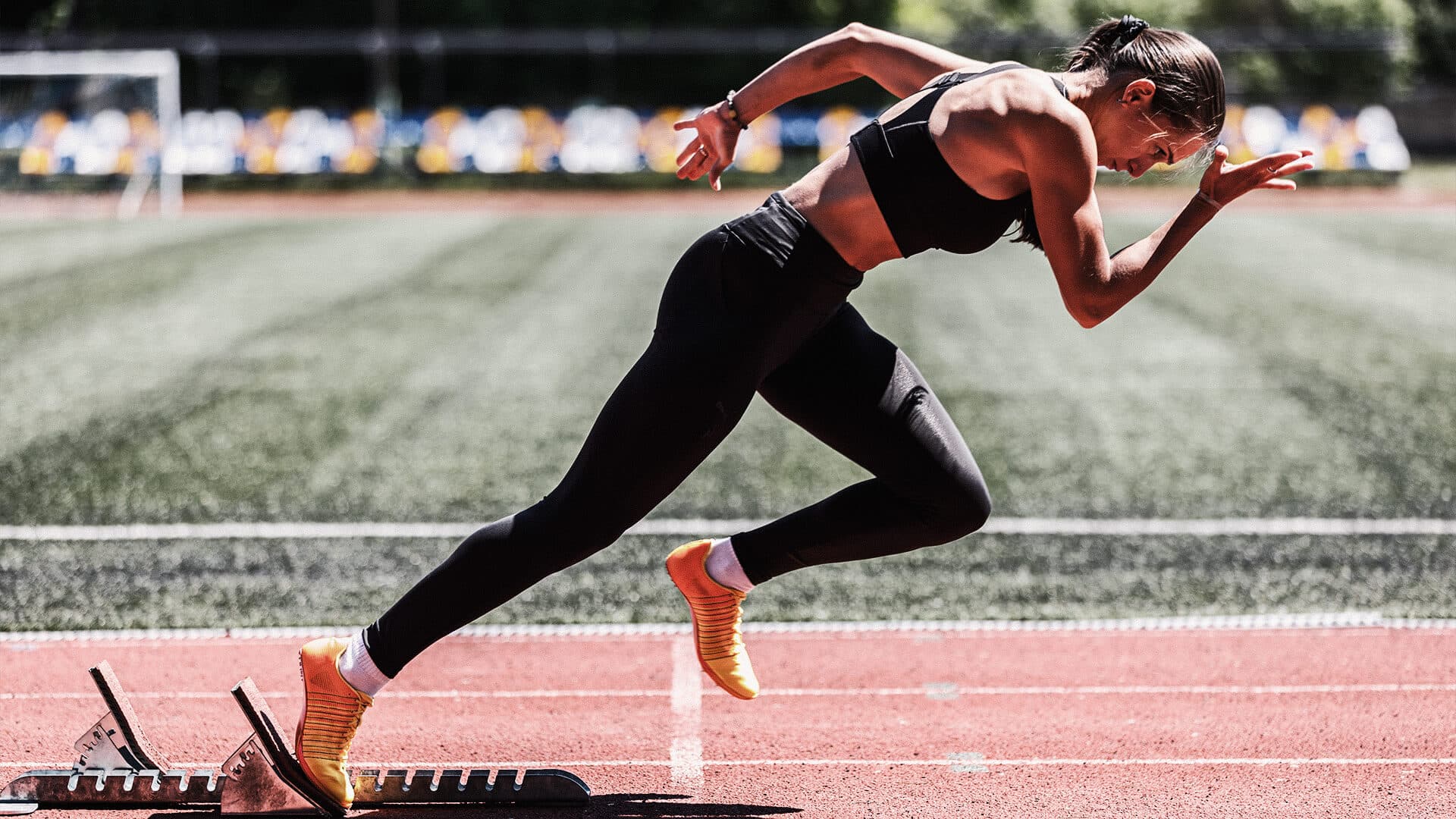
For example, a 100-meter sprinter needs the hamstrings to handle high forces as the leg swings forward and prepares for ground contact. Improving eccentric strength can support sprint mechanics while also helping build resilience in a muscle group exposed to substantial running demands.
Recommended sets: 3-5 sets of 3-8 reps
3. Front Squat
The front squat is one of the best tests of total-body strength because it requires your legs, core, and upper back to work together.
Compared to a traditional back squat, the front squat forces you to maintain a more upright position. This places additional demand on your core and upper body stability while still heavily training your quads and glutes.
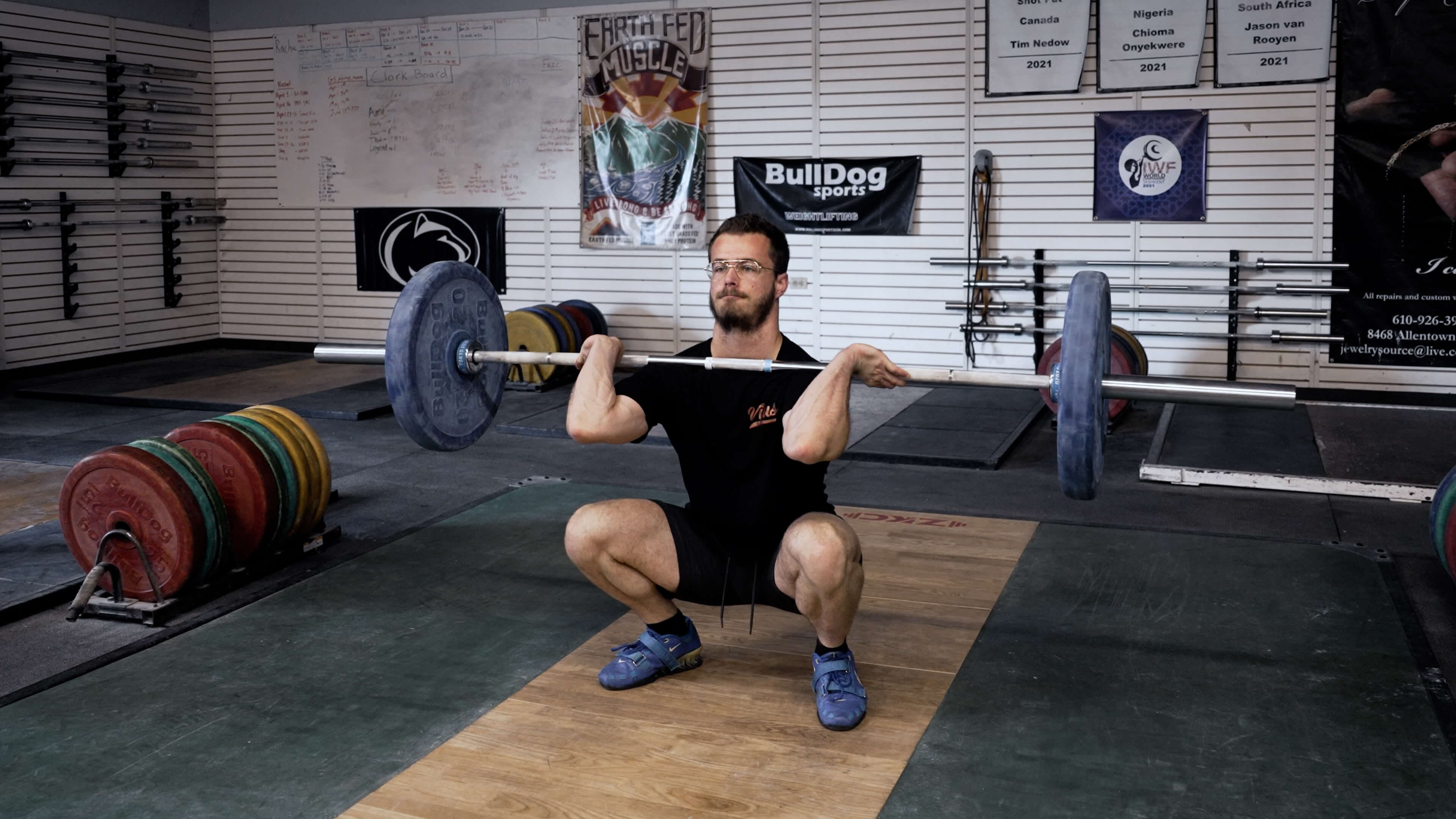
A weak core or poor mobility can quickly expose itself during a heavy front squat. Maintaining proper posture throughout the movement is critical.
The front squat also carries over well to athletic movements like jumping, sprinting, and Olympic lifting.
Athletic Performance: Front squats build lower-body strength while requiring the athlete to maintain an upright torso and strong core position. That combination can improve the ability to transfer force through the hips, legs, and trunk during explosive movements.
-1.jpg&w=3840&q=75)
For example, a basketball player can benefit from stronger front-squat capacity when jumping for rebounds or quickly accelerating into space. The exercise also reinforces posture and bracing, qualities that help athletes maintain efficient body positions while producing force under load.
Recommended sets: 4-5 sets of 3-8 reps
Hardest Upper Body Exercises
Upper body strength is about more than just pressing heavy weights. The most challenging upper body exercises require coordination, stability, and control while targeting multiple muscle groups.
4. Weighted Pull-Up
The weighted pull-up is one of the ultimate tests of upper body strength.
Unlike machines that guide your movement, pull-ups require you to control your entire body through space. Adding additional weight around your waist increases the difficulty dramatically.
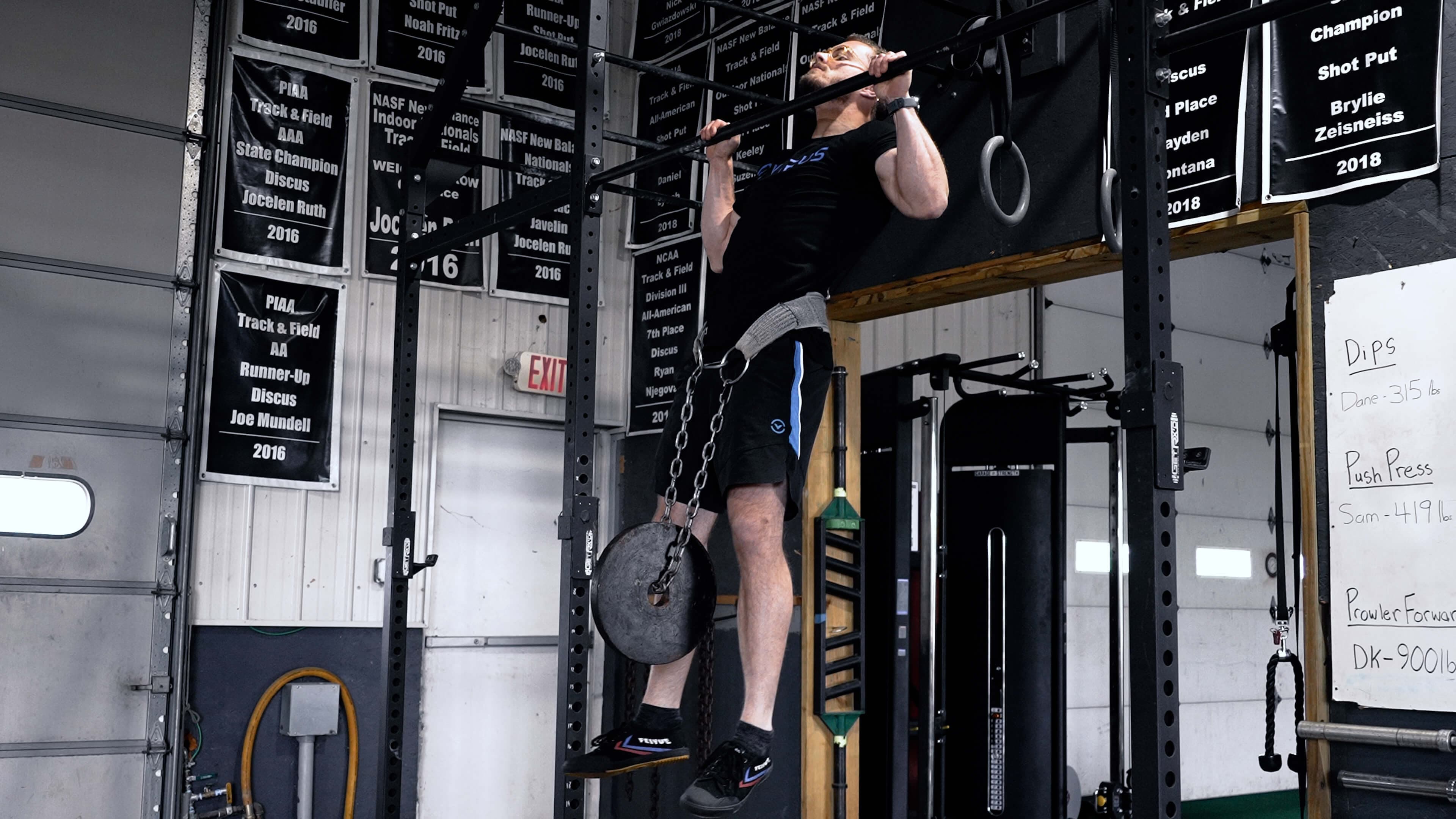
Weighted pull-ups build incredible strength in the lats, biceps, forearms, shoulders, and core. They also improve grip strength, which transfers to almost every other lift.
For maximum benefit, avoid swinging or using momentum. Focus on driving your elbows down, squeezing your back, and controlling the lowering portion.
Athletic Performance: Weighted pull-ups improve relative upper-body strength, grip strength, and the ability to control the body through space. These qualities are valuable in sports where athletes must pull, climb, grapple, or stabilize the upper body.

For example, a wrestler can use weighted pull-ups to build a stronger pulling base that supports powerful snap downs. The added load also makes the athlete produce more force without relying on momentum, reinforcing controlled strength through the shoulders, back, arms, and core.
Recommended sets: 3-5 sets of 5-11 reps
5. Dumbbell Bench Press With Alternating Reps
The alternating dumbbell bench press takes a traditional pressing movement and adds a major stability challenge.
By pressing one dumbbell at a time, your core must work harder to prevent your body from rotating. This makes the exercise a combination of strength training and anti-rotation core work.
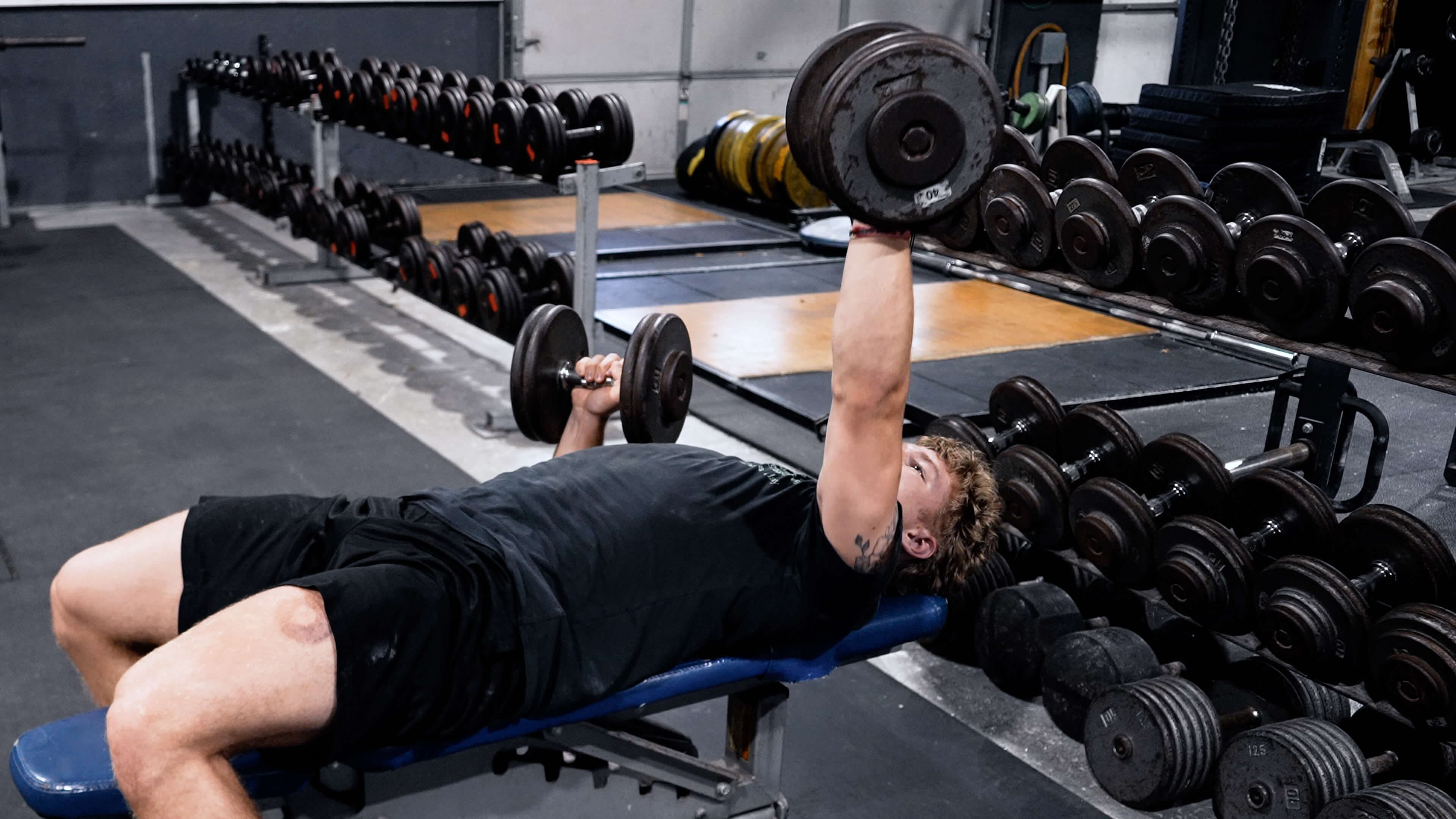
This movement helps improve shoulder stability, coordination, and muscular balance between each side of your body.
Use controlled reps and avoid rushing through the movement. The goal is to maintain perfect control from start to finish.
Athletic Performance: Alternating dumbbell presses challenge pressing strength while forcing the core to resist rotation. This combination can improve coordination between the upper body and trunk, helping athletes maintain control while producing force asymmetrically.

For example, a tennis player frequently generates force with one side of the body while the trunk resists unwanted rotation, so improved anti-rotation control can support efficient strokes and body positioning. The independent dumbbells can also reveal and strengthen side-to-side differences that may affect balanced force production.
Recommended sets: 4 sets of 8-12 reps per arm
Hardest Core Exercises
A strong core is the foundation for nearly every athletic movement. Your core helps transfer power, maintain posture, and protect your spine during heavy training.
6. Ironklad Abs
Ironklad abs is one of the hardest bodyweight abdominal exercises made as a weighted variation of the dragon flag.
This movement requires incredible control from your abs, hip flexors, and lower back. Instead of simply crunching your torso, you must stabilize your entire body while lowering yourself under control.
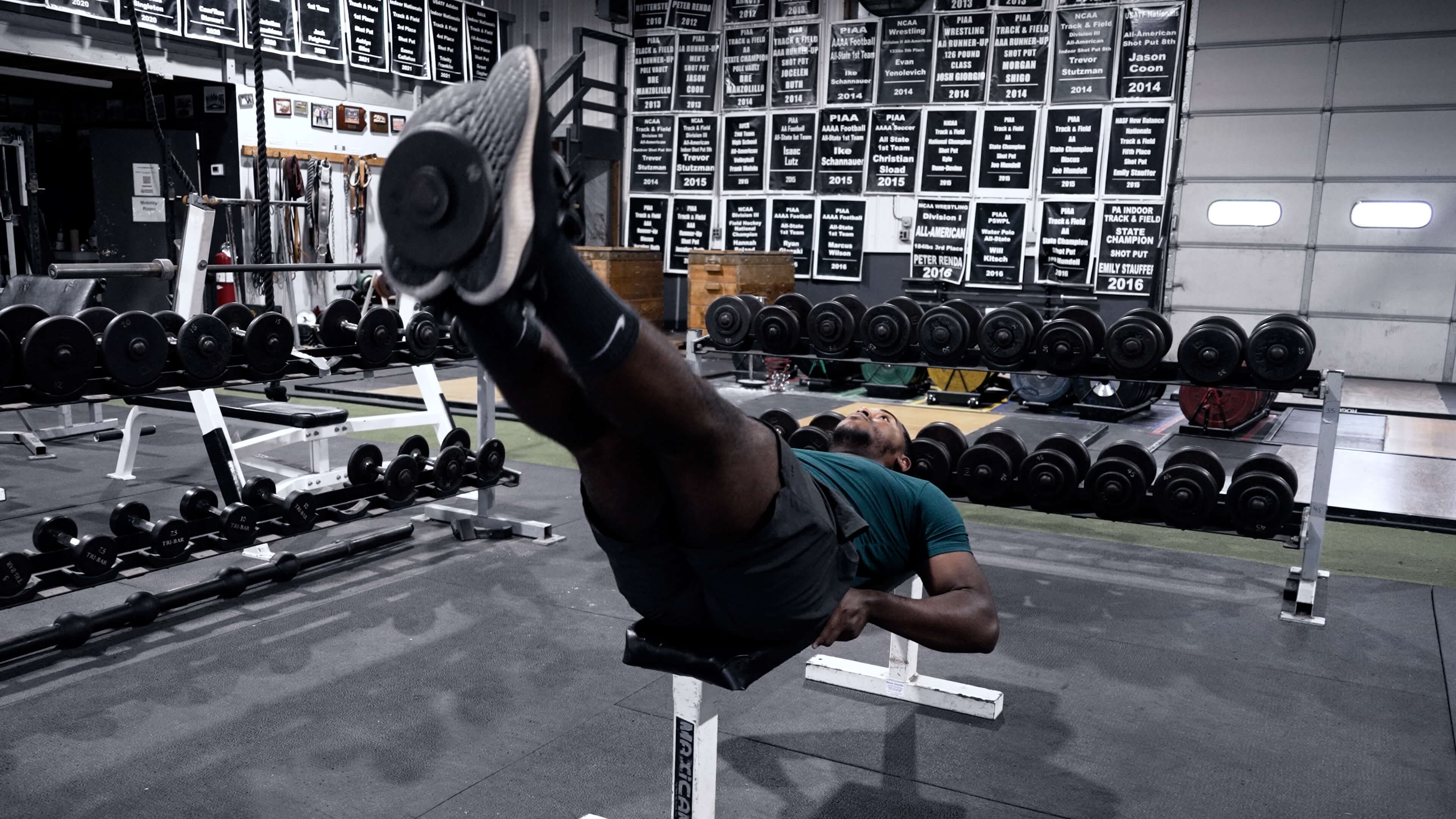
To perform Ironklad abs, lie on a bench and grip the surface behind your head. Lift your lower body into a straight line while supporting your weight through your shoulders and back. Slowly lower your legs to a horizontal position and repeat that motion with a dumbbell in between your feet.
Adding weight is optional and beginners shout start without a dumbbell.
Athletic Performance: Ironklad abs demand intense control from the abdominals, hip flexors, and trunk while the legs move as a single unit. Developing this type of core strength can help athletes maintain a rigid, controlled torso while the lower body produces or absorbs force.
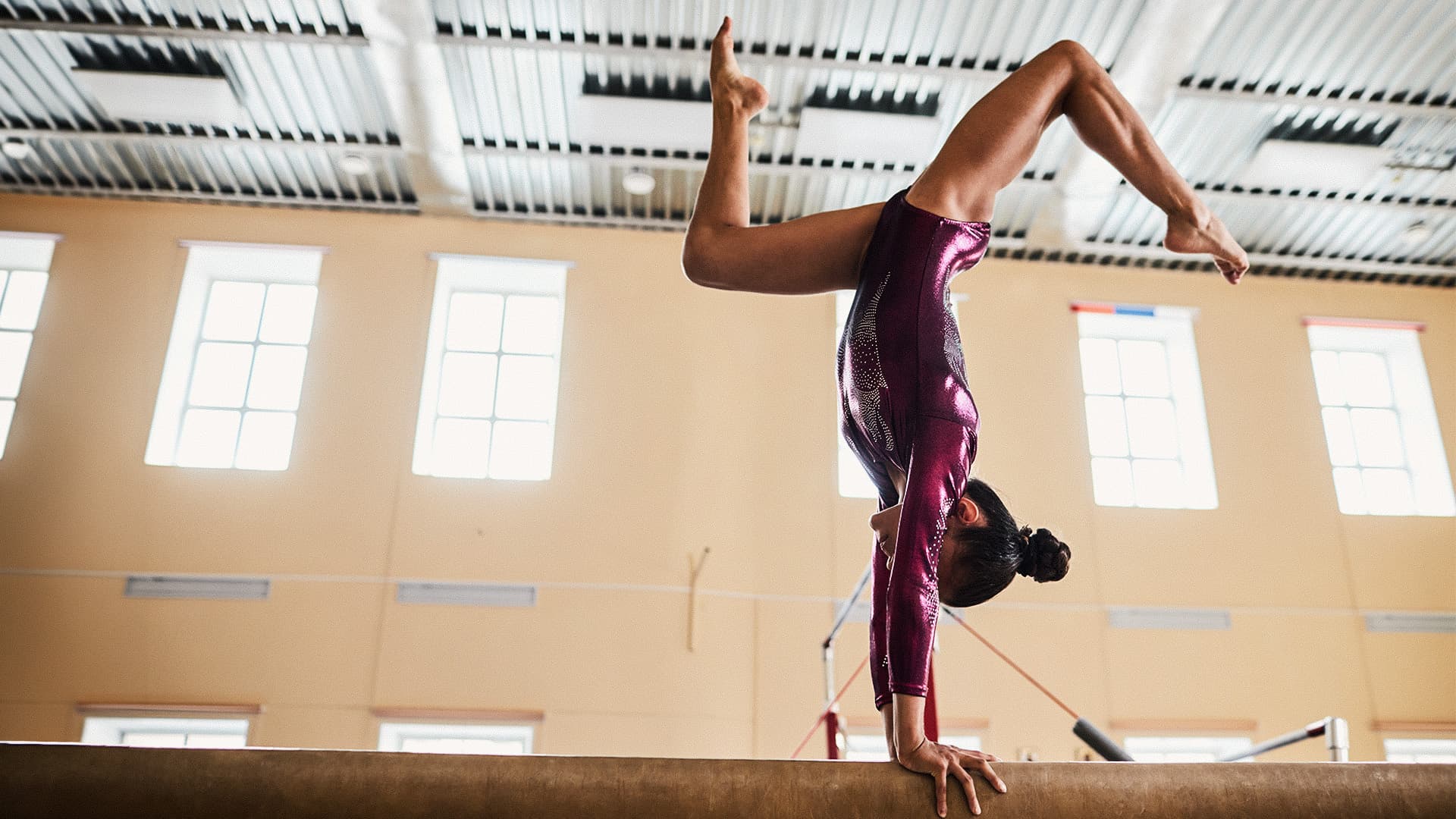
For example, a gymnast needs exceptional trunk control to keep the body aligned during skills that require precise body positions. A stronger core can improve force transfer and help prevent unnecessary movement that could reduce efficiency during demanding athletic actions.
Recommended sets: 3-4 sets of 3-8 reps
7. Ab Roller
The ab roller looks simple but is one of the most challenging core exercises you can perform.
As you extend forward, your abs must prevent your lower back from arching. The farther you roll out, the more difficult the exercise becomes.
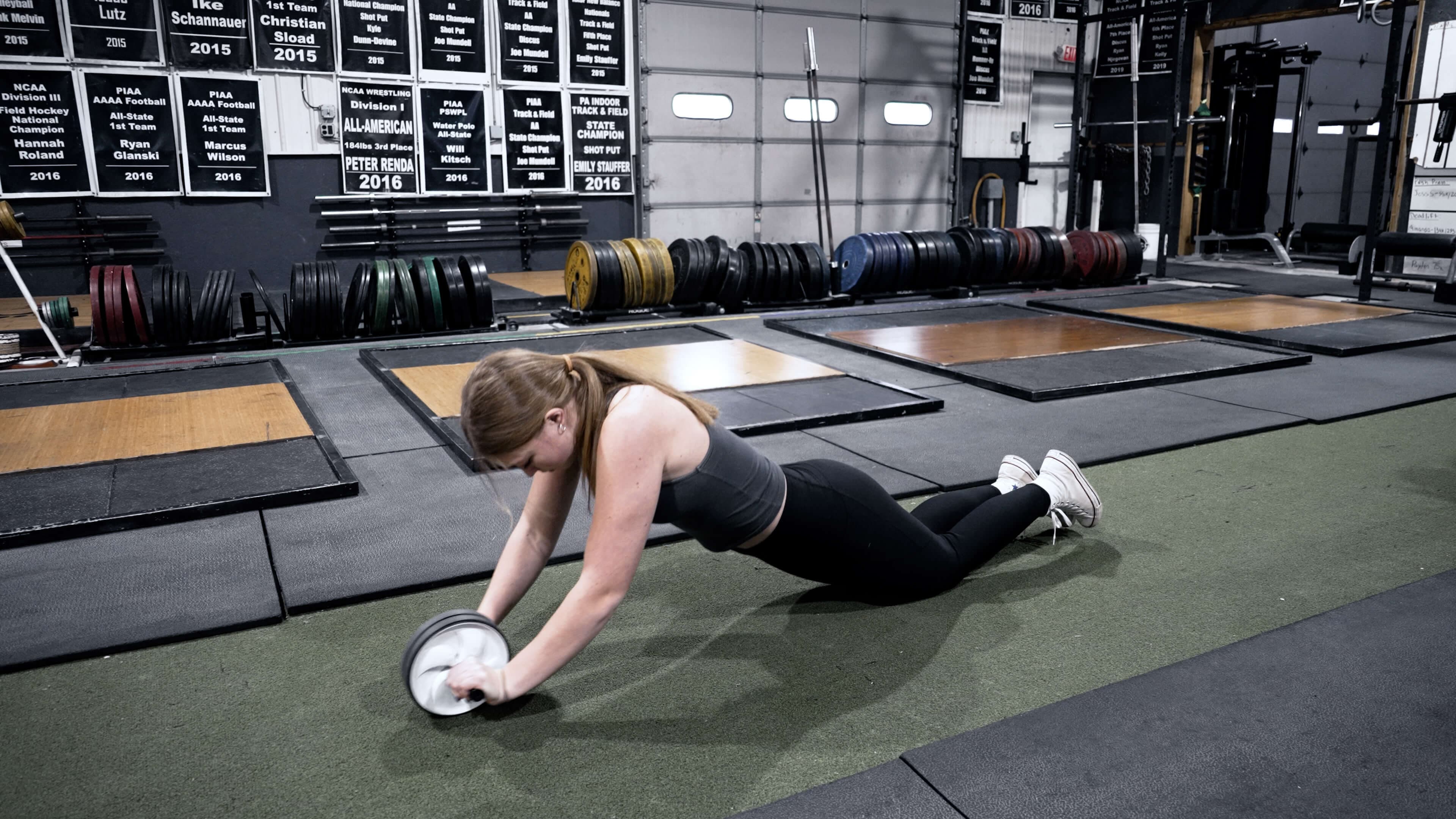
Ab rollers strengthen the entire core, including the rectus abdominis, obliques, and deep stabilizing muscles.
The key is quality over quantity. A few controlled repetitions are much more effective than rushing through a high number of sloppy reps.
Athletic Performance: Ab rollers strengthen the core’s ability to resist extension, meaning the athlete must prevent the lower back from arching as the body lengthens. This is useful for maintaining a stable trunk while the limbs move rapidly.
.jpg&w=3840&q=75)
For example, a baseball pitcher needs to transfer force from the lower body through a controlled trunk into the throwing arm, so strong anti-extension capacity can support efficient force transfer. Better trunk control may also help athletes maintain posture during sprinting, lifting, and other high-force movements.
Recommended sets: 3-5 sets of 5-12 reps
Hardest Athletic Exercises
Athletes need more than strength. They need speed, explosiveness, coordination, and the ability to produce power quickly.
8. Power Clean
The power clean is one of the most explosive exercises you can perform. This Olympic lifting movement requires strength, speed, timing, and coordination. Athletes use power cleans because they train the ability to generate force quickly from the ground.
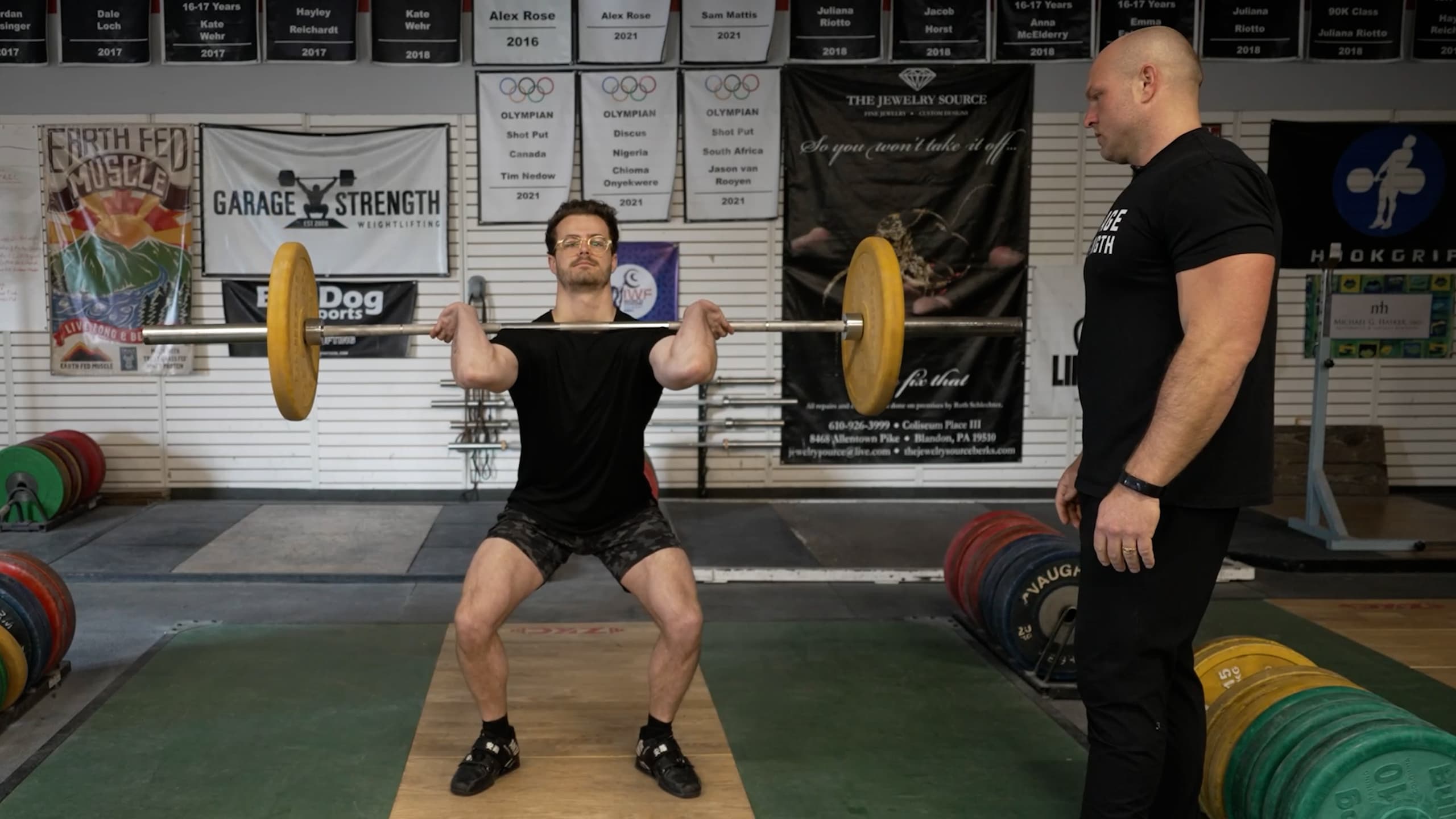
The exercise works nearly every major muscle group, including the legs, hips, back, shoulders, and core.
Because of its technical nature, beginners should focus on learning proper mechanics before increasing weight.
Athletic Performance: Power cleans train an athlete to generate large amounts of force quickly, making them especially useful for developing explosive power. The movement coordinates the legs, hips, trunk, and upper body in a rapid sequence, closely matching the need to produce force efficiently in many sports.
.jpg&w=3840&q=75)
For example, a football linebacker can benefit from improved power-clean performance because tackling, blocking, and accelerating all require rapid force production. The exercise also reinforces timing and coordination, which are essential when strength must be expressed at high speed.
Recommended sets: 3-5 sets of 2-5 reps
9. Hurdle Hops
Hurdle hops are a demanding plyometric exercise that develops explosive power, coordination, and reactive strength.
Unlike traditional jumps, hurdle hops require you to quickly absorb force when landing and immediately produce force again to clear the next hurdle. This rapid transition challenges the legs while teaching the body to become more efficient at producing power.
Hurdle hops primarily target the quads, glutes, calves, and hamstrings while also requiring strong core control and balance. They are especially useful for athletes who need quick, explosive movements and the ability to change direction or accelerate rapidly.
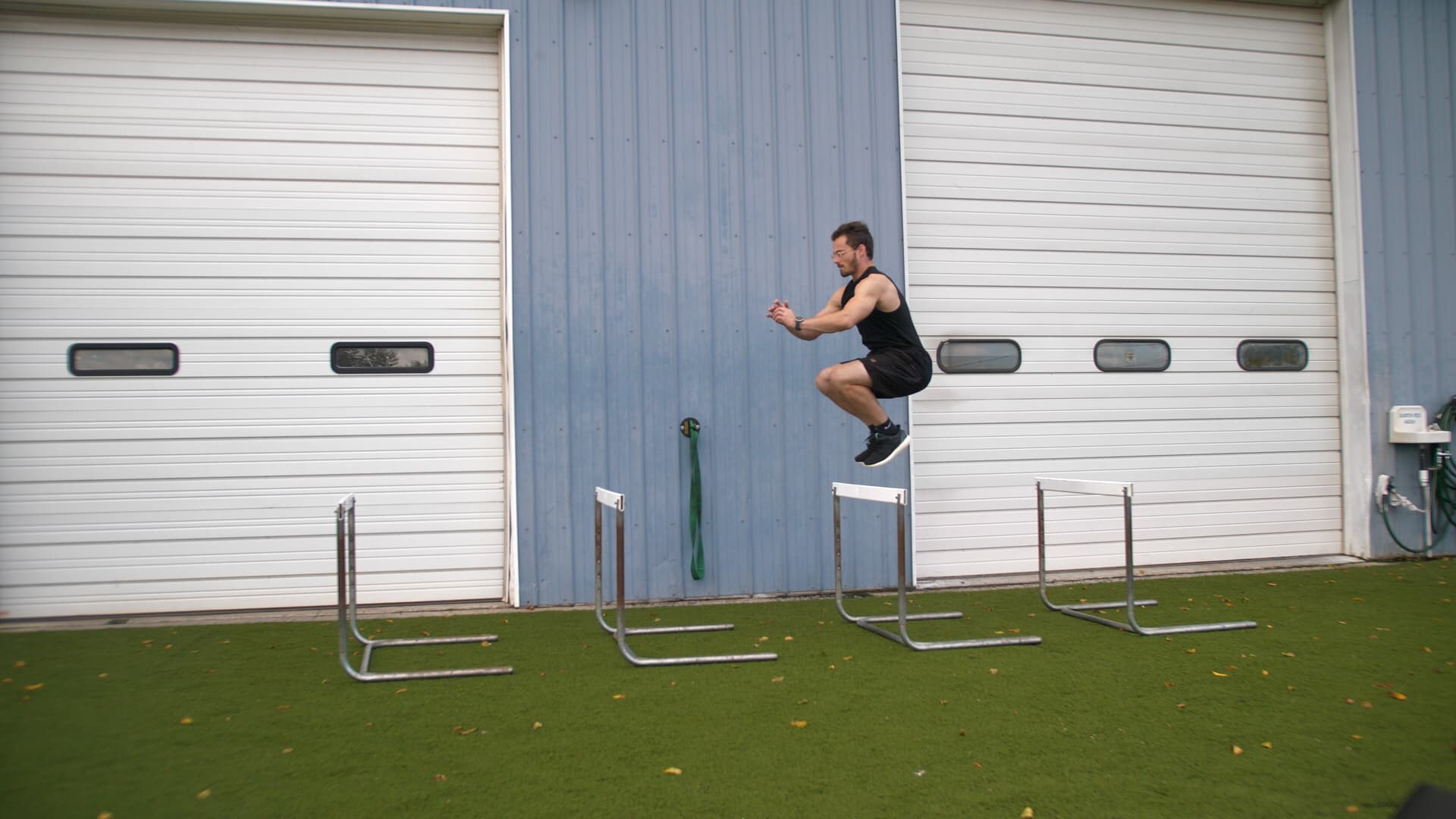
To perform the exercise, set up several hurdles or other appropriate obstacles in a straight line. Jump over the first hurdle, land softly on the balls of your feet, and immediately explode into the next jump. Keep your body controlled and focus on minimizing the amount of time spent on the ground. Start with lower hurdles and gradually increase the height or distance as your jumping ability improves. Quality and proper landing mechanics should always take priority over speed.
Athletic Performance: Hurdle hops develop reactive strength by requiring athletes to absorb force on landing and rapidly produce force for the next jump. This quick stretch-shortening cycle can improve the ability to rebound, accelerate, and change direction efficiently.
.jpg&w=3840&q=75)
For example, a volleyball player repeatedly jumps and lands before reacting to the next play, making fast force absorption and re-production highly relevant. Progressively challenging hurdle height or spacing can also teach the athlete to maintain controlled landings while producing explosive movement with minimal ground contact time.
Recommended sets: 3-5 sets of 3-5 hurdle hops
10. Stair Jumps
Stair jumps are a challenging plyometric exercise that combines explosive lower-body power with coordination, balance, and body control.
Jumping up stairs requires your legs to generate a large amount of force in a short period of time. The exercise places significant demands on the quads, glutes, hamstrings, and calves while also challenging your core and coordination.
To perform stair jumps, stand at the bottom of a set of stable stairs with enough space to land safely. Bend slightly at the knees and hips, then explosively jump onto the next step or a small group of steps. Land softly with your knees slightly bent and stabilize your body before performing the next repetition.

The difficulty can be increased by jumping onto higher steps, increasing the number of steps cleared, or performing consecutive jumps with minimal ground contact. However, safety and landing control should always come before height or distance.
Stair jumps are particularly useful for athletes looking to improve explosive strength, jumping ability, and power production. Because they are highly demanding, allow adequate recovery between sets and stop if your landing mechanics begin to deteriorate.
Athletic Performance: Stair jumps develop explosive lower-body power by requiring the athlete to produce force quickly while coordinating the hips, knees, ankles, and trunk. They can be useful for athletes who need rapid acceleration or repeated powerful jumps.
For example, a basketball guard may benefit from improved explosive strength when pushing into a fast break or jumping quickly from a stationary position. Because the exercise emphasizes force production and landing control, it can also reinforce the ability to stabilize the body after an explosive effort.
Recommended sets: 3-5 sets of 1-2 times jumping up a single flight of stairs.
Should You Be Doing These Exercises?
The hardest exercises are not necessarily the exercises you should perform every day. They are tools that should be used strategically based on your goals, training experience, and current ability level.
A beginner should not immediately load up a heavy power clean or attempt advanced core movements without developing the proper foundation first. Mastering technique and building strength gradually will lead to better results and reduce injury risk.
For athletes, these movements can improve explosiveness, power production, and overall performance. For general fitness enthusiasts, they can add variety and help break through training plateaus.
The best training programs combine challenging exercises with proper progression, recovery, and consistency.
At Peak Strength, our goal is to help athletes and lifters become stronger, faster, and more capable through intelligent training. The right exercises, combined with the right programming, can help you reach your next level of performance.
Ivan Escott
Ivan is a national-level Olympic weightlifter and performance coach at Garage Strength Sports Performance.