When Should Athletes Learn Olympic Lifts? - Cleans and Snatches
by Ivan Escott
Jan 29, 2026
•10 minutes
When to start teaching Olympic lifts is one of the most common concerns coaches, parents, and sport performance professionals have. The clean and snatch develop unmatched power, coordination, and speed.
However, these lifts also require precise technique and general coordination. They can be taught as early as elementary school, but an athlete needs to be proficient in some prerequisite movements before learning Olympic movements.
This coaching guide from our team at Peak Strength breaks down how to introduce Olympic lifts across various age groups and what some learning curves you may have per age group.
You’ll also find the beginner Olympic lift progressions that Peak Strength uses for snatch and clean that can be used with any athlete.
Prerequisites to Learn Olympic Lifts
.jpg&w=3840&q=75)
Before an athlete ever touches a barbell for Olympic lifting, they must demonstrate a baseline level of mobility, stability, and coordination. At Garage Strength, Olympic lifts are not restricted by age but by movement competency. These prerequisites ensure the athlete can safely assume and control the key positions required for long term technical success.
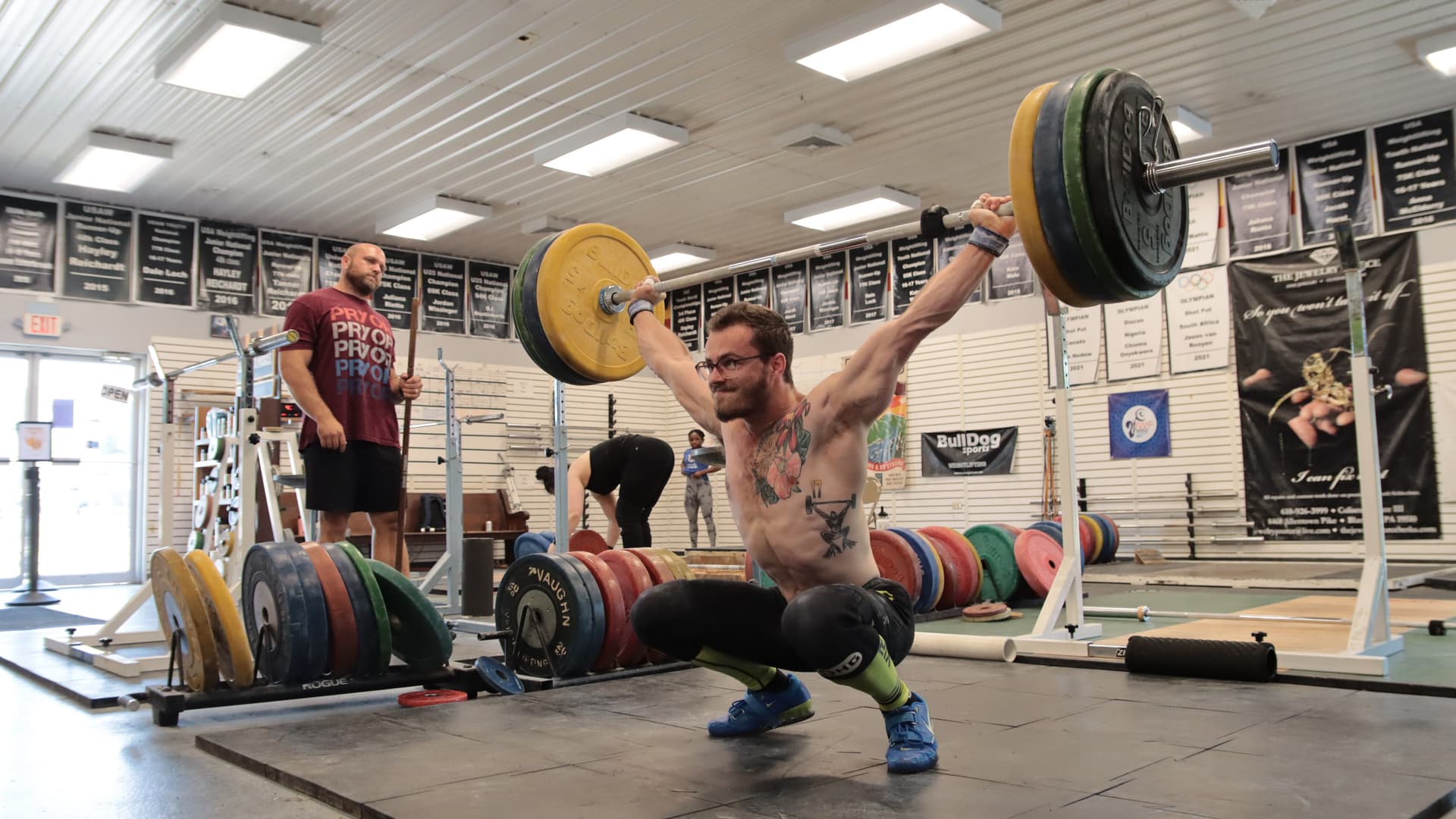
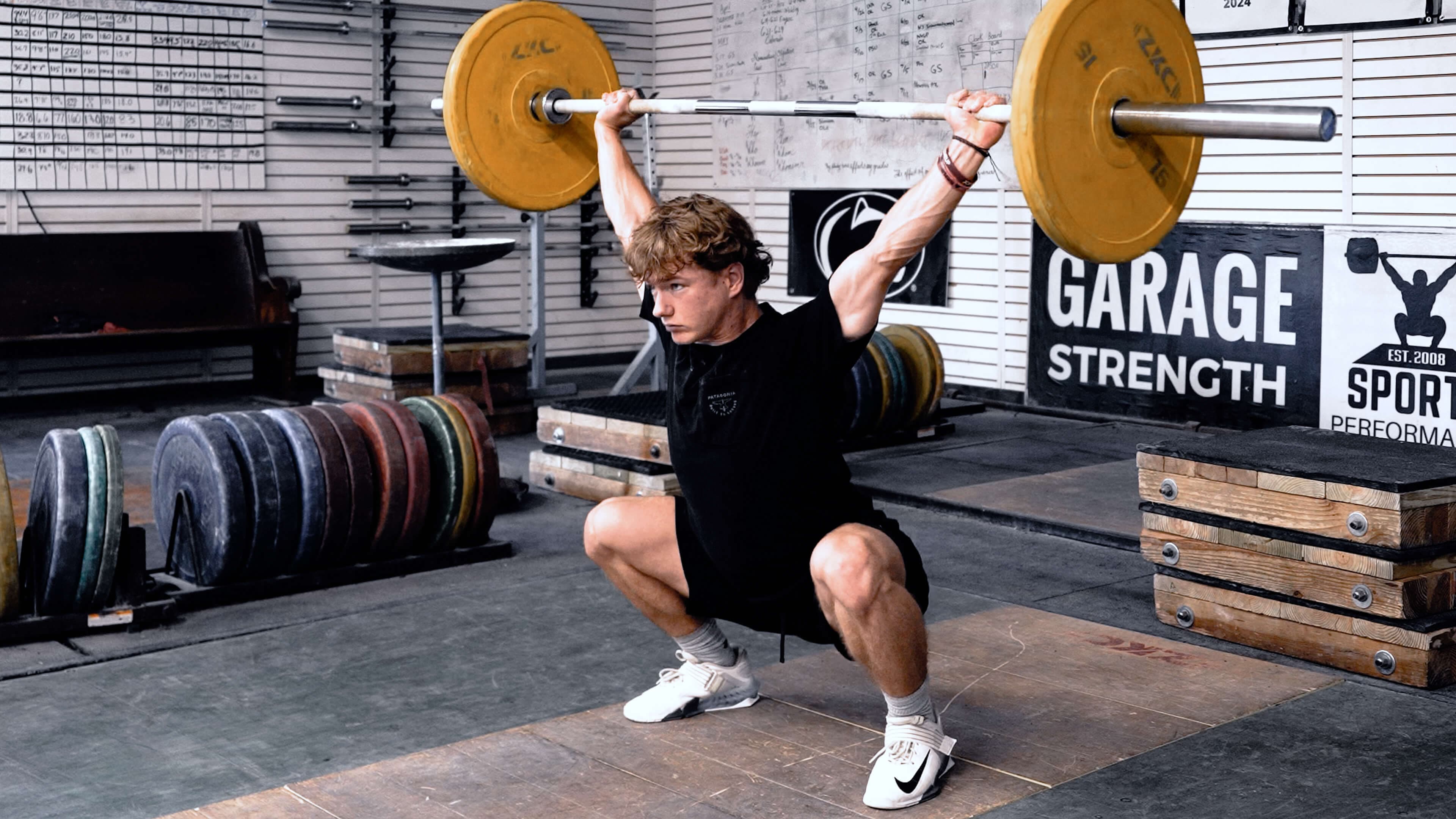
First, the athlete should be able to complete 10 full range of motion overhead squats with a dowel rod while maintaining balance, upright posture, and grounded heels. This demonstrates adequate shoulder mobility, thoracic extension, ankle range of motion, and total body coordination, all of which are required to receive and stabilize a bar overhead.
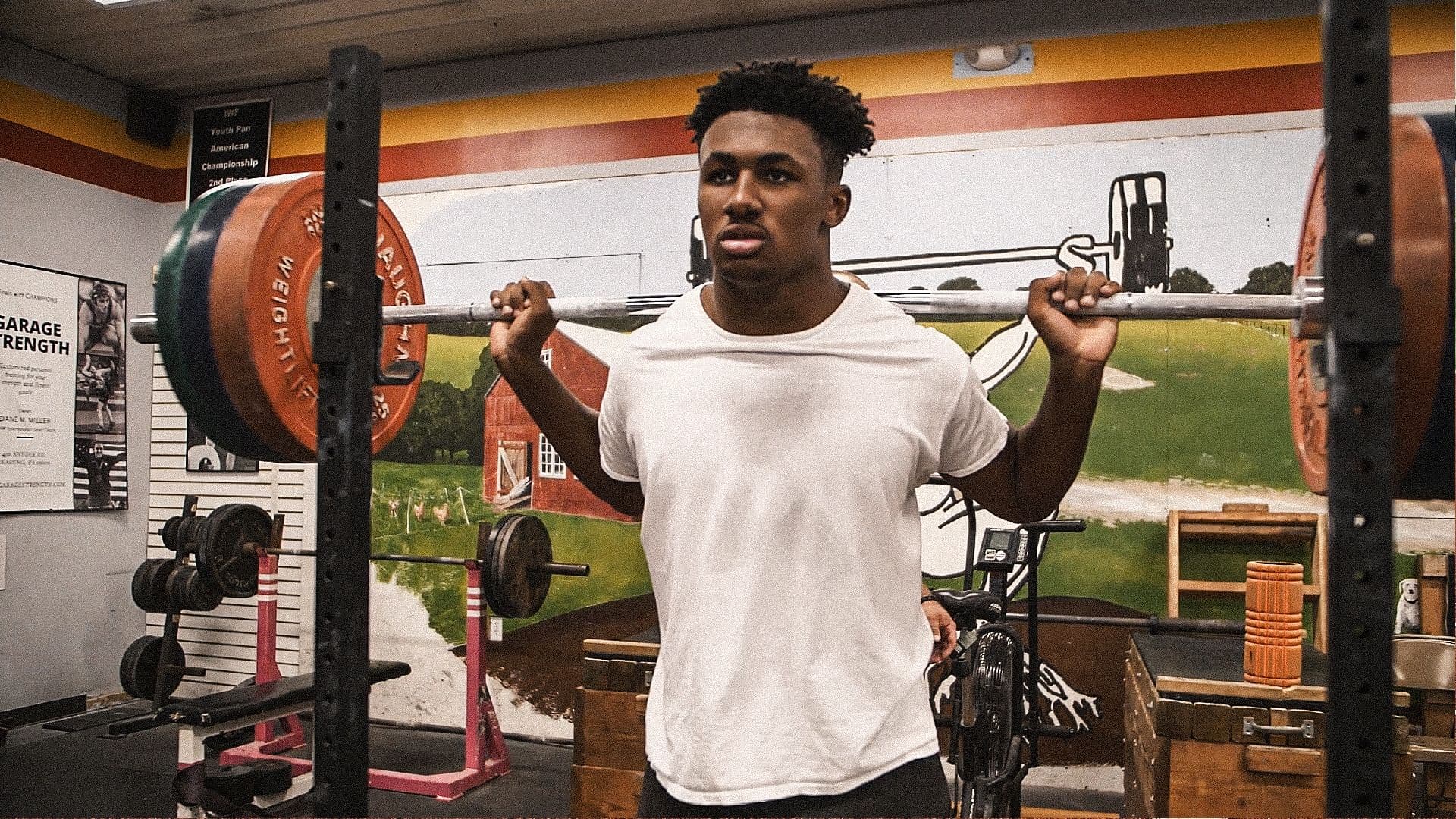
Second, the athlete must perform 10 front squats with a dowel rod without the chest dropping or the spine rounding. This confirms the athlete can maintain a strong and upright torso under load, which is critical for catching cleans and efficiently absorbing force.
Finally, the athlete should be able to jump onto a 12 inch box with a controlled landing. This shows foundational lower body power, eccentric control, and the ability to produce and absorb force, which underpin all explosive Olympic lifting movements.
When these standards are met, the athlete is physically prepared to learn Olympic lifts regardless of age.
What to Expect When Teaching Different Ages
Elementary School (Ages 10 and Under)
When teaching Olympic lifts to elementary school athletes ages 8 to 11, coaches should expect the primary focus to be skill development, not strength expression.
.png&w=2048&q=75)
The most important goal at this stage is building coordination because young athletes are still learning how to sequence the ankles, knees, hips, and shoulders in the correct order. Olympic lifts provide an excellent environment to practice rhythm, timing, and body awareness with simple tools like a dowel rod or a light training bar.
The second goal is maintaining mobility since consistent exposure to deep squatting, front rack shapes, and overhead positions helps preserve range of motion while reinforcing posture and joint control.
The third goal is practicing positions because mastery of start positions, power positions, and receiving positions creates a technical foundation that will later allow safe progression in load and complexity.
Common learning curves at this age include:
• Difficulty timing the extension of the hips and knees
• Inconsistent receiving positions due to balance or mobility limitations
• Trouble keeping the bar close to the body during pulls
• Limited ability to maintain focus and consistency across multiple repetitions
At this age, significant loading is not necessary. Light resistance allows high quality repetitions, faster learning, and less risk while the athlete’s motor patterns are developing.
Middle School (Ages 11-14)
When teaching Olympic lifts to middle school athletes ages 11 to 14, coaches should expect many of the same goals as with younger athletes, but with quicker learning and more consistency.
Coordination is still the top priority because athletes are learning how to move their legs, hips, and upper body together in the correct order. At this age, many athletes can understand instructions more easily and repeat movements better from workout to workout, which allows coaches to introduce structure earlier. Because of this, it is important to be clear and consistent with coaching so athletes learn the right way to move from the start.
.png&w=2048&q=75)
Maintaining mobility remains essential since growth spurts can temporarily reduce control at the hips, ankles, and shoulders. Regular exposure to full depth squats, front rack positions, and overhead shapes helps preserve range of motion while improving joint stability.
Common learning curves at this age include:
• Rushing through lifts instead of maintaining control and positions
• Using excessive weight to compete with peers
• Losing technique consistency during growth spurts
• Developing personal habits that drift away from coached positions
Practicing positions is the most important emphasis because this is the age where athletes begin to “find a way” to make lifts, sometimes by defaulting to inefficient patterns. Reinforcing strong start positions, a balanced power position, and solid receiving mechanics early prevents bad habits, keeps them safe, and sets the foundation for loading progression later.
High School (Ages 15-18)
When teaching Olympic lifts to high school athletes ages 14 to 18 for the first time, coaches should expect to spend more time undoing habits than building from scratch.
.png&w=2048&q=75)
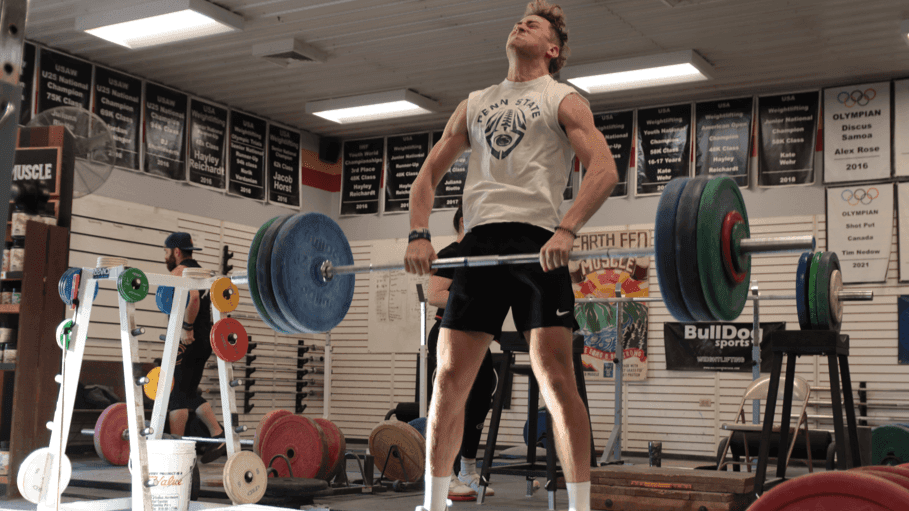
Many athletes arrive with movement patterns from other sports or weight room experience that do not transfer well to Olympic lifting, such as pulling with the arms too early, cutting depth, or jumping forward to “save” a lift. One key goal is breaking these habits because clean positions create better power transfer and reduce stress on the wrists, shoulders, and low back.
Maintaining and improving mobility is also critical during puberty. Rapid growth can tighten the ankles, hips, and upper back, which makes front rack and overhead positions harder to hold. Consistent exposure to full range positions helps keep movement quality high as the body changes.
Common learning curves at this age include:
• Limited mobility affecting front rack and overhead positions
• Rushing lifts or forcing reps as weight increases
• Overusing the arms instead of driving with the legs and hips
• Emotional regulation challenges, such as frustration after missed lifts
• Lack of confidence when learning technically demanding movements
.png&w=3840&q=75)
.png&w=3840&q=75)
This is also the first age group that benefits from deeper explanations. Instead of only giving commands, coaches should explain why positions matter so athletes buy into the process, self correct, and keep technique intact as intensity increases.
Collegiate (Ages 18-22)
When teaching Olympic lifts to collegiate athletes ages 18 to 22 for the first time, coaches should expect many of the same challenges seen at the high school level, but with a greater sense of urgency. The primary goal with this age group is establishing technical proficiency as quickly as possible, particularly in power positions. Because collegiate athletes have a limited competitive window, emphasizing power cleans and power snatches allows them to develop explosive output without the time investment required for mastering full lifts.
.png&w=1920&q=75)
Most athletes in this age range are coordinated adults, which makes instruction more efficient and allows for faster correction of technical errors. Coaches can rely on verbal cues and detailed explanations to reinforce positions and intent.
Supplementing power variations with squats and other full range of motion lifts helps maintain mobility, build strength, and support sport specific force production. This approach balances technical development with performance demands, ensuring Olympic lifting contributes directly to on field performance during a short collegiate career.
Common learning curves at this age include:
• Relying on strength instead of technical power positions
• Hesitancy with Olympic movements due to limited prior exposure or coaching
• Difficulty adjusting from slow strength lifts to explosive movements
• Mobility restrictions affecting front rack or overhead comfort
Post-Collegiate (Ages 22-35)
When teaching Olympic lifts to post collegiate athletes ages 22 to 35 for the first time, the primary goal is establishing comfort with dynamic movement while removing fear around speed, load, and coordination.
Many athletes in this age group have spent years in controlled strength training environments, which can make explosive movements feel unfamiliar or intimidating. Building confidence through simple progressions and repeatable success is critical early on.
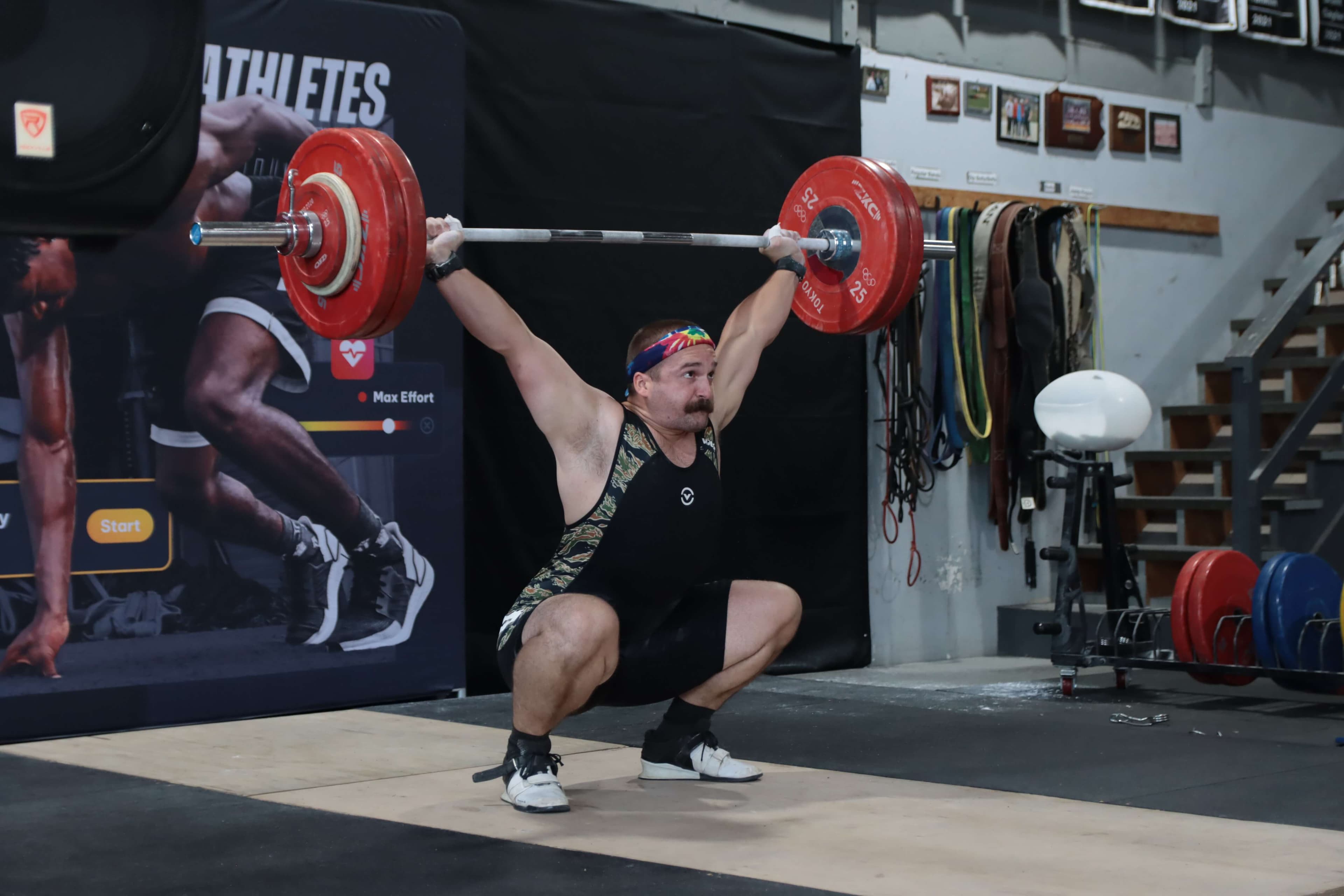
This group is typically highly inquisitive and self motivated, often choosing to learn Olympic lifts out of personal interest rather than obligation. Coaches should lean into this curiosity by explaining how and why movements work, while also setting firm technical boundaries to prevent ego lifting. Early guardrails around load selection and positions help protect the athlete while confidence grows.
Common learning curves at this age include:
• Hesitancy to move fast under load
• Overconfidence leading to excessive loading too early
• Difficulty trusting dynamic catch positions
• Limited mobility from years of restricted training patterns
• Frustration when technical lifts feel harder than strength lifts
This stage is where lifelong athletes are either built or lost. A positive coaching experience that balances education, confidence, and discipline can turn Olympic lifting into a long term training tool rather than a short lived experiment.
Masters (Ages 35+)
When teaching Olympic lifts to post collegiate athletes ages 35 and older for the first time, coaches must prioritize meeting the athlete where they are physically and mentally.
.png&w=2048&q=75)
Progress in load will be slower, and certain positions may be limited or unavailable due to years of sport participation, occupational stress, or previous injuries. The goal is not to force ideal positions, but to identify what is realistic and safe for the individual athlete.
Coaches should assess mobility, training history, lifestyle demands, and recovery capacity before setting expectations. Modifying ranges of motion, using power variations, or incorporating alternative dynamic movements allows athletes to train explosively without unnecessary risk.
Common learning curves at this age include;
• Restricted mobility limiting ideal front rack or overhead positions
• Hesitancy with speed and catching movements
• Longer recovery times between sessions
• Difficulty separating past injuries from current ability
• Frustration when progress feels slower than expected
Introducing dynamic movements at this age plays a key role in maintaining joint health, coordination, and overall bodily function. These movements also provide mental benefits, helping athletes feel capable, athletic, and engaged in training. When coached appropriately, Olympic lifting can become a sustainable tool for long term physical and mental well being rather than a short term performance pursuit.
Beginner Snatch Progression
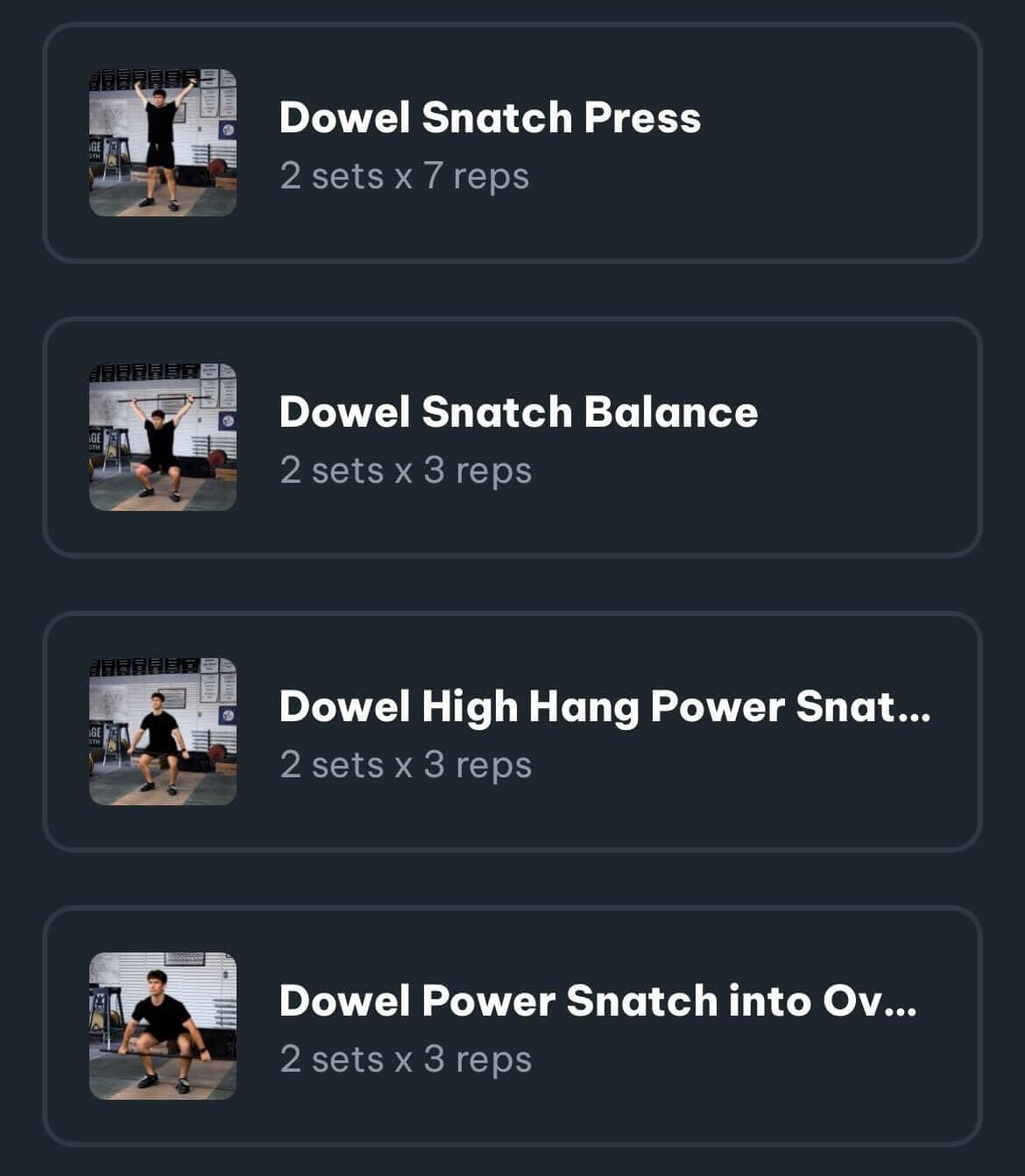
This is the beginner progression Peak Strength uses to introduce the snatch movement:
Dowel Snatch Press: This improves shoulder mobility and establishes the catch position in the snatch.
Dowel Snatch Balance: This helps establish timing of the catch and builds comfort squatting into a full overhead squat position.
Dowel High Hang Power Snatch into Overhead Squat: This helps practice extension of the hips and introduces the upper body turnover.
Dowel Power Snatch into Overhead Squat: This builds confidence from the floor, practices knee movement repetitions, and reinforces extension and turnover.
Beginner Clean Progression
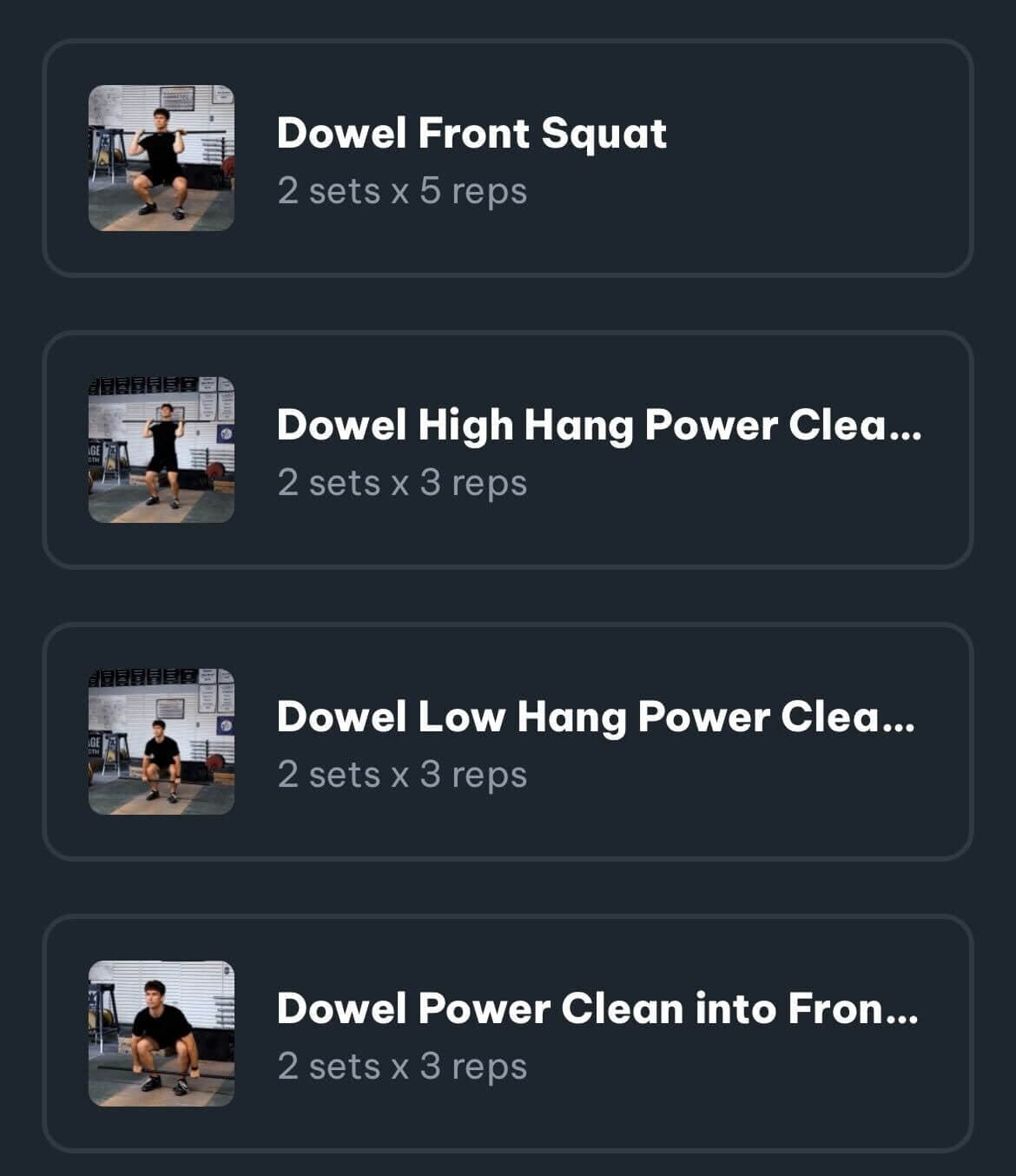
This is the beginner progression Peak Strength uses to introduce the clean movement:
Dowel Front Squats: This helps athletes get comfortable in a front squat position and practice full range of motion.
High Hang Power Clean into Front Squat: This helps to practice extension and turnover timing of the elbows.
Low Hang Power Clean into Front Squat: This helps practice knee movement and pushing through the floor with the lower body.
Power Clean into Front Squat: This builds confidence off the floor and into the front rack position.
Conclusion: When to Start Teaching Olympic Lifts
If you’re looking for a specific answer to the question of “when should I start teaching Olympic lifts?”, the answer is right now.
As long as your athletes can achieve the prerequisites, then they can start learning Olympic lifts at any time. Just understand the age group you are working with and what they will need to succeed long term.
Teaching Olympic lifts is no easy feat. It requires a lot of patience, clear communication, and a good eye for safe positions. If you want to incorporate Olympic lifts into your athletes’ training, apply for the Peak Strength Teams Pilot Program to access training plans that incorporate the right variations for your sport and goals.
Ivan Escott
Ivan is a national-level Olympic weightlifter and performance coach at Garage Strength Sports Performance.