Peak Strength Helps 39-Year-Old Wrestler Become a World Champion
by Ivan Escott
Jan 8, 2026
•8 minutes
.png&w=3840&q=75)
INTRODUCTION
This case study examines the progress of a 39-year-old freestyle wrestler that used Peak Strength to get stronger, more powerful, and put on lean mass. This athlete’s primary goal was to improve his standings at the Veteran World Championship for freestyle wrestling. The program, consisting of 4-6 days a week of training, was designed to improve overall strength, explosiveness, and endurance.
Key results from the program include:
Strength
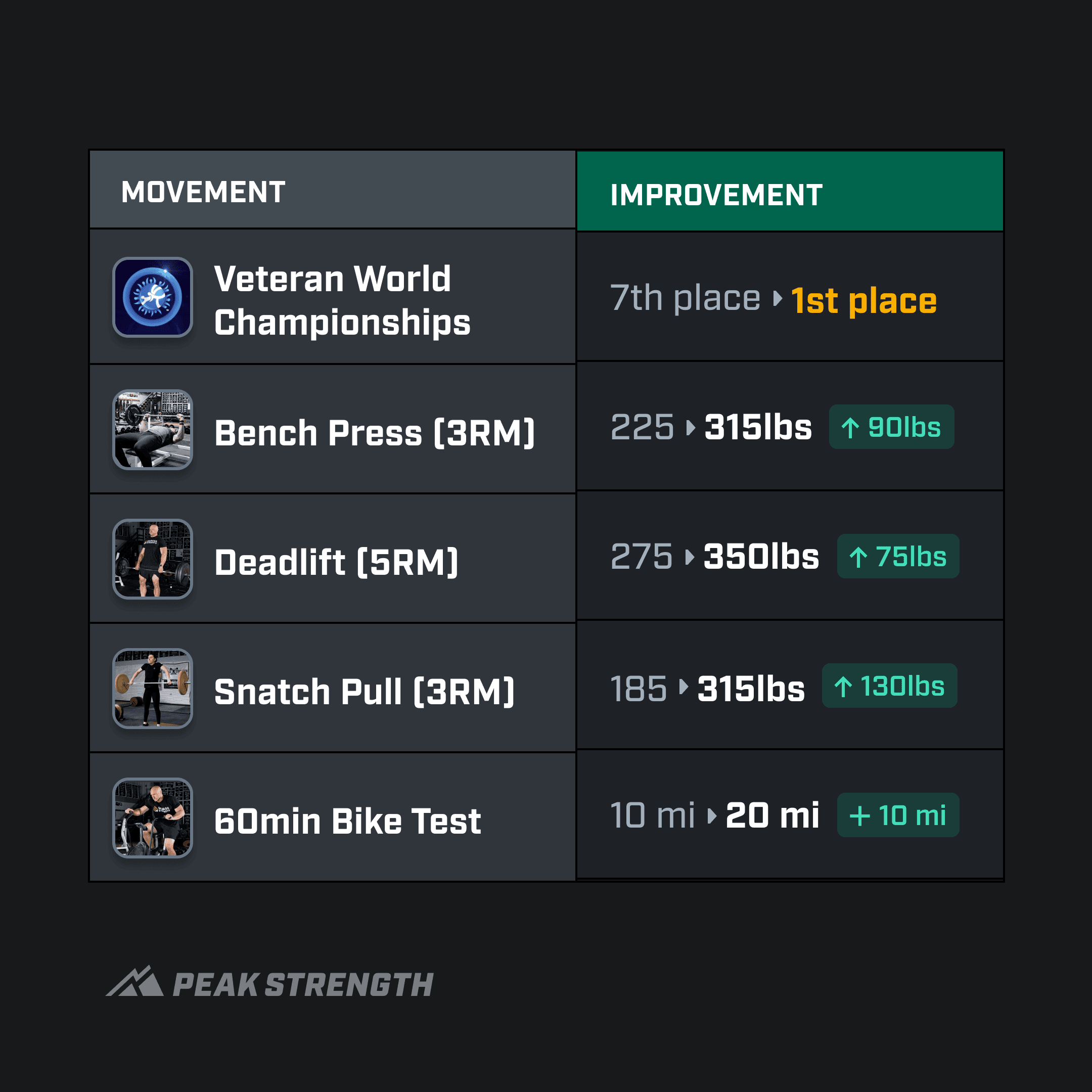
Deadlift: Increased 5RM from 275 lbs to 350 lbs (+75 lbs)
Bench Press: Increased 3RM from 225 lbs to 315 lbs (+90 lbs)
Explosiveness
Snatch High Pull: Increased 3RM from 185 lbs to 315 lbs (+130 lbs)
Endurance
60 Minute Bike Test: Increased mileage 10 miles to 20 miles (+10 miles)
Over 2 years of using the wrestling training plan in Peak Strength, the athlete improved in all three primary physical focuses. This case study provides a detailed analysis of the athlete’s training program, methodology, and outcomes, demonstrating the effectiveness of following a structured training plan for a masters athlete at the international level.
ATHLETE PROFILE
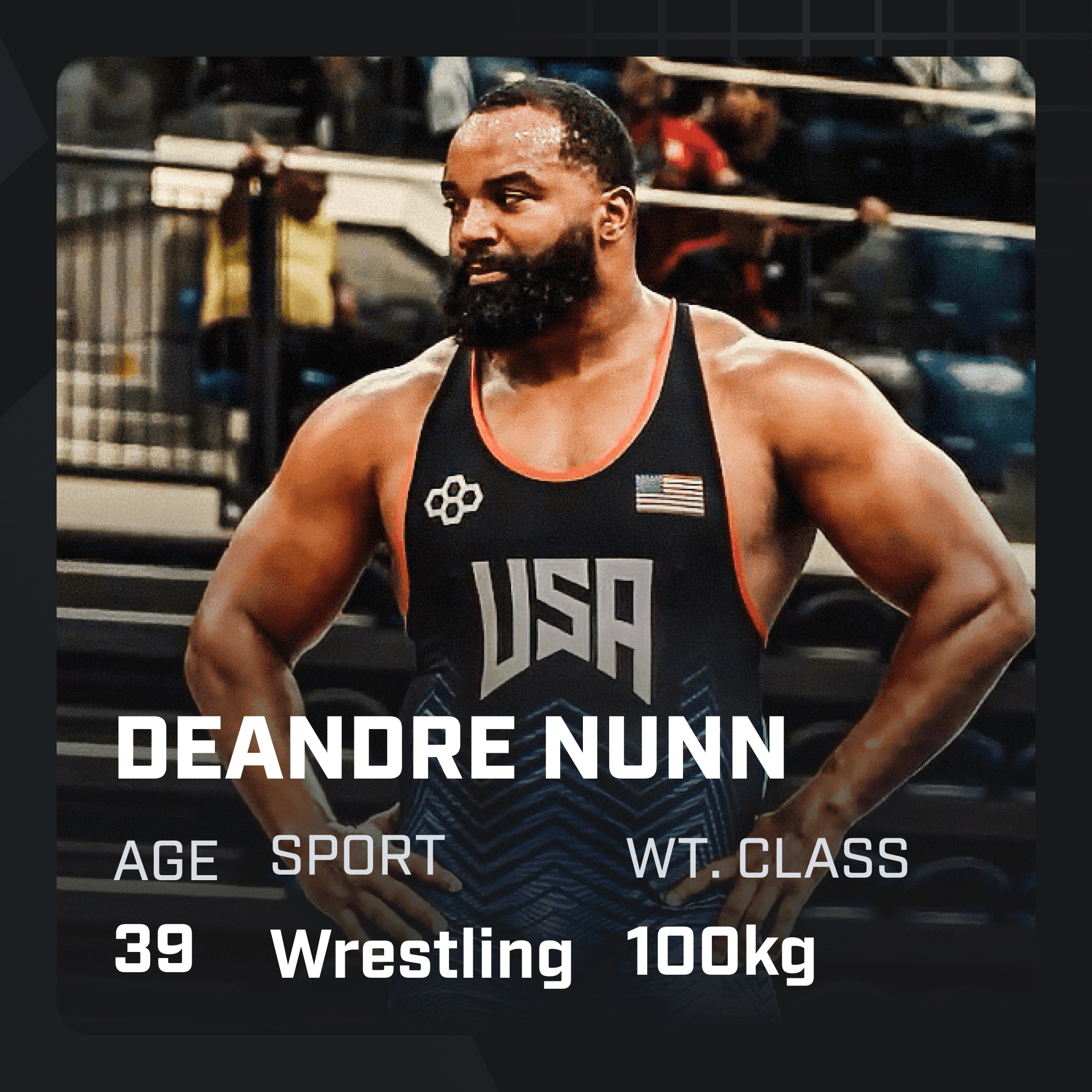
Name: DeAndre Nunn
Sport: Wrestling
Training Duration: 2 Years
Frequency: 4-6 days per week
Total Tonnage: 2,375,000+ lbs
“I was able to go out to worlds and just crush everybody. I was in phenomenal shape and I never got tired.” - DeAndre Nunn
TRAINING FOCUS
DeAndre’s primary goals were to:
Increase explosiveness to overpower talent at the international level.
Improve absolute strength to support the demands of his sport.
Improve endurance to outlast opponents throughout tournaments with multiple matches a day.
METHODOLOGY
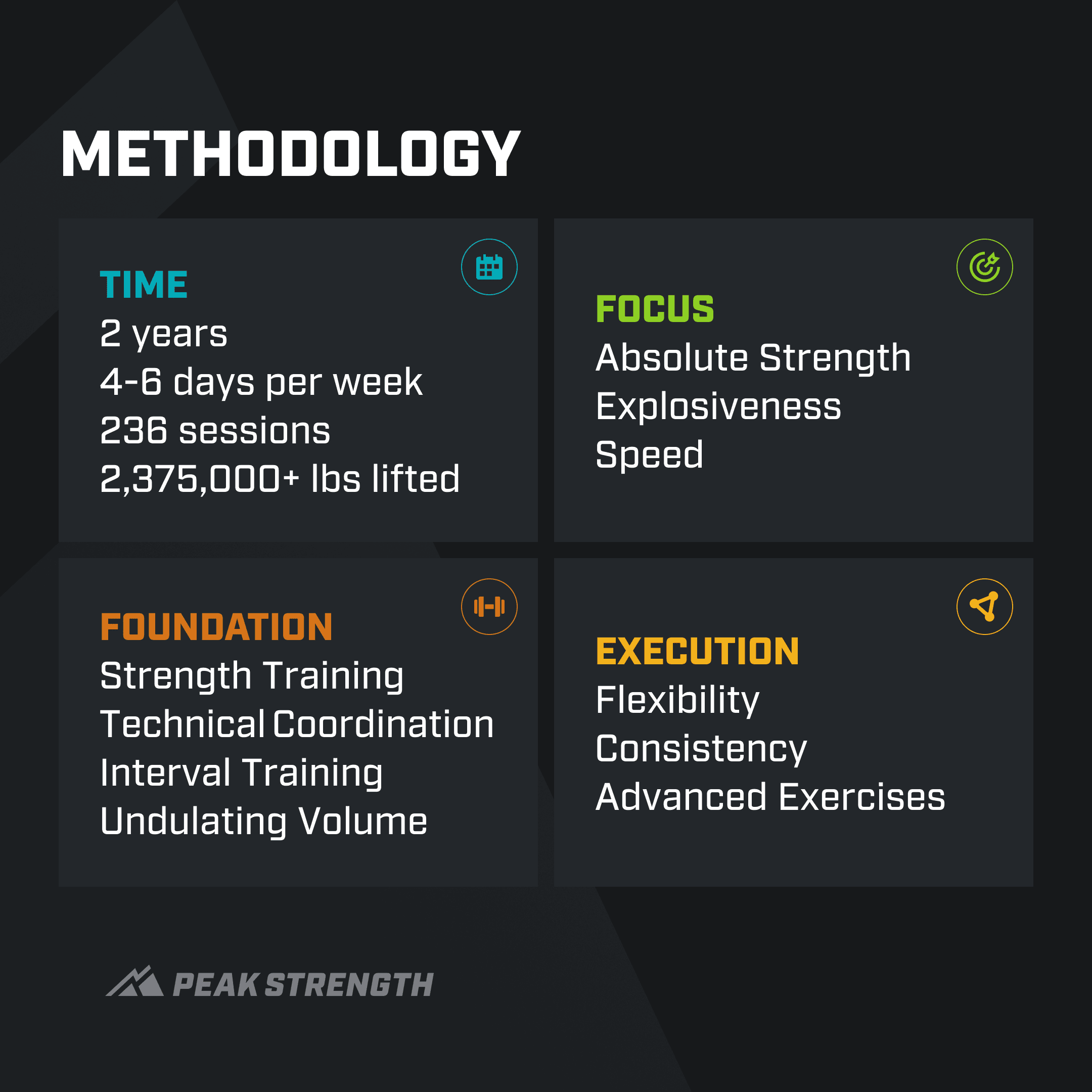
DeAndre followed a comprehensive, wrestling-specific training plan The program integrated key elements of strength training, Olympic weightlifting, hypertrophy, and conditioning training. Each training week included the following components:
Strength Training: Emphasis on squat variations, bench press, and pulling power.
.png&w=3840&q=75)
.png&w=3840&q=75)
Technical Coordination: Dynamic movements such as snatch high pulls and clean high pulls to develop power and train fast twitch muscle fibers.
Accessory Work: Core strengthening exercises, mobility drills, and grip strengthening specific to wrestling.
Endurance Training: A combination of interval and LSD (long slow distance) training to improve the cardiovascular performance of the athlete.
Undulating Volume: A method of varying training volume based around specific competition dates.
“I wasn’t just bodybuilder-big. I was athletic and powerful. I felt way bigger in my back, in my traps, and it wasn’t fat. It was muscle.” - DeAndre Nunn
TRAINING PROGRESS AND RESULTS
Absolute Strength
Deadlift (5RM):
Starting Point: 275 lbs
End Point: 350 lbs
Improvement:+75 lbs (27%)
Analysis: DeAndre’s improvement in the deadlift from a 275 lbs 5RM to 350 lbs 5RM significantly enhanced the physical qualities most critical to success at the 100 kg weight class. Increased posterior-chain strength improved his ability to maintain strong hip position in ties, resist being pulled out of stance, and re-anchor during scrambles. This gain also supported greater force transmission from the ground through the torso, allowing more repeatable power late in matches. From a preparation standpoint, stronger hips and trunk increased durability, reduced energy leakage, and supported consistent high-intensity training throughout the competitive season.
Additional context: For a 39-year-old athlete, testing rep maxes instead of a true 1RM provides a safer, more informative assessment of strength. Rep max testing reduces peak joint and connective tissue stress while still capturing meaningful strength capacity. It also better reflects repeatable force production and fatigue tolerance, qualities that transfer more directly to wrestling performance and long-term training availability.
Bench Press (3RM):
Starting Point: 225 lbs
End Point: 315 lbs
Improvement:+90lbs (40%)
Analysis: DeAndre’s bench press progression from a 225 lbs 3RM to a 315 lbs 3RM significantly enhanced upper-body force production and structural resilience, both of which transferred directly to mat performance. Increased pressing strength improved his ability to create separation in hand fighting, reinforce strong frames in ties, and apply force through the arms without compromising posture.
Explosiveness
Snatch High Pull (3RM):
Starting Point: 185 lbs
End Point: 315 lbs
Improvement: +90lbs (70%)
Analysis: DeAndre’s snatch high pull progression from a 185-lb 3RM to 315-lb 3RM reflected a major increase in explosive force production and rate of force development. This improvement enhanced his ability to generate rapid vertical and rotational force from the lower body while maintaining strong posture through the upper back. On the mat, this translated to more violent snaps, faster re-attacks, and the ability to impose force quickly against high-level international opponents, allowing him to overwhelm positions that previously stalled his offense and dictated match tempo.
Endurance
60 Minute Bike Test
Starting Point: 10 miles
End Point: 20 miles
Improvement:+10 miles (100%)
Analysis: DeAndre’s improvement in the 60-minute bike test from 10 miles to 20 miles demonstrated a substantial increase in aerobic capacity and work efficiency. This adaptation supported faster recovery between high-intensity exchanges and between matches throughout tournament days. Improved cardiovascular conditioning allowed him to maintain pressure, hand-fighting intensity, and offensive intent deep into later matches, rather than shifting to a defensive approach. As a result, he was able to stay aggressive across multiple matches, preserve power output under fatigue, and impose his pace on opponents as the tournament progressed.
TRAINING OBSERVATIONS
Absolute Strength: Over the two-year period, DeAndre’s absolute strength improvements meaningfully enhanced his wrestling performance by refining how force was applied, not simply increasing raw capacity. Entering the process with a strong foundation from his background as a collegiate wrestler and national-level powerlifter, training focused on rebuilding and optimizing usable strength for competition. Increased strength in the hips, trunk, and upper body improved positional control, reduced energy leakage in ties and scrambles, and made technical execution more reliable under fatigue.
Explosiveness: DeAndre exhibited a substantial improvement in explosive physical preparedness, as evidenced by his snatch high pull increasing from a 185 lbs 3RM to 315 lbs 3RM. This progression reflects a significant enhancement in rate of force development and the ability to rapidly translate strength into powerful movement. Improved explosiveness supported quicker force expression, improved coordination between the lower body and upper torso, and greater efficiency during high-intensity efforts. From a preparation standpoint, this adaptation improved DeAndre’s capacity to produce repeatable, high-output actions while minimizing fatigue accumulation, contributing to a more resilient and competition-ready physical profile.
Endurance: DeAndre’s endurance improvements were driven by specific physiological adaptations rather than general conditioning alone. The progression from 10 to 20 miles in a 60-minute bike test reflected improved aerobic efficiency, higher sustainable power output, and enhanced recovery between high-intensity efforts. These adaptations supported faster lactate clearance, improved heart rate recovery, and greater tolerance to repeated bursts of effort throughout competition. DeAndre identified this endurance development as a key factor in winning the 2025 Veterans World Championship, as it allowed him to maintain technical sharpness, decision-making, and force output across multiple rounds without the typical decline seen late in tournament settings.
Body Composition: DeAndre showed significant improvements in body composition at the 100kg weight class. Increases in lean muscle mass from targeted hypertrophy work allowed him to maintain size and structural presence, while strength and power training improved tissue density and force capacity without unnecessary mass gain. Concurrent endurance development enhanced metabolic efficiency and recovery, supporting greater caloric utilization and improved fat loss. Together, these adaptations enabled DeAndre to approach competition weight with less aggressive cutting, reduce stress during the weight-management phase, and consistently enter the 100 kg class strong, lean, and physically stable.

CONCLUSION
Over the past two years, DeAndre’s development represented a complete transformation of his physical profile, aligning strength, explosiveness, endurance, and body composition into a unified competitive advantage. Strategic improvements in absolute strength enhanced positional control and durability, while gains in explosive power allowed him to express force more rapidly and decisively than in previous seasons. Endurance advancements supported sustained output and technical consistency across full tournament days, a factor DeAndre identified as critical to his success. Compared to prior years, this integrated progression culminated in a higher competitive ceiling and ultimately his 2025 Veterans World Championship title.
FUTURE RECOMMENDATIONS
Maintain Elasticity: Future training should prioritize elastic and reactive qualities through loaded jumps, plyometric progressions, and rapid Olympic-lift derivatives. Improving force expression in shorter time windows will enhance DeAndre’s ability to initiate actions earlier while reducing overall energy cost per effort, helping preserve longevity and competitive sharpness as he continues competing at the veteran level.
Prioritize Strength and Recovery: Rather than chasing higher absolute loads, programming should focus on maintaining current strength levels while increasing work density and recovery between efforts. Clusters, tempo-based strength work, and aerobic power intervals can preserve force output, reinforce durability, and support faster between-match recovery, ensuring DeAndre remains physically dominant across multi-day tournaments without unnecessary joint or systemic fatigue.
Ivan Escott
Ivan is a national-level Olympic weightlifter and performance coach at Garage Strength Sports Performance.