From 6th Grade to the NFL: How 11 Years of Strength Training Built a Kansas City Chief
by Ivan Escott
Feb 19, 2026
•6 minutes

INTRODUCTION
This case study examines the progress of a 25-year-old male’s athletic development within a strength training system over a 11 year period to earn a spot on the Kansas City Chiefs NFL roster. The program, consisting of an average of 4 days a week of training, was designed to improve explosiveness, speed, and overall strength.
Key results from the program include:
Explosiveness
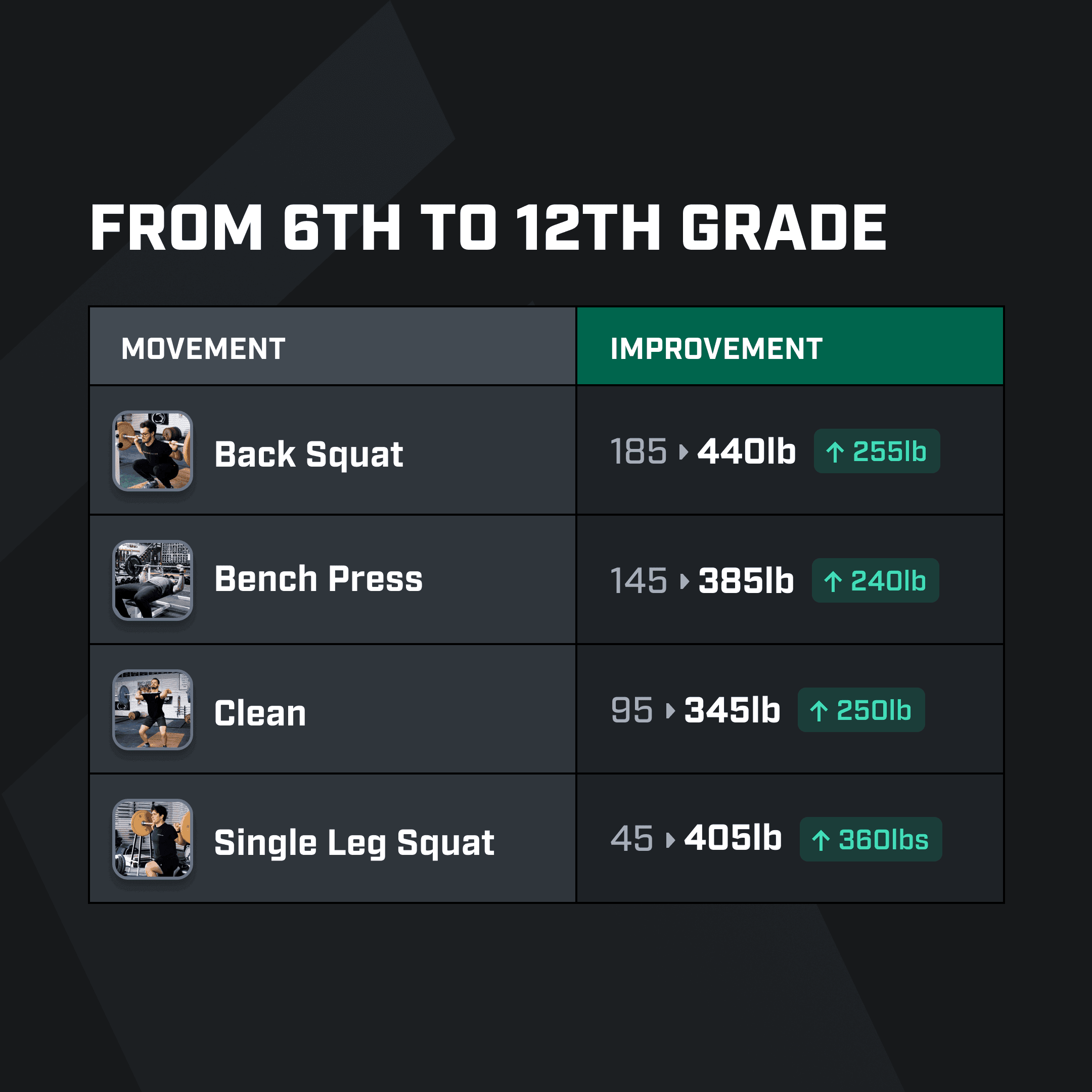
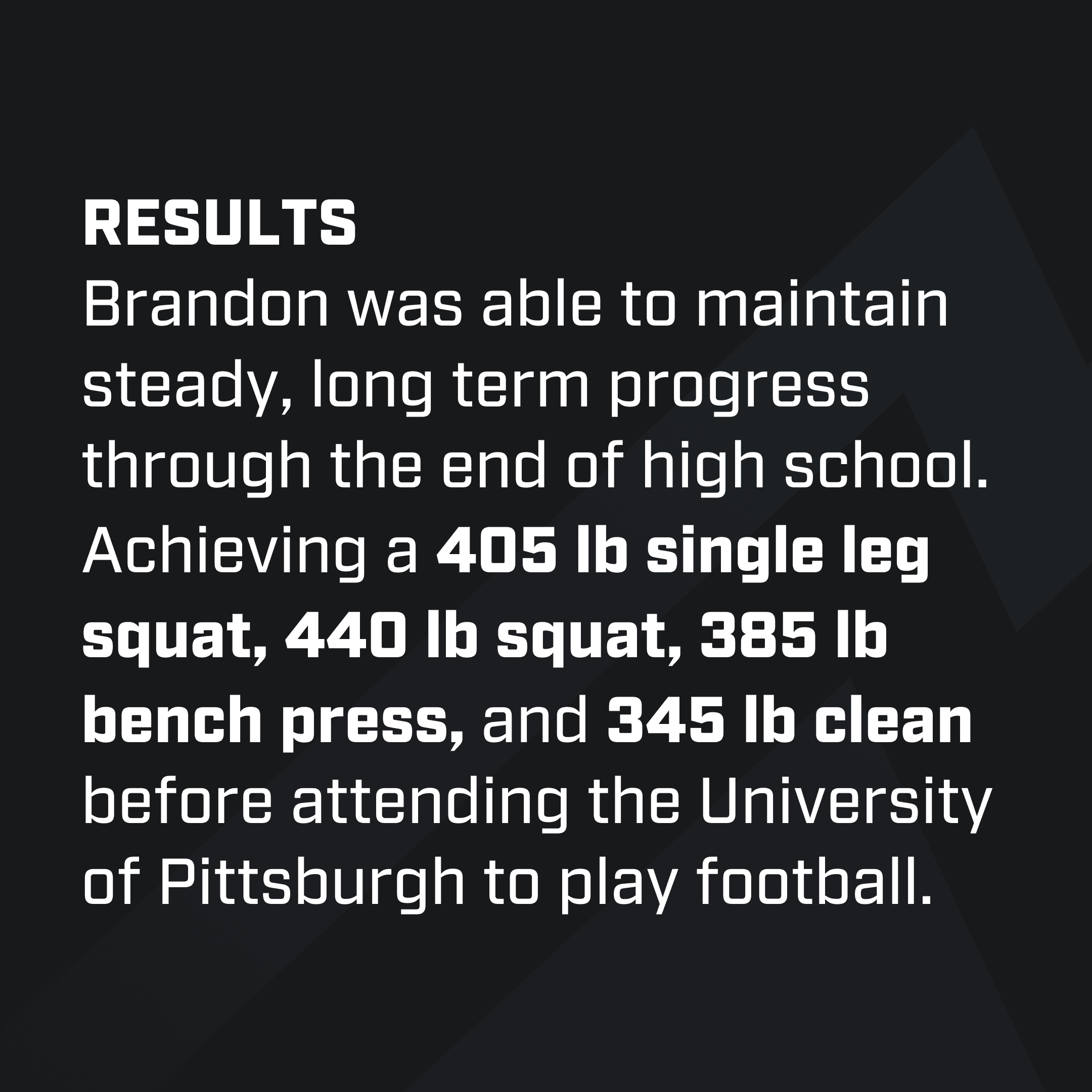
Clean: Increased from 95 lbs to 345 lbs (+250 lbs)
Strength
Single Leg Squat: Increased from 45 lbs to 405 lbs (+360 lbs)
Back Squat: Increased from 185 lbs to 440 (+255 lbs)
Bench Press: Increased from 145 lbs to 385 lbs (+240 lbs)
These improvements highlight long term gains in lower-body explosiveness and full body strength translated to more specific tests related to football performance . This case study provides a detailed analysis of the athlete’s training program, methodology, and outcomes, demonstrating the effectiveness of long term athletic development in youth athletes.
ATHLETE PROFILE
.png&w=1920&q=75)
Name: Brandon George
Primary Sport: Football / Linebacker
Training Duration: 11 Years
Frequency: 4 days per week
TRAINING FOCUS
The athlete’s primary goals were to:
Develop absolute strength that could be expressed through impulse.
Increasing explosive power for football.
Improve general athletic profile and maximize competitive physical potential.
METHODOLOGY
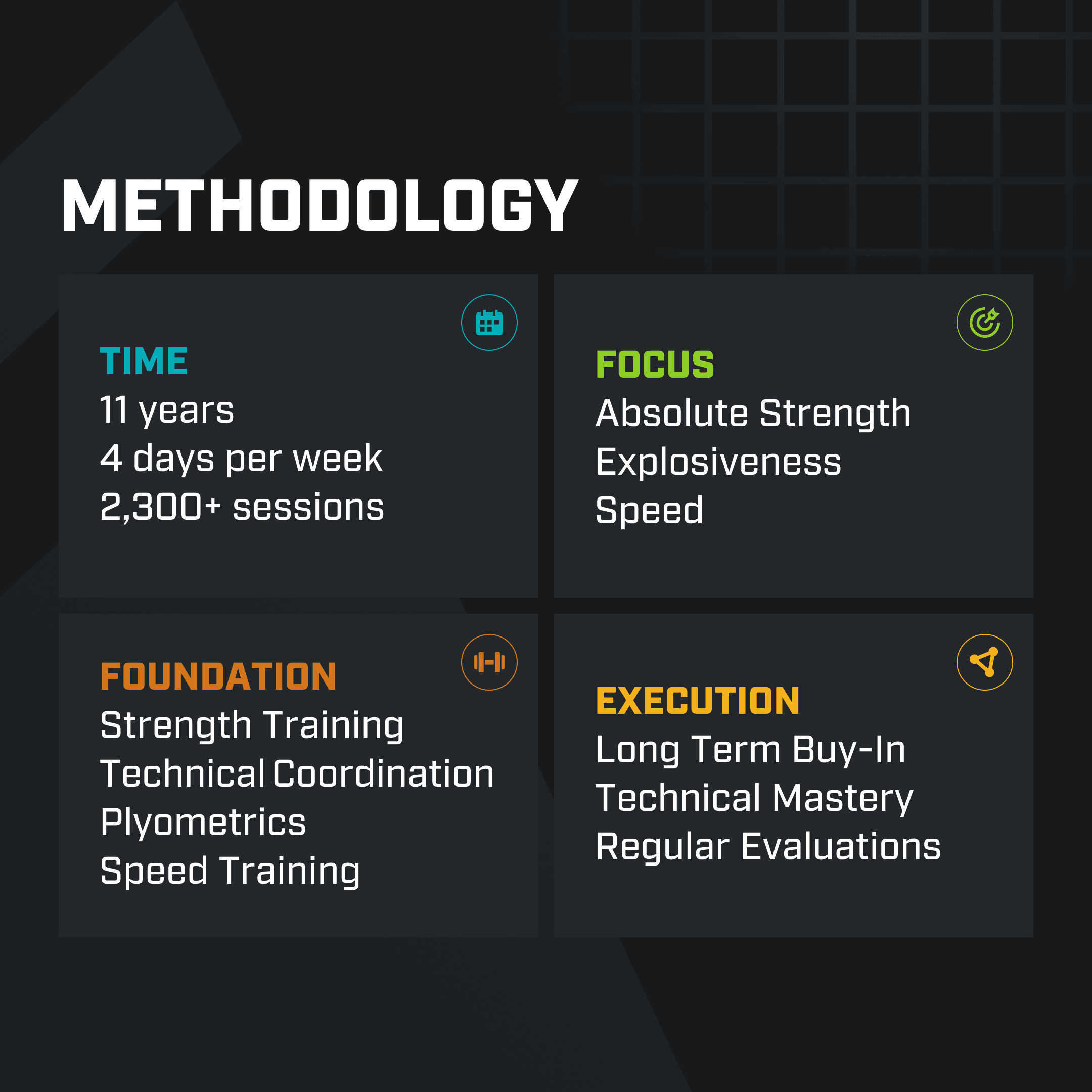
The athlete followed a comprehensive, sport-specific training plan designed to enhance explosiveness, strength, speed, and coordination. The program integrated key elements of strength training, Olympic weightlifting, plyometrics, and speed training. Each training session included the following components:
Strength Training: Emphasis on squat variations, bench press, and unilateral development..
Technical Coordination: Dynamic Olympic weightlifting movements such as cleans from various positions to develop coordination and train fast twitch muscle fibers.
Plyometrics: Drills designed to improve movement patterns, balance, and explosiveness.
Accessory Work: Mobility drills, unilateral strengthening, and upper body hypertrophy.
.png&w=3840&q=75)
.png&w=3840&q=75)
Speed Training: Max intensity speed drills to improve acceleration and top end speed.
TRAINING PROGRESS AND RESULTS
The following training results are based on Brandon’s development from 6th grade to 12th grade. After 12th grade, Brandon played football at the University of Pittsburgh.
Explosiveness
Clean:
Starting Point: 95 lbs
End Point: 345 lbs
Improvement: +250 lbs (263%)
Analysis: Brandon George’s clean development followed a pattern of long-term consistency, increasing by approximately 20 lbs per year from 6th through 12th grade. Rather than rapid spikes or early specialization, this steady progression allowed strength, coordination, and power qualities to mature in parallel with his physical growth. This approach reinforced proper movement mechanics, efficient force production, and technical confidence under load. The result was not only a significant increase in absolute power, but improved athleticism expressed through faster acceleration, stronger ground contact, and better control in dynamic positions.
Strength
Single Leg Squat:
Starting Point:45 lbs
End Point: 405 lbs
Improvement: +360 lbs (800%)
Analysis: The single-leg squat increased from 45 lbs to 405 lbs, represents an exceptionally large improvement in unilateral strength. For a long-limbed athlete, developing this level of single-leg force production was critical to improving joint control, leverage, and force transfer through extended ranges of motion. As load increased, Brandon demonstrated improved hip stability, knee tracking, and trunk control, allowing him to better express strength without positional breakdown. This unilateral development directly enhanced his ability to decelerate, redirect, and absorb contact.
Back Squat:
Starting Point: 185 lbs
End Point: 440 lbs
Improvement: +255 lbs (139%)
Analysis: His back squat progression served as a foundational lift in establishing the level of absolute strength required for higher power expression on the football field. Developing this strength base allowed Brandon to better translate force into explosive movements. As his squat strength increased, so did his ability to express power in football-specific actions. This foundation supported improvements across his training, allowing speed, explosiveness, and contact strength to be layered on top of a resilient and well-developed strength base.
Bench Press:
Starting Point: 145 lbs
End Point: 385 lbs
Improvement: +240 lbs (165%)
Analysis: Brandon George’s bench press reflected the development of elite upper-body strength necessary for success at the linebacker position. This progression directly supported his ability to strike, extend, and control opponents at the point of contact. This upper-body strength foundation allowed him to build both power and muscular endurance.
TRAINING OBSERVATIONS
Absolute Strength: Brandon George’s being able to play for the University of Pittsburgh was strongly supported by years of deliberate, long-term athletic development built on foundational strength training from an early age. Rather than chasing short-term performance, consistent progress in the back squat, single-leg squat, and bench press established a durable strength base that matured alongside his physical growth. This patient approach demonstrated reliability, work ethic, and readiness for the demands of a Power Five program. By developing foundational strength early, Brandon entered college prepared to handle higher training volumes and competitive intensity, allowing his athletic qualities to continue progressing within a high-level collegiate environment.
Explosiveness: His explosive development in the clean played a key role in his elite lower-body power outputs during high school, highlighted by a 37-inch vertical jump and a 10’8” broad jump. Consistent progress in the clean improved his ability to rapidly produce force and express it efficiently, reinforcing explosive qualities as his body matured. These results reflected a well-sequenced development process where explosive lifting supported measurable athletic expression, helping establish Brandon as a high-level prospect entering the next stage of his football career.
Speed and Agility: Brandon George’s speed and agility testing results within his Relative Athletic Score profile were strongly supported by long-term development of absolute strength and explosive capacity. His ability to post a sub-4.5 second 40-yard dash alongside an elite short-shuttle performance reflected how foundational strength and clean-based explosiveness improved his acceleration, braking efficiency, and re-acceleration ability.

CONCLUSION
Brandon George’s athletic progression is a clear example of what is possible when long-term development is prioritized from an early age. Steady improvements in foundational strength through the squat, bench press, and single-leg squat created the base necessary for advanced power expression, while continued progress in the clean supported elite explosive outputs, including a 37-inch vertical and 10’8” broad jump by the end of high school.
As strength and explosiveness matured, these qualities translated into high-level speed and agility results during the NFL evaluation process, reinforcing the connection between patient training and measurable athletic outcomes. Brandon’s development highlights that youth athletes do not need to rush progress to achieve elite performance, but instead benefit from consistency, structure, and time. Entering the next phase of his career with the Kansas City Chiefs, his foundation positions him well for continued growth, durability, and long-term success at the professional level.
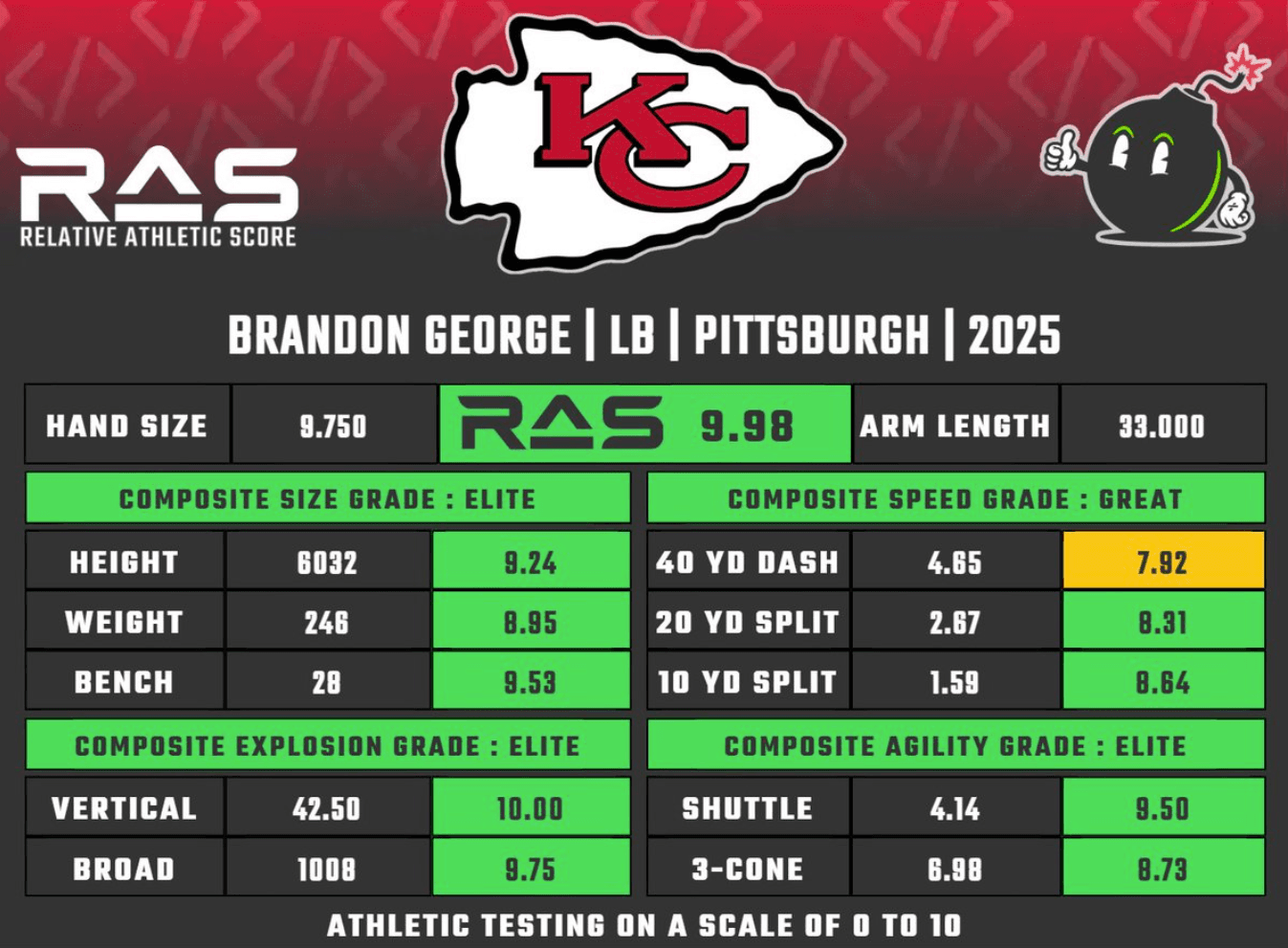
Additional Context: MathBomb’s 2025 Relative Athletic Score is a percentile-based system which compares verified the top athletes in the NCAA. Often composed of 3rd, 4th, and 5th year players, the 1-10 rating in each category is related to the percentile of an athlete’s performance compared to the other athletes in that position. Brandon George scored an unofficial 9.98 out of a possible 10.00 on the MathBomb Relative Athletic Score (RAS). This extraordinary score placed him among the top linebackers ever tested. He ranks around 7th out of more than 3,100 linebackers evaluated since 1987.
Ivan Escott
Ivan is a national-level Olympic weightlifter and performance coach at Garage Strength Sports Performance.